Image © Adobe Images
Pound sterling benefits as UK-specific risk premiums fade alongside declining oil prices.
The pound to dollar exchange rate (GBP/USD) rose last week and extended gains on Monday as traders pared the month's losses.
To be sure, May is usually a month when the pound drops against the dollar, and seasonality was therefore never supportive. But the solid performance of recent days sets the pair up for a better mid-year spell.
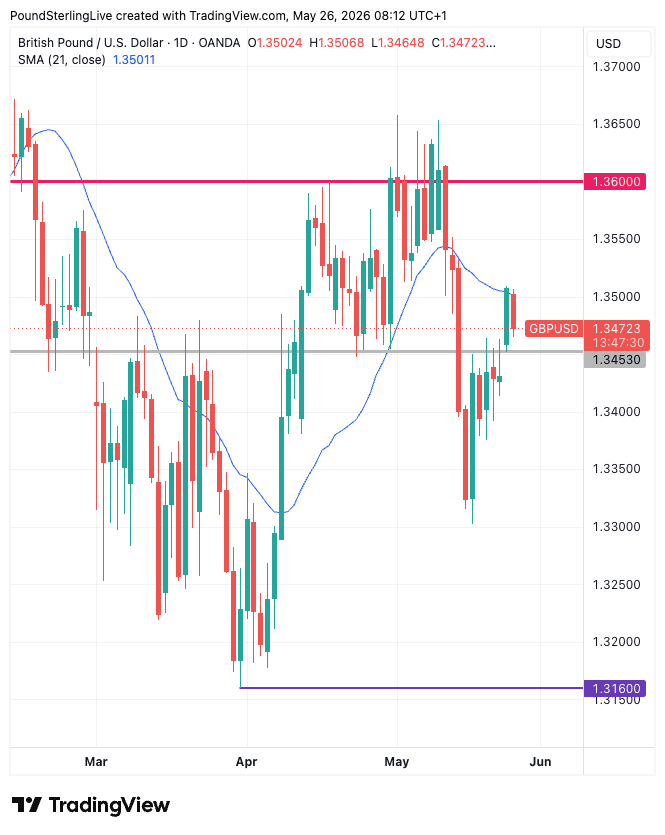
Turning to levels, the 21-day moving average is now at 1.35 and looks to be offering up some technical resistance. That would be confirmed by a negative daily close this Tuesday.
If so, then pound-dollar will be pressured onto 1.3450 which is the approximate location of a pivot line that runs back to this time last year. What does that mean? A pivot is where either support or resistance can be found, depending on how the exchange rate approaches the line.
In this instance, a fall to the pivot means we're likely to encounter support. However, a break below it and the line then turns to resistance.
So, while above 1.3450, GBP/USD is supported and should retain a constructive setup.
Turning to the drivers of recent GBP/USD resilience, a fall in UK bond yields is worth keeping an eye on.
In fact, UK bond yields fell faster than their U.S. equivalents last week, indicating solid demand for the underlying bonds.
Usually, when that happens, the pound-dollar would be expected to fall. However, UK bonds have incorporated a risk premium over recent years owing to nervousness over Britain's stubborn inflation and seemingly perennial political uncertainty.
Last week saw some of that premium fade as Andy Burnham - challenger and likely replacement of Prime Minister Keir Starmer - confirmed he would obey the UK's fiscal rules that demand politicians keep a lid on borrowing.
The situation was further helped by the continued slide in global oil prices, which were arguably more of a concern for a country like Britain which went into the Middle East energy shock with a headline inflation rate closer to 3.0% than 2.0%.
"The energy shock has been the key driver behind the UK gilt sell-off in the past few months. Against this backdrop, voter discontent in recent local elections has increased doubts regarding Starmer’s leadership, with gilts remaining exposed to political uncertainty," says Francesco Maria Di Bella, FI Strategist at UniCredit in Milan.
The fading UK-linked premium in bond markets we've seen of late is proving supportive of pound sterling in the current setup.
It means that further progress in Iran-U.S. negotiations should be considered supportive of GBP/USD upside.
Turning to the calendar, there are no top-tier releases due from the UK this week. In the U.S., we'll be watching consumer confidence numbers later on Tuesday and the release of April PCE figures on Thursday, where we should get further evidence of building inflationary pressures.
A core PCE rate of around 3.3% y/y will reinforce that there's limited scope for the U.S. Federal Reserve to lower interest rates this year.
That's supportive of the dollar and could frustrate the GBP/USD rate's recent recovery.