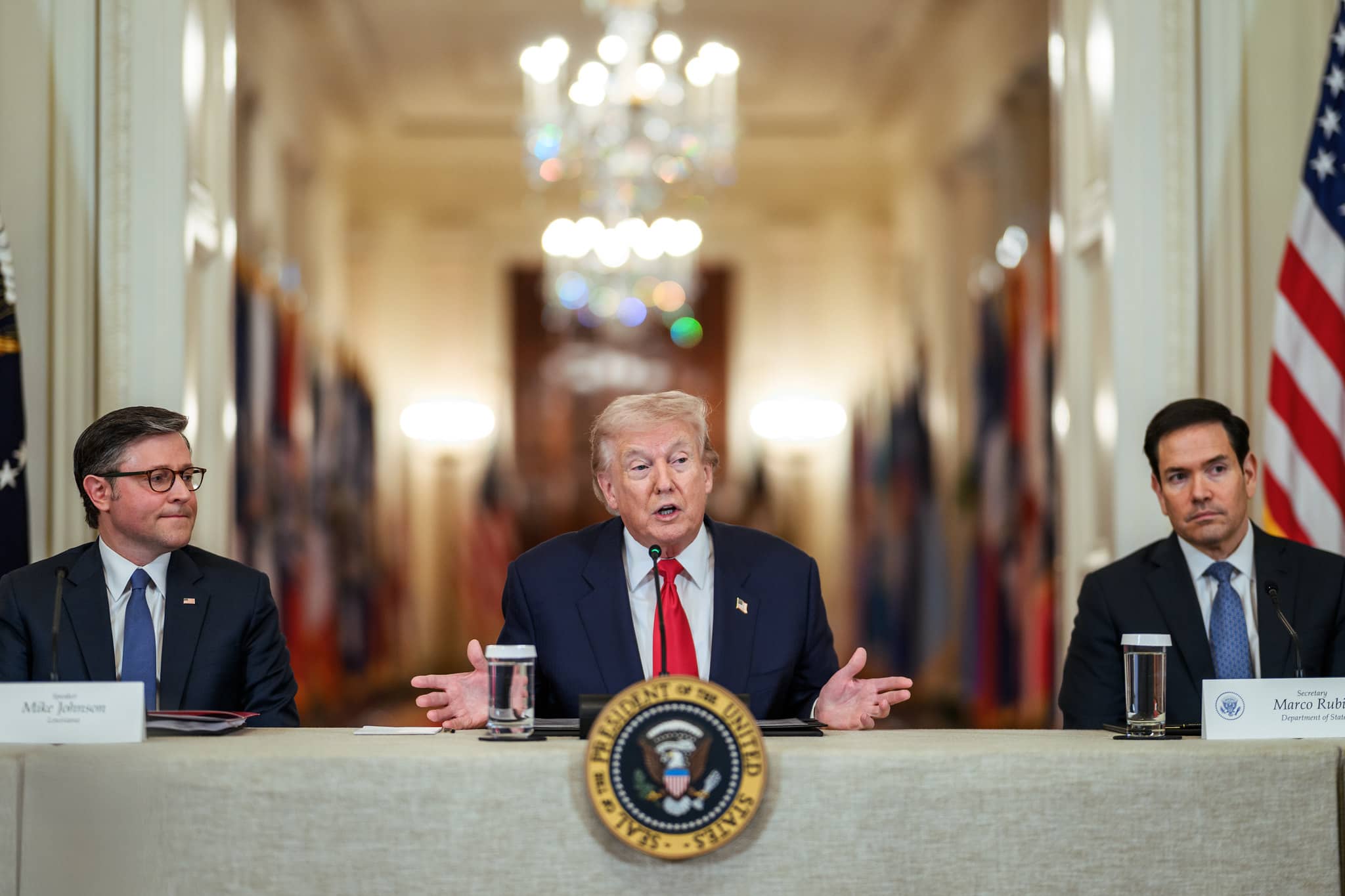
File image. Official White House Photo by Daniel Torok.
The British pound advanced against the dollar and euro Tuesday amidst signs the U.S. President was looking to end his war with Iran.
Donald Trump said in a press conference in Florida overnight that the war with Iran would resolve "very soon" and that U.S. military objectives are "pretty well complete."
With an eye on a damaging surge in oil and gas prices, Trump also indicated the U.S. Navy would escort shipping through the Strait of Hormuz, the pinchpoint between Iran and the Saudi peninsula that Iran has effectively shuttered.
Brent crude prices have fallen back to $90 / barrel, down from Monday's peak at $113, a signal that the fear premium of recent days is starting to fade.
The dollar is softer as a result, allowing GBP/USD to rally to 1.3447 on Tuesday and build on the gains of the previous two trading sessions. "The US dollar retreated as a function of calming global oil markets and bounce in risk sentiment on hopes that the war in Iran will end soon and oil and gas flows through the Persian/Arabian Gulf will resume quickly," says a strategy note from Saxo Bank.
The pound is also up against the euro, which is surprising as we thought easing tensions would allow some of the recent gains to unwind. Instead, the pair trades at 1.1560 on Tuesday, and if the advance is held, will mark a fourth consecutive daily gain.
Traders will continue to fixate on developments in the Middle East, where the conflict will likely continue as Trump says it's too soon to expect an end to the campaign this week.
He warned that the bombing of Iran would happen "at a much, much harder level" if Iran disrupted oil supplies. Today, Israel and the U.S. continued airstrikes.
Iran says it's not seeking a truce and has continued its attacks on neighbours: the UAE says it is currently responding to a missile threat and Qatar says it intercepted a missile targeting the "State of Qatar." We've also seen reports of an explosion of an oil tanker near Abu Dhabi
In his press conference, Trump said "we're looking to keep the oil prices down... they went artificially up because of this excursion."
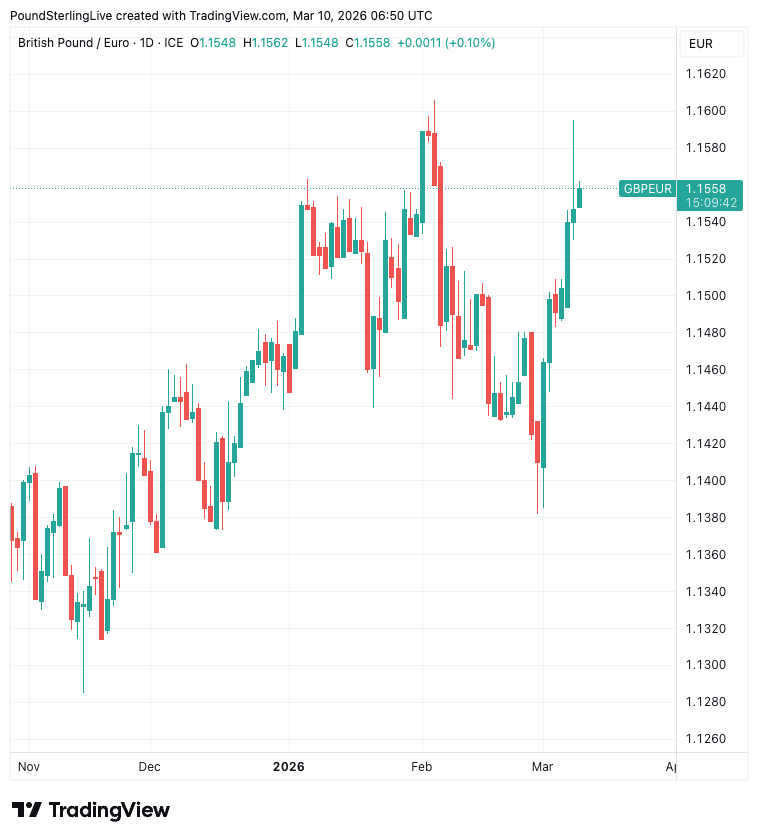
Above: GBP/EUR extends its rally.
"He also indicated that oil-related sanctions, likely involving Russia, may be waived, while the U.S. Navy would escort tankers through the Strait of Hormuz," says Saxo Bank in a daily strategy note.
Becalmed oil dynamics should put a cap on the dollar and allow bond markets to settle.
The rise in oil and gas prices will nevertheless likely raise inflation rates around the world, which has caused markets to factor in interest rate hikes at the major central banks.
The pound has benefited from a particularly marked shift in expectations for the Bank of England: where two weeks ago there were two rate cuts priced into the 2026 outlook, there's now a hike.
That's close on 75 basis points worth of a 'hawkish' shift, which compares to a 25bp shift in European Central Bank expectations, explaining why GBP/EUR has rallied during the conflict.
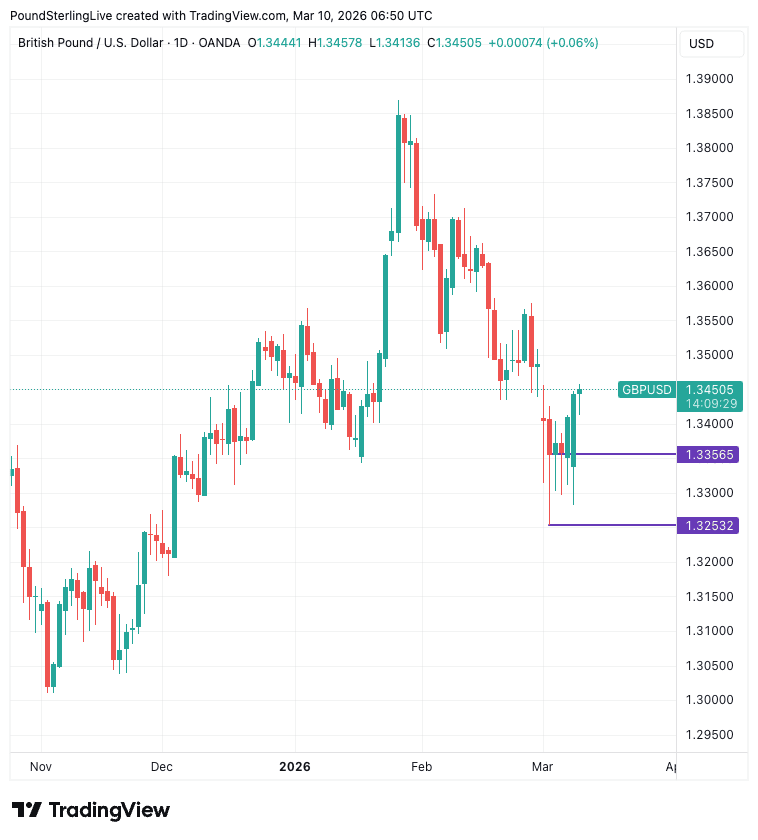
Above: The GBP/USD has carved out a decent technical floor.
"Currently money markets see a rate hike more likely as the next BoE move. Interest rates currently in the first place should be seen as risk premia. Often this isn't a huge support for the currency. Still, it apparently provides some (relative) protection for sterling currently," says a note from KBC Bank released Monday.
The prospect of a Middle East truce can, however, signal an end to the hawkish repricing in central bank expectations.
Keen to get a grip on oil prices, Trump told CBS he is looking to get oil and gas out of the Middle East by protecting the Hormuz Strait, and he is "thinking about taking it over."
Oil prices surged on Monday after Trump said that the rise in oil prices was a price worth paying in order to achieve the end result of removing the Iranian regime. It signalled a potential long-running war, as did Iran's weekend appointment of hard-liner Mojtaba Khamenei, son of the slain former supreme leader.
"The appointment of Mojtaba Khamenei as Iran's new supreme leader significantly complicates the strategic outlook, increasing the probability of a more intense, and possibly prolonged, conflict," says Edoardo Campanella, Director and Chief Editor of The Investment Institute at UniCredit Bank.
A weakened Iran is not capitulating and the conflict continues; energy prices and volatility will remain elevated short-term, but at least an offramp is finally visible.