The relief rally in Pound Sterling has reversed and increases the chance that the dominant downtrend of 2016 re-establishes over coming days.
- Sterling in fresh decline on Chancellor Hammond quantitative easing comments
- Carney arrests declines, but downside momentum growing
- Pound to Euro exchange rate today: 1.1168, 24-hour best rate: 1.1255, low: 1.1134
- Euro to Pound Sterling exchange rate today: 0.8954, 24-hour best rate: day's best rate: 0.8965, low: 0.8882
- Pound to Dollar exchange rate today: 1.2184, 24-hour best rate: 1.2244, low: 1.2081
The UK currency is under pressure as we head through the mid-week session.
The Pound suffered a sharp selloff after Chancellor Hammond said he will not stand in the way of future quantitative easing at the Bank of England.
The comments were delivered to Parliament mid-day on Tuesday and triggered a run lower in Sterling.
The comments put to bed concerns the Government may stand in the way of future monetary moves at the Bank - which would include quantitative easing.
Quantitative easing is a negative for the currency as it increases the supply of money into the economy, thereby pushing down bond yields and diluting the Pound's unit value.
Hammond also warned that the UK may not get an ideal Brexit deal as the EU would likely adopt a vindictive stance against the country as punishment for leaving the bloc.
The slip in Sterling has turned momentum negative once more bringing to an end the short-term rebound we have seen in the currency of late.
"Sterling is vulnerable to a sharp spike slower even if relative rates and the scale of the economic hit suggest the bulk of the Brexit have been made," says Kit Juckes, an analyst with Societe Generale in London.
Latest Pound/Euro Exchange Rates
  | Live: 1.1657▲ 0%12 Month Best:1.1828 |
*Your Bank's Retail Rate
| 1.1261 - 1.1307 |
**Independent Specialist | 1.1494 - 1.154 Find out why this is a better rate |
* Bank rates according to latest IMTI data.
** RationalFX dealing desk quotation.
Carney Provides Scant Relief, Pound Could fall Below 1.20
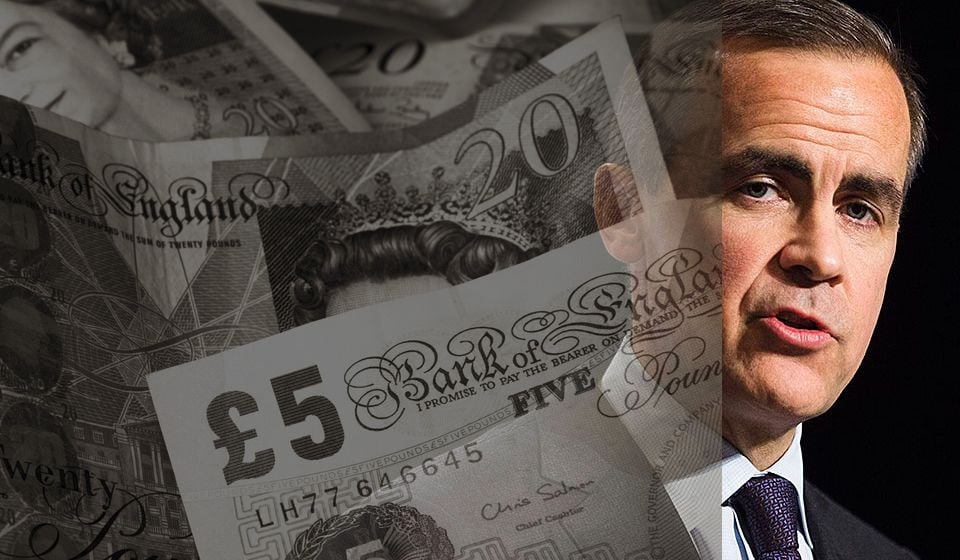
Sterling attempted a tepid relief-rally after Bank of England Governor Mark Carney gave a relatively assured performance before members of the House of Lords on Tuesday afternoon.
This was the second appearance before lawmakers by Carney since the August rate cut and the Governor reiterated he was not in favour of pursuing negative interest rates in the UK, as is the case in the Eurozone and Japan.
Like quantitative easing, falling interest rates tend to weaken the exchange rate and the observation that cuts will be limited aided Sterling.
Carney warned he would accomodate a rise in inflation above the 2% target over the next 2-3 years as this inflation was largely a product of the depreciation of Sterling.
However, he also said there are limits to the inflation overshoot the Bank would accept - this is something new from the Governor.
This suggests interest rate cuts and quantitative easing face rising hurdles.
The Governor also confirmed his main concern for now is ensuring economic growth is secured in the face of Brexit-inspired uncertainty.
Therefore, further quantitative easing and interest rate cuts could be entertained as early as November but markets are increasingly of the opinion that further action in 2016 is unlikely.
"GBP/USD enjoyed a limited bounce off 1.2080 following comments from BoE Governor Carney that it may not look a spike in inflation. We had already removed a November rate cut from our BoE profile, but still see one cut in 1Q17 when we forecast the UK economy heading into recession," says Chris Turner at ING.
Carney also told lawmakers that market perceptions of the relationship between Europe and the UK is behind Sterling’s decline, and not Bank of England policy.
Carney cited the relatively stable response by Sterling to the Bank’s rate cut in August and the sharp drop after the Conservative Party conference as proof the currency is now more fixated on fundamental drivers.
The big move in currency has largely been driven by a, “market perception of a fundamental factor, not a shift in monetary policy.”
Rate divergence between US and UK rates has some part to play, but not nearly as much as the fundamentals surrounding Brexit.
"A better 3Q16 UK GDP release tomorrow could lift GBP/USD into the 1.2250/2350 range, but we imagine sellers would be queuing up there. Sub 1.20 looks possible on Friday," says ING's Turner.