The British pound has fallen on the back of events in the United States.

Currency markets have ignored strong domestic data and sold the British pound in response to global economic developments.
The pound / euro conversion will start the new week on the back foot thanks to weakness in the US dollar. Why does this matter for the pound?
The US dollar fell sharply on Friday after it was shown US Non-Farm Payroll data read at 142K, markets had expectations for a reading of 203K; this is a big miss.
"Every aspect of the September Payrolls report was disappointing: the US economy added 142k jobs (consensus 201k), the payrolls of the previous two months were downwardly revised by 59k, average hourly earnings fell short of expectations and the unemployment rate only stabilized because of the lower participation rate," notes Piet Lammens, an analyst with KBC Markets.
What this tells markets is that the US Federal Reserve has a strong case to push back its first interest rate rise in 7 years.
It is expectations for higher rates that has boosted the dollar exchange rate complex.
The same goes for the British pound - the GBP strengthens when expectations for a Bank of England interest rate are brought forward.
Latest Pound/Euro Exchange Rates
  | Live: 1.1661▲ + 0.01%12 Month Best:1.1828 |
*Your Bank's Retail Rate
| 1.1265 - 1.1311 |
**Independent Specialist | 1.1498 - 1.1544 Find out why this is a better rate |
* Bank rates according to latest IMTI data.
** RationalFX dealing desk quotation.
The problem for those hoping for a stronger pound sterling is that the Bank of England will only move on rates after the US Fed has moved.
So when markets see the Fed pushing back expectations they push back Bank of England expectations, and so the pound falls.
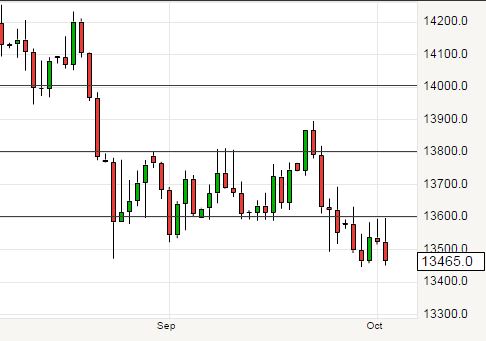
Risks are particularly skewed towards the euro; the pound to euro conversion is seen trading sharply lower at 1.3460 - its lowest level since May.
Importantly the exchange rate has broken lower and is now below its August-September range which spells a potentially tough month ahead for those hoping on higher rates.
The prospect of an interest rate rise at the US Fed now appears to have subsided according to Dennis de Jong, managing director at UFX.com:
“The US economy seems fairly resilient but, with employment data particularly disappointing for a second month running, enthusiasm for a rate hike in the short term will surely be tempered.
“The Federal Reserve don’t want to sit on their hands for too much longer, yet with significant global issues continuing to affect the US economy, now would not be the wisest time to press the button.
“We’re surely not too far away from a first hike in seven years, although both US and global economic data will have to improve if it’s to happen before the end of the year.