Image: Dave Collier, sourced: Flickr, licensing: CC 2.0.
News of a surge in growth should support the British pound. Here's why the news isn't shifting the dial for currency markets.
The British pound is slightly softer against the euro and dollar, despite the ONS saying today the economy grew a handy 0.6% q/q in the first quarter.
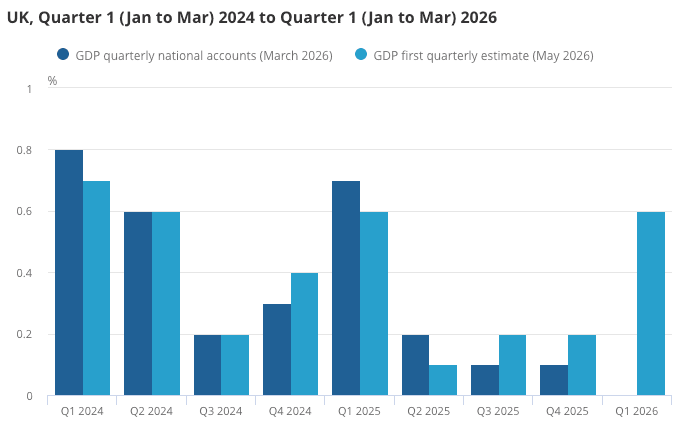
On the face of it, 0.6% q/q represents a remarkable turnaround for an economy that was effectively flat in the second half of 2025; it hints a corner has been turned. That's unambiguously good by any metric. But analysts at ING Bank, say "you should be sceptical" of these growth data.
"Ever since 2022, the UK economy has grown much faster in the first quarter than in the rest of the year," says James Smith, Developed Markets Economist at ING. "2026 looks like it'll be no different."
If currency markets discount future growth outperformance, we would expect sterling to be higher on the back of today's numbers. But GBP/EUR showed little emotion to the data, trading near 1.1530 and GBP/USD held fort near 1.3520.
This is confirmation that the market is sceptical.
So what's going on? "We just aren't convinced by the UK's first quarter growth performance," says ING's Smith.
He explains why:
1) The ONS methodology draws questions: "something’s not quite right with the way the data is being seasonally-adjusted."
2) The A1 spike looks to be a legacy of "higher inflation and the timing of annual price hikes."
In short, official UK GDP data has become seasonal.
What comes next?
Economists aren't dismissing these data outright, saying the economy started the year on a decent footing, even if there are question marks over the data.
But, looking ahead, a slowdown is highly likely, says Smith:
"A strong GDP reading for March sets a decent base for the second quarter; growth is likely to come in around 0.2-0.3%, before likely turning negative in the third quarter. Real disposable incomes are likely to fall, with inflation headed slightly above 4% this summer and wage growth stuck closer to 3%, and unemployment likely to increase further."
For the pound, it's the deceleration that's more relevant than anything contained in today's backwards-looking data.
Consensus projections for the next four quarters, compiled from leading investment banks.
Access the full forecast →