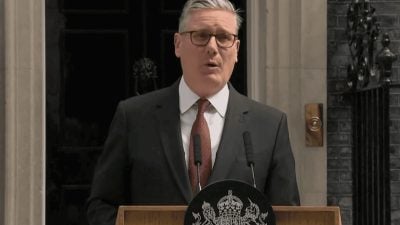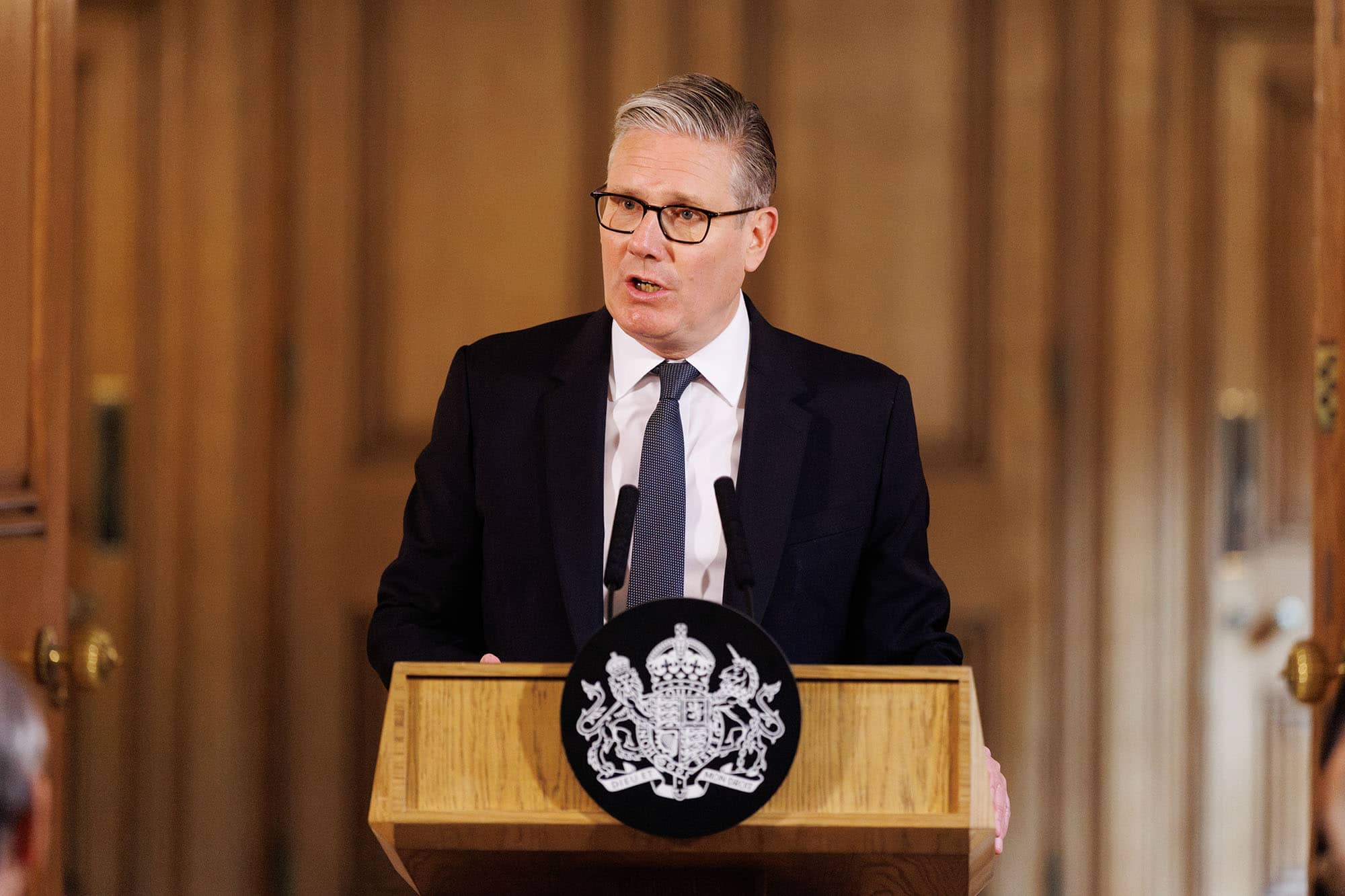
Picture by Simon Dawson / No 10 Downing Street.
Pound sterling is up on the day against euro and dollar as elections pose a conundrum for investors.
The pound and bond markets won't like a pivot leftwards by the Labour Party in response to local election results, but they might welcome the fact that right-leaning parties are proving dominant.
Results so far show significant gains for Reform UK, while Labour and the Conservatives are recording notable losses.
Key for markets in the near-term will be how the Parliamentary Labour Party (PLP) respond to the results and whether it has the stomach to remove the Prime Minister. Polymarket shows the likelihood of Keir Starmer relinquishing power by the end of June has risen to 50% and 70% by year-end.
So far, currency and bond markets are taking the developments relatively well: "A clearer picture of the damage wrought on the government will thus be visible later, and the trickle of results ought to help the Gilt market digest that information more efficiently over the Friday session," says Sam Hill, Head of Market Insights at Lloyds Bank.
The pound-to-euro rate trades at 1.1568, putting it higher on the day, while the pound-to-dollar pair recovers to 1.3587, up 0.25%.
The benign market reaction suggests traders think it's too early to respond to the political anxieties posed by the vote. Nevertheless, analysts at ING warn the Pound is "vulnerable" to local election fallout.
"Some Labour figures are already out this morning calling on Prime Minister Starmer to go. Investors will be watching the cabinet closely for signs of pressure or even resignations, as markets weigh up the possibility of an increase in borrowing later this year under different leadership scenarios," says ING's Francesco Pesole.
The concern for markets is that any replacement of Starmer and his finance chief, Rachel Reeves, will be less committed to fiscal discipline, risking an unsustainable rise in debt.
2026 local elections: net seat changes by party
Key developments
- Sir Keir Starmer says he is "not going to walk away" after early English council results showed Reform picking up seats in former Labour heartlands.
- Reform's Nigel Farage says Labour is being "wiped out"; Kemi Badenoch insists there are "signs of renewal" for the Conservatives; Lib Dem leader Sir Ed Davey says his party is "feeling very bullish".
- So far, 46 councils have declared results in England, with 90 still to go.
Figures reflect the BBC News scoreboard's most recent net change tally; counting continues, with Essex, Norfolk and Suffolk county results due from late Friday afternoon. This panel will be updated as the BBC's figures advance.
For now, global drivers and central bank expectations remain firmly in charge of near-term action across UK gilt and currency markets, with eyes on the war in the Middle East and oil prices.
Hopes for a peace deal have sent oil prices lower; a welcome development for the British economy and the pound, as it eases stagflationary risks.
Expect the near-term focus for sterling to be firmly fixed on domestic developments. Pesole says that no political premium was priced into the pound ahead of these elections, leaving risks to the downside for GBP/EUR if that were to change.
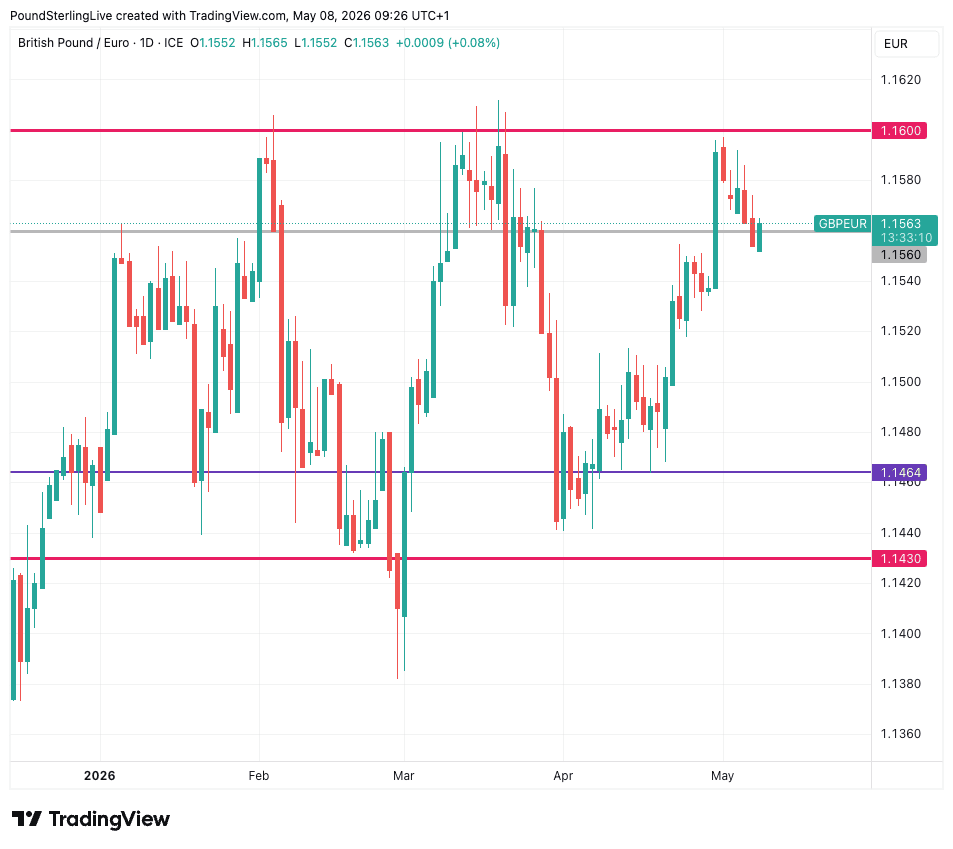
Although there are concerns of a leftward shift in government policies, economists say the market could already looking forward to a post-Labour future.
Simon French, economist at Panmure Liberum, says the relatively steady market reaction suggests a conflicting political outlook that's not all bad.
"One of the challenges for UK Gilt investors is how to interpret what seems to be a strong Reform UK result, but also a likely reaction by the PLP urging an economic move to the left," he explains.
"Do you price the probable short term impulse of greater issuance / inflation - or the longer term signal that a centre-right vote share of ~45% provides? Such a mixed narrative suggests UK markets won’t move decisively over the next few trading days."
Kallum Pickering, economist at Peel Hunt, echoes this sentiment. He says the risk of Starmer being ousted and a pivot left by Labour comes up against a clear structural shift towards right-leaning parties.
He explains that Reform are in favour of deregulation and a smaller state and "that's a tricky calculation for gilt investors."
Consensus projections for the next four quarters, compiled from leading investment banks.
Access the full forecast →