Image © Adobe Images
The euro’s recovery against the dollar is running into a growing disconnect between what markets expect central banks to do and the underlying economic backdrop.
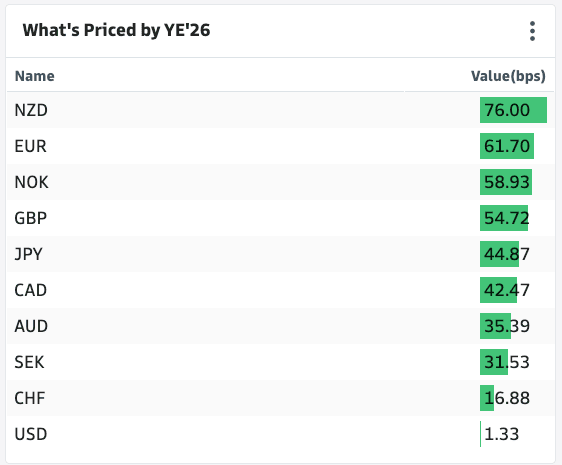
Ongoing EUR/USD resilience rests heavily on the assumption that the policy gap between the ECB and Federal Reserve will remain wide enough to favour the euro, thanks to a market that sees three ECB rate hikes this year and none from the Federal Reserve.
That would compress the interest rate differential between the U.S. and Eurozone in favour of the euro. "The risks are to the downside for the USD if Global growth manages to hold up or European central banks hike more than what is priced," says a note from investment bank Mizuho.
But what if the market has it all wrong in its assumptions about what the ECB and Fed will do?
"Central bank pricing looks inconsistent on a relative basis. Markets are pricing the Fed to stay on hold over the next 12 months, but also think the ECB might even hike 3 times by March. That’s despite the US having stronger growth and higher core inflation," says Henry Allen, a strategist at Deutsche Bank.
Allen says this ECB vs. Fed policy divergence is one of the "biggest market dislocations right now."
"It’s difficult to imagine a world where the ECB hikes 3 times by March, but the Fed are staying on hold," he adds.
If the ECB doesn't hike as much as the market expects, and the Fed chooses to raise rates again, then a key argument for euro-dollar rising to 1.20 in the coming months falls away.
The assumption that the Fed can afford to sit still will be challenged by resilient economic growth and rising inflation. If growth continues to surprise to the upside, the market will steadily start betting on rate hikes again.
"Relative resilience of US growth and activity suggests that expectations for a sustained and material dollar decline are premature," says George Vessey, an analyst at Convera.
For now, the dollar is retreating as headlines concerning the Iran war dominate sentiment. It has fallen against the euro and other G10 currencies over recent sessions as markets welcome signs of progress towards a lasting Middle East peace deal that would unblock the Strait of Hormuz.
"Fading geopolitical risk and a sharp pullback in oil are removing key supports for the USD, at least tactically, though headline risk remains high until an Iranian response is confirmed," says Vessey.
Consensus projections for the next four quarters, compiled from leading investment banks.
Access the full forecast →
However, as Iran fades in prominence, fundamentals will assume a leading role in determining FX action. U.S. GDP nowcasting suggests annualised growth now sits at 1.24%, significantly down from 4-5% pre-war.
However, that looks more like a temporary setback rather than the start of anything new, according to analysis from Mizuho, the investment bank.
Economists at the bank say the U.S. economy should rebound thanks to rising new orders in manufacturing surveys, supportive financial conditions, increased willingness to lend from US bank surveys and an insulated energy-independent US economy from the Middle East supply shock.
For the dollar, that's supportive.

Concierge Money Transfers
For high-value transfers, you need high-value service: dedicated account management, on-point pricing, insight into market conditions and trends, help with structuring your payment, and execution support at key moments.
Learn More →