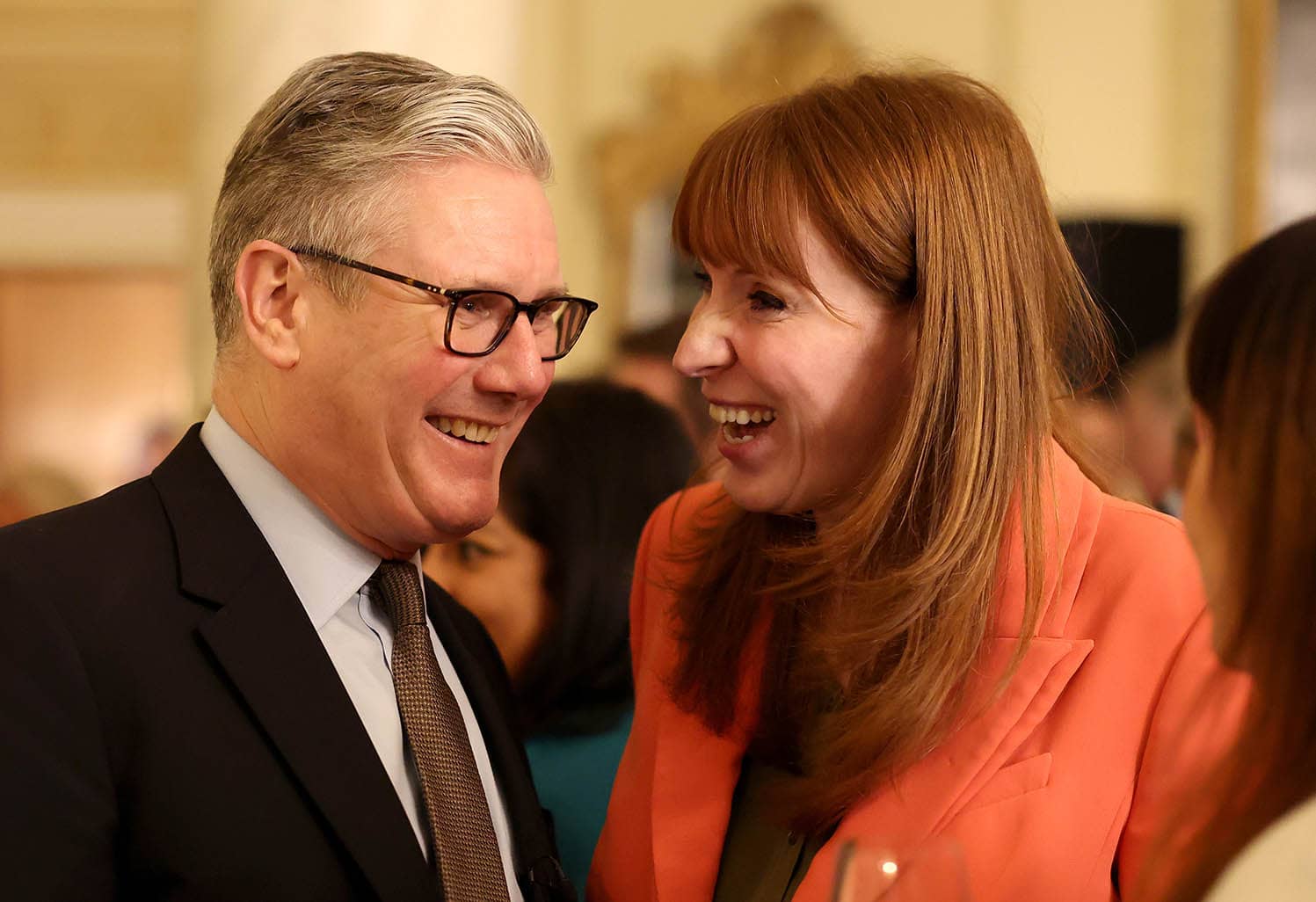
File image of Starmer and Rayner. Picture by Lauren Hurley / No 10 Downing Street.
The British pound isn't panicking over political winds of change in the UK, say analysts.
As the British public goes to the polls to reject two-party politics, there's little sign of concern in currency markets: the pound-euro exchange rate is steady just below range highs at 1.16, and the pound-dollar is brooding at 1.36.
There has been intense speculation over recent days that a recent outsized surge in British bond yields - which reflect government borrowing costs - was a sign of concerns that today's local elections would deliver results that would destabilise the government.
But with pound sterling near multi-week highs, the verdict from investors is that recent unsavoury moves in bond markets are not yet extreme enough to trigger a selloff in the currency markets. This week's price action in bonds instead suggests that oil prices and broader inflation expectations are the main drivers of the moves.
"In broader financial markets, ten- and thirty-year gilt yields are rapidly unwinding yesterday's gains, suggesting - to us, at least - that local elections are playing a relatively minor role," says Valentin Marinov, head of FX analysis at Crédit Agricole.
The Labour Party is expected to lose about 1000 local government seats and come in third in Welsh and Scottish government elections.
Recent weeks have seen rumours swirl that Prime Minister Keir Starmer would be challenged, most likely by a left-wing rival.
And that was a worry for markets, with some analysts and financial commentators saying this was driving a selloff in government bonds, driving underlying yields higher.
For the pound, there's been widespread analysis warning that the elections will be destabilising.
However, a trader from the FX dealing frontline at JP Morgan says, "Starmer’s coffee will be tasting much better this morning - and not just because he is an Arsenal fan - Rayner is having a very poor press round with the Times highlighting a crucial lack of support amongst the Unions."
The point he makes is there's no credible momentum building against Starmer, and it's hard to see any building soon, even if Labour is wiped out on Thursday.
"Labour is expected to take a solid drubbing-raising the risk of a tilt toward a more profligate left under new leadership," says Marinov.
Consensus projections for the next four quarters, compiled from leading investment banks.
Access the full forecast →
But Rayner will struggle to topple the PM, and another hopeful, Andy Burnham, isn't even a member of Parliament. The JP Morgan trader says this grants Starmer a stay of execution, "and in a carry-loving world, it is hard to be short GBP right now."
"Carry loving" refers to the advantage the UK's elevated yields - which are the interest rates paid to investors in UK bond debt - bestow on the pound.
International capital chases higher yields when volatility is low and confidence is high. So, the recent rise in bond yields is actually helping the pound.
"We think the risk of a major volatility shock around the elections looks overstated; sterling is likely to continue tracking global dynamics more closely than domestic ones," says Marinov.
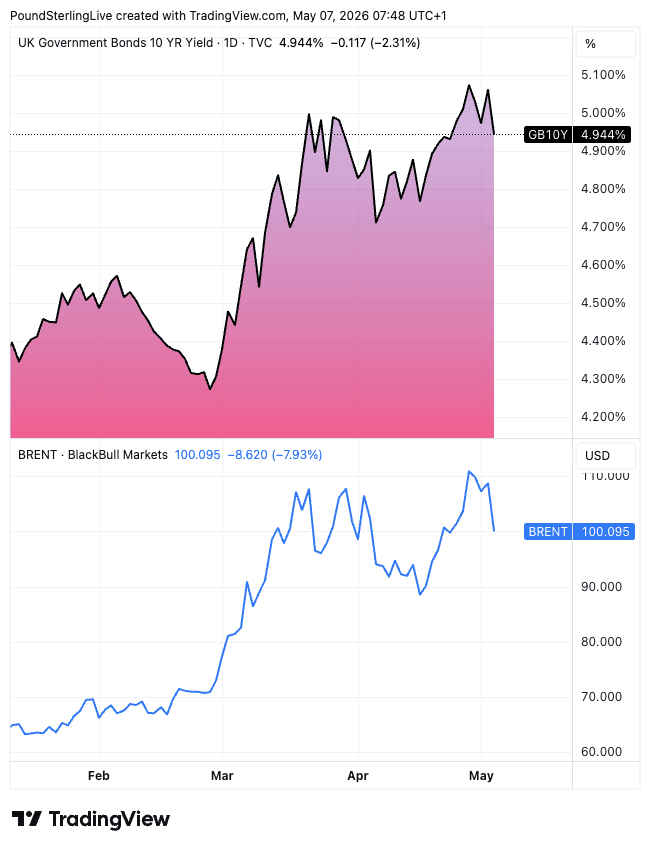
Above: The rise in UK ten-year yields are linked to rising oil prices (lower panel) more than election risks.
For sure, inflation expectations seem to have been behind recent bond market moves, and not politics. The UK ten-year yield has been faithfully tracking oil prices since the start of the Middle East war, and news of a potential peace deal between the U.S. and Iran has pushed oil lower, which has also weighed on UK bond yields.
"For sterling, global forces have dominated price action, with concerns around Prime Minister Starmer largely sidelined by geopolitics," says George Vessey, an analyst at Convera.
The argument in some circles is that the UK doesn't have a debt problem so much as an inflation problem, meaning higher oil prices are particularly acute for Britain's economy. As oil recedes, so too does the 'inflation premium'.
Therefore, even if Starmer is routed today, the pound won't be.

Concierge Money Transfers
For high-value transfers, you need high-value service: dedicated account management, on-point pricing, insight into market conditions and trends, help with structuring your payment, and execution support at key moments.
Learn More →