The pound to euro exchange rate (GBPEUR) has struggled in the run-up to the weekend as buying interest ran dry at 1.38 once more.
The pound traded higher against the euro over the course of preceeding days with the support zone at 1.36 proving it is the key number to watch from a technical perspective:
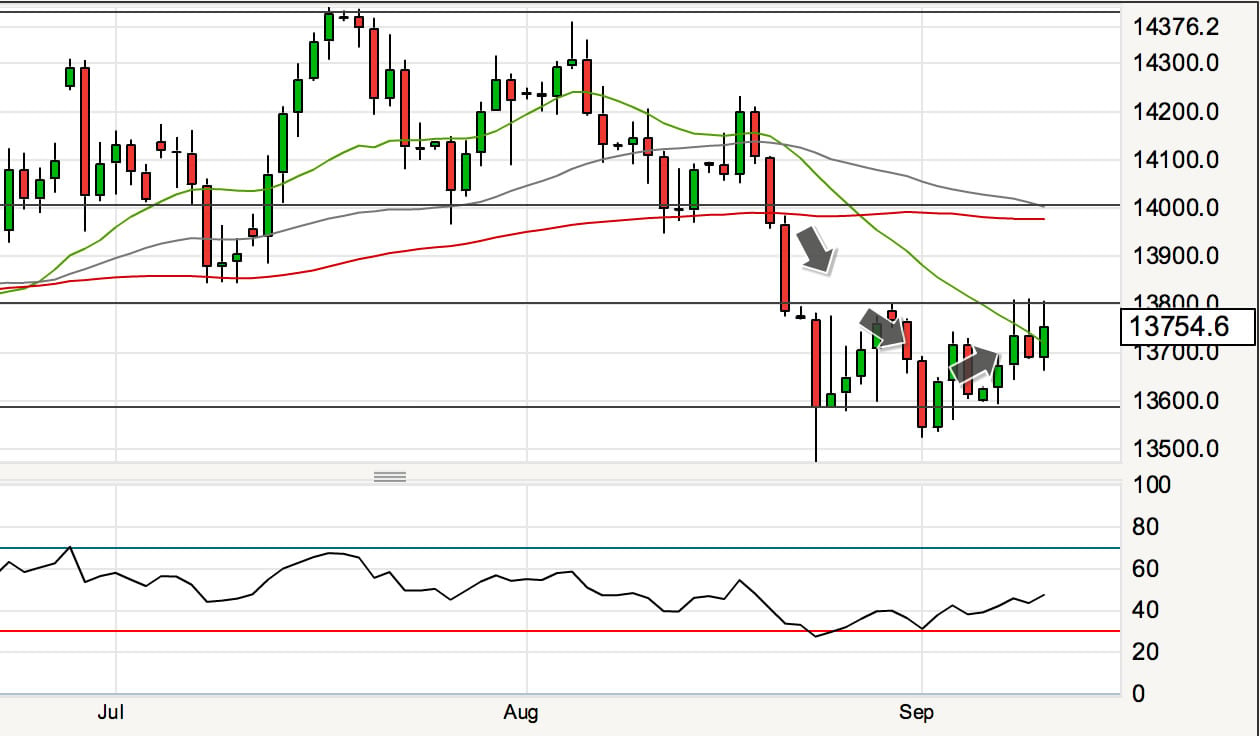
As we can see for GBP/EUR the 1.38 point now forms resistance to further buying interest.
The above graph was plotted by Pound Sterling Live at the end of August as shown here. We are rather confident that the way forward from here is above the 1.38 threshold despite the present inability to break 1.38 and a test of 1.44 is on the cards this Autumn.
That said, a test of 1.36 cannot be ruled out as further consolidation could be possible until such a time that the Bank of England (BoE) is shown to be more confident in its intent on raising interest rates.
Indeed, heading into the weekend we see the GBP/EUR pair has fallen below the 20 day moving average at 1.3690 - a sign confirming near-term momentum has swung in favour of the euro.
The Bank of England Must Raise Rates
Global FX remains a slave to two factors - interest rate policy and Chinese economics data.
The GBP and USD are both favoured over their rivals by a host of analysts on the observation that the BoE and US Fed are to begin raising rates soon whereas other major banks are looking to keep rates flat, or even make further cuts.
Latest Pound/Euro Exchange Rates
  | Live: 1.1872▲ + 0.05%12 Month Best:1.1913 |
*Your Bank's Retail Rate
| 1.1468 - 1.1516 |
**Independent Specialist | 1.1706 - 1.1753 Find out why this is a better rate |
* Bank rates according to latest IMTI data.
** RationalFX dealing desk quotation.
The September meeting at the Bank of England (BoE) was never supposed to cause waves in the FX markets; however some GBP bulls will likely be disappointed that only one member of the committee opted to vote for a rate rise.
The key remains what happens in the US - only once the US Fed has raised rates will the BoE follow.
The Fed meets mid-month and this will be a key moment for the British pound.
“It would be surprising if the Bank of England did not follow the Fed’s lead on the timing of the first rate rise. If the US makes the first move next week, the Bank of England must be prepared to act as soon as it can,” says James Sproule, chief economist at the Institute of Directors.
However, those hoping for a stronger pound to euro exchange rate should be aware that there is a growing argument for the BoE leaving rates unchanged for many months, regardless of what the US Fed does in September.
Nick Dixon, investment director at Aegon UK says:
"With muted consumer spending and earnings growth, coupled with low oil prices and broader inflationary pressures, there is a credible case for the Bank to keep rates lower for longer, or even cut them to provide relief to consumers.
"With the strong pound also dragging down exports, we are unlikely to see any upward revision of interest rates until well into 2016."
The Time to Raise Interest Rates is Now
The Institute of Directors has been vocal over recent months in the importance of slow buy steady interest rate rises for business certainty.
James Sproule comments:
"This far into the recovery, it is worrying that interest rates are still at an extraordinary low. The ability to cut rates and stimulate the economy in times of instability is crucial, but with rates at their historic level of 0.5 per cent, this is almost impossible."
"All eyes are now on next week’s meeting of the Federal Reserve. Given the strength of the domestic economy, it is perhaps surprising that interest rates have not yet started to normalise in the United States either."
Looking at the markets, the euro steadied with wavering risk sentiment keeping both its upside and downside in check. The euro tends to drift higher when the market mood darkens and stocks fall. A skittish market backdrop boosts the euro as it tends to spark an evacuation out of risky plays and back into lower yielding ones like the euro, home to a rock-bottom rate a speck above zero.
TD Securities: Interest Rate Only Due in May 2016
Chipping into the debate on when the first interest rate rise will fall is TD Securities who offer what seems an increasingly plausible date for May 2016.
James Rossiter, Senior Global Strategist with TD Securities says
"While the MPC was perhaps a bit less concerned about global market volatility than expected, they did acknowledge the important downside risks to global growth prospects. We therefore remain comfortable with our call for the first first BoE rate hike to come in May 2016.
"With inflation only just expected to hit 1% in January’s CPI print (released in February), we think the MPC would prefer to hold off until once the Governor has finished his string of letter-writing."
Euro on the Front-Foot
Heading into the weekend the euro steadied around one-week highs against the dollar and was on track for a weekly advance, buoyed by dollar-restraining uncertainty over U.S. interest rates, and constructive news from the bloc that showed upgraded growth during the second quarter.
The euro has now erased its ECB-inspired losses of last week, though a daunting week ahead looms when the spotlight will shine on the rate hike leaning Fed.