The pound has seen momentum turn positive once more, we look at the numbers that matter in the mid-week session.
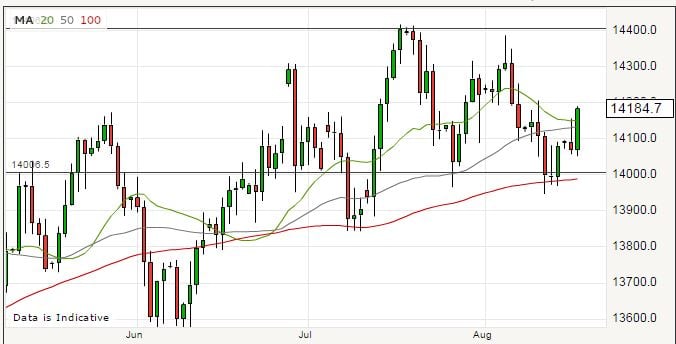
The pound to euro conversion (GBPEUR) has found upside momentum once more following the declines witnessed in the first half of August.
Following the release of inflation data on Tuesday the 18th August the GBP/EUR breached the 1.41 level and in doing so moved above its 20 day moving average.
The 20 day MA rests at 1.4150 and now forms support to any pullback. In short, we would like to see the price remain above this level for sterling to keep the short-term initiate.
Resistance is seen forming at 1.42 - this is the pyschological level at which it appears market traders are happy to take profit on the recent rally. A break above here would likely entice more buyers and open the door to longer-term resistance at 1.44.
The GBP/EUR is already above the 50 and 100 day moving averages confirming medium-term and long-term gains are preferred.
Latest Pound/Euro Exchange Rates
  | Live: 1.166▲ 0%12 Month Best:1.1828 |
*Your Bank's Retail Rate
| 1.1264 - 1.131 |
**Independent Specialist | 1.1497 - 1.1543 Find out why this is a better rate |
* Bank rates according to latest IMTI data.
** RationalFX dealing desk quotation.
Markets: UK Inflation Higher
The pound sterling was propelled higher on Tuesday the 18th following news that UK inflation has bottomed and is climbing again.
A reading of 0.1% for July confirms the era of deflation may be over. Certainly, the Bank of England believes we will see UK inflation back at 2% in the medium-term (2016).
On this basis currency markets are forecasting an interest rate rise around the turn of the year.
The promise of rising UK interest rates and flat Eurozone rates will keep upward momentum on the GBP/EUR exchange rate alive.
Core Inflation Pushes Pound Sterling Higher
While the headlien inflation rate read at 0.1% it was the core inflation reading (which excludes energy, food, alcohol and tobacco) that got markets moving. The figure jumped 0.3pp to 1.2% yoy it was reported by the ONS.
Core inflation now lies above its 1999-2007 average of 1.1% when the Bank Rate averaged 4.8%.
“In the last few months MPC members have attached particular importance to measures of core inflation as they look-through the temporary impact of the fall in energy and food prices,” says Daniel Vernazza, Lead UK Economist with UniCredit Research.
In July Bank of England Governor Carney listed a rise in core inflation as one of three pre-conditions for rate hikes.
UniCredit expect the MPC will increase interest rates in February next year – around three months earlier than the market expects.
Meanwhile, GBP-USD hit its highest level in 7 weeks against the Greenback.
"Sterling soared to a July 1 high against the dollar, demonstrating how a little inflation goes a long way for currencies. In a low inflation world, U.K. prices unexpectedly ticked up to 0.1% in July, which was enough to keep Britain poised to raise interest rates in the months ahead," notes Joe Manimbo at Western Union.