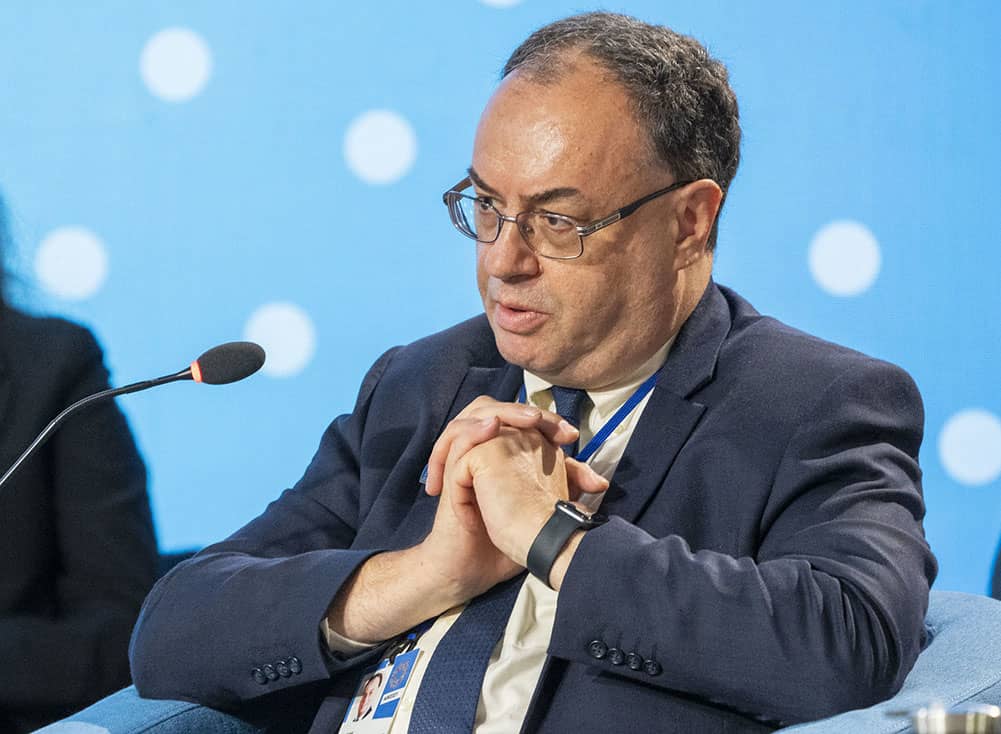
Above: File image of Bank of England Governor Andrew Bailey. Image: IMF Photo/Cory Hancock, reproduced under CC licensing.
Pound sterling is struggling to cross a major barrier against the euro.
The pound to euro exchange rate (GBP/EUR) trades at 1.1534 on Monday, a level it has been stuck at for three days now.
The problem for those wanting a stronger pound is that gains are limited by resistance at the 200-day exponential moving average which lies just ahead at 1.1563.
This is an almighty source of frustration for euro buyers: Last week saw two attempted rallies shutter here, confirming there's significant selling interest here.
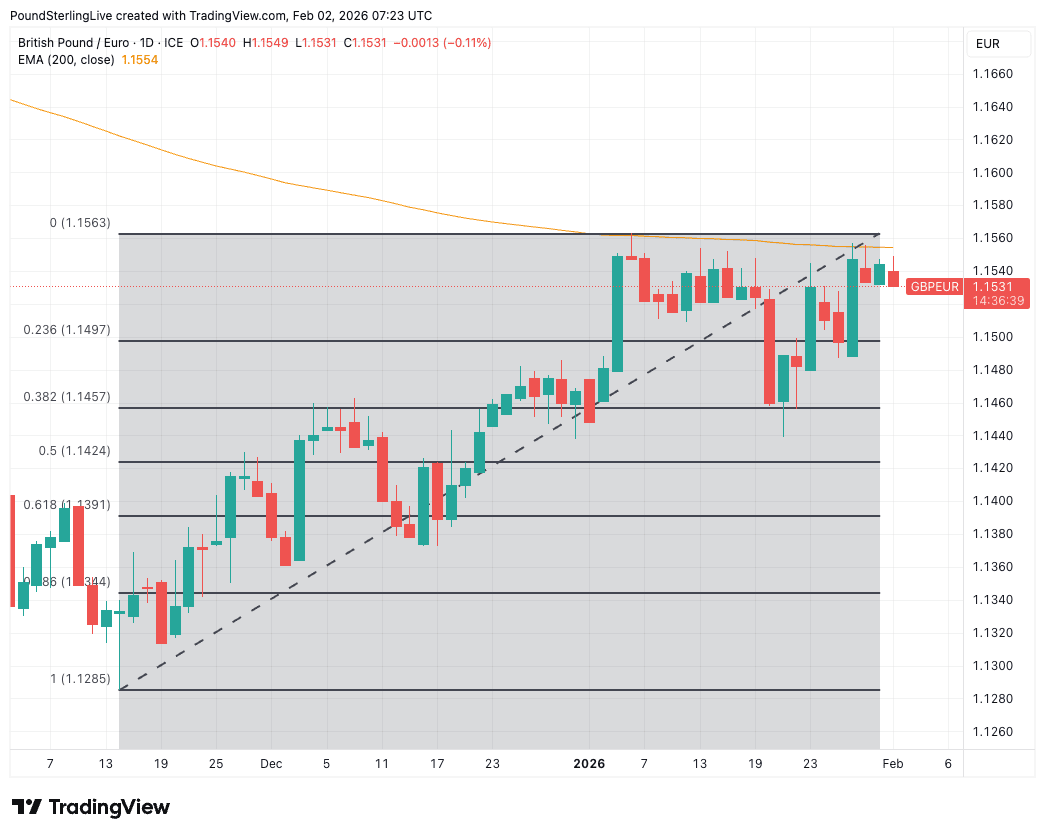
In fact, GBP/EUR has been unable to cross this technical rubicon on numerous attempts in 2026; in January we saw failure at this technical barrier result in a sideways trend that lasted for two weeks.
That consolidation range was narrow: the highs were at 1.1540 and the lows at 1.1510 and by all accounts, our Week Ahead Forecast sees another spell of narrow consolidation evolving at the start of the new month.
Losses can extend to the range low at 1.1510, with deeper pullbacks ranging towards the 23.6% fibonacci retracement line at 1.1490 and then the 38.2% fib line at 1.1457.
So in all, GBP/EUR looks well supported, but with buyers increasingly frustrated with the pound's inability to rise.
Nevertheless, the coming week offers some interest in the form of the Bank of England's February policy decision.
Interest rates are expected to be left unchanged as inflation remains too high for a cut, with recent surveys confirming some reflationary trends are building.
For sterling traders, what the Bank says about the possibility of another cut in the coming months will be of importance.
To be sure, the labour market is weakening and inflation is tipped to fall to 2.0% by April, which implies the Bank has scope to cut and money markets show investors are lining up a cut by April.
This week's decision will likely verify such pricing, making it a relatively uncontroversial decision for the pound.
"We think the MPC is broadly comfortable with current market pricing, which implies only a very small chance of a March cut and around a 75% likelihood of an April reduction. Our baseline outlook is for two quarter‑point cuts this year, taking Bank Rate to 3.25%, with the first move expected in April," says Hann-Ju Ho, Senior Economist at Lloyds Bank.
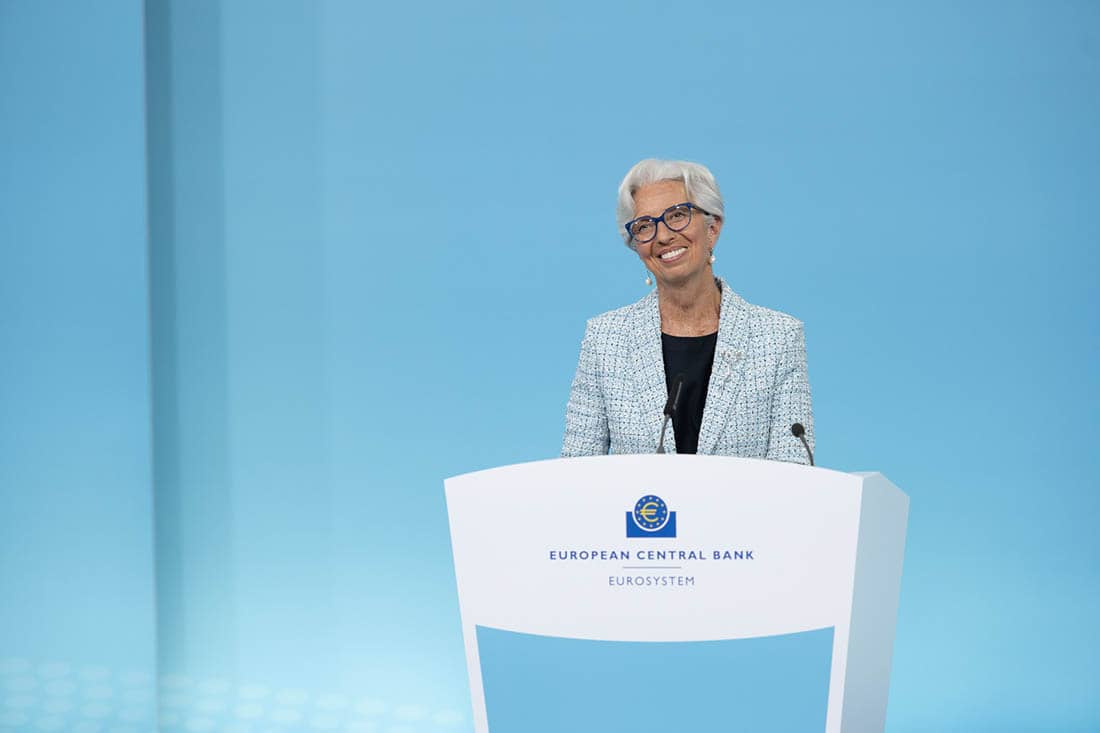
ECB President Christine Lagarde. Image: Andreas Reeg/ECB.
The same goes for the European Central Bank's policy update, also due this Thursday.
There's very little expected of the ECB in 2026, with no move priced into forward-looking money market data, which should mean the euro gets through the event unscathed.
"Policy makers will instead focus on how currency strength and other factors, such as energy prices, develop, as well as whether the recent rise in services inflation proves short‑lived. Markets currently expect rates to remain on hold for all of this year, with only a small probability of a cut priced in," says Ho.
Recent euro strength against the dollar has caught the attention of ECB policy makers, who might judge that the stronger euro is deflationary.
However, the euro-dollar has since pulled back and this should blunt any comments on the exchange rate made on the day, denying us the prospect of any excitement emerging from Frankfurt.