Image © Adobe Images
Deutsche Bank have dug into the data to explain why Britain's unemployment rate fell so sharply in February.
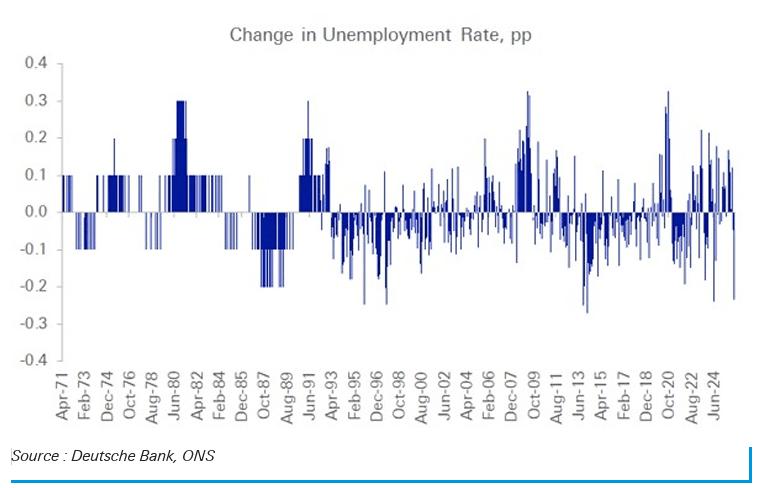
The ONS said Tuesday that the unemployment rate dropped to 4.9% in February, surprising the consensus amongst economists for a repeat of January's 5.2%.
In fact, that's the 7th largest drop in the headline unemployment rate going back to 1971. That's going to attract scrutiny, particularly when the narrative of recent months is that the country's job market is deteriorating markedly.
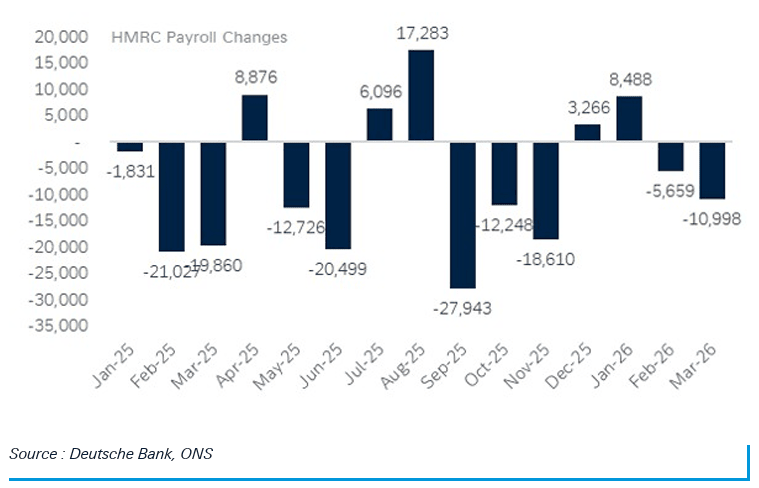
What makes the data all the more surprising is that HMRC's measure of payrolled employees fell by some 11K in March and 6K in February.
What explains the fall in unemployment while employment is rising on one important count?
The go-to is to explore the participation rate: often, if unemployment rates fall but there's no jump in employment, it means people have simply exited the jobs market.
Deutsche Bank's Chief UK Economist, Sanjay Raja, has looked at the numbers and finds participation fell by 71k in the three months to February.
But, he says that's not enough to explain the significant fall in the unemployment rate.
"Something else is going on," says Raja. He explains:
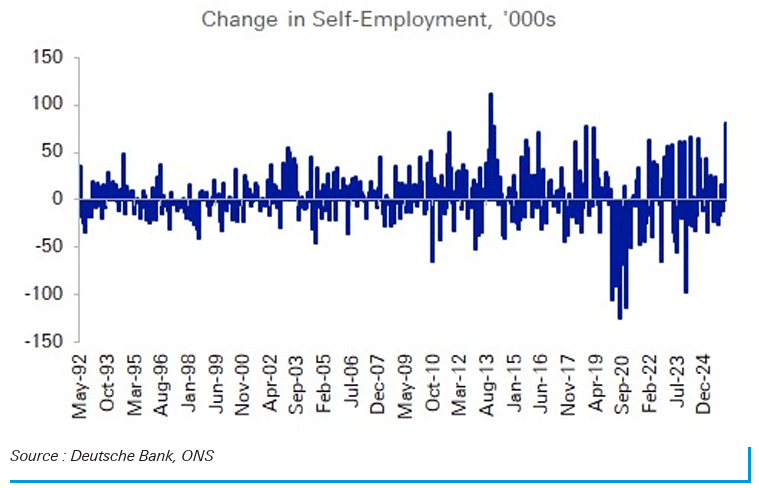
"Job gains came from self-employment. If we look at the number of employees from the LFS, there was a 63k drop in the 3m to Feb-26. So what happened? The number of self-employed rose by a whopping 81k. Across the entire data series (going back to May 1992), this marked the SECOND LARGEST self-employment increase on record."
Steven Blitz, an economist at TS Lombard, offers an explanation as to why we're seeing these developments. He says, "the gig economy has become the escape valve for workers losing their jobs."
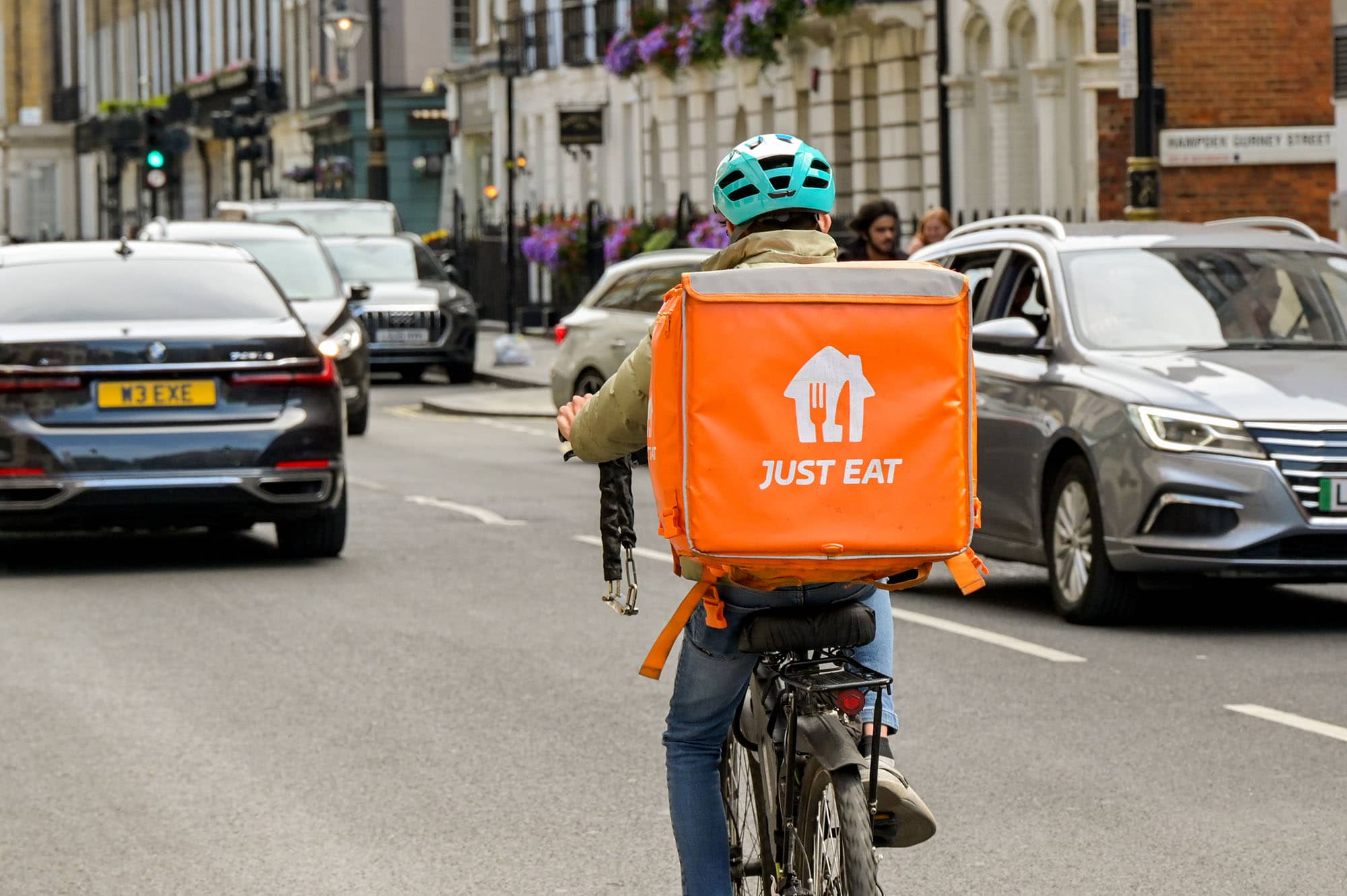
His analysis is directed at the U.S. economy, but could equally apply to that of the UK. The gig economy describes part-time work, such as delivering food and goods and driving taxis, occupations that lend themselves to self-employment.
"Driving an Uber, for example, pays more than unemployment insurance, there is no time limit for receiving check," says Blitz. "We see this shift between payroll employment and self-employment, the gig economy these days."