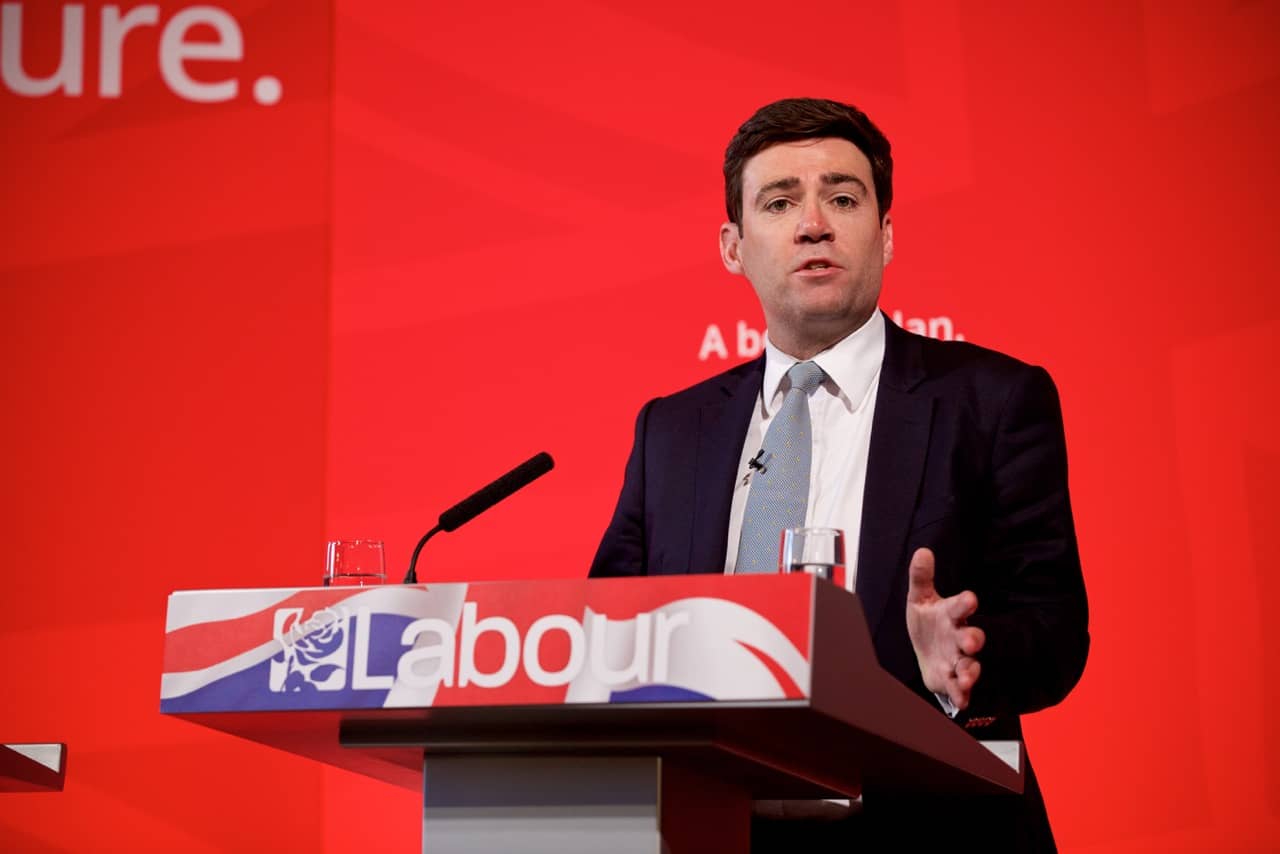
File image of Andy Burnham: Labour Party, sourced: Flickr, licensing: CC 2.0.
The pound could even end the week higher against the euro and dollar than where it started.
The coming week sees the all-important by-election in Makerfield, and there's nothing to say the pound can't end the week higher than where it started.
That's a counterintuitive call for a currency heading into a week that sees political intrigue increase, which traditionally tends to penalise the pound and gilts.
The grounding for the prevailing assessment that Burnham is a threat to the pound is he will swing the government leftwards and boost borrowing at a time when the UK is quite clearly pushing the envelope with global lenders.
And there's been enough commentary crossing the desk in the days leading to the vote that says the prevailing belief remains one that the pound will be in trouble on Thursday if Andy Burnham wins.
The only problem with this assessment is that the market has seen the vote decision coming a hundred miles off: it won't be surprised when he wins.
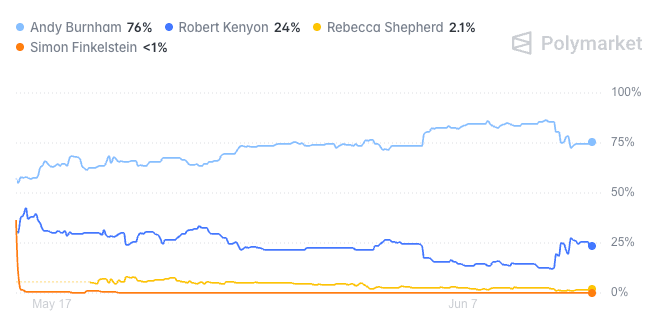
Polymarket has had Burnham trending near 80% odds for weeks now; no surprise = no meaningful currency market reaction.
And if Reform pulls off a monster surprise and wins, well then, we're just back at the status quo anyway.
Both outcomes leave the typical drivers of recent weeks remaining in control of the pound.
King of the North, and King of the U-turn
The so-called King of the North also has a penchant for u-turns, and for the pound and UK assets, that's a good thing.
He's in the past said the government should break the fiscal rules and borrow more to fund social housing and defence.
He has also said the government shouldn't be in hock to bond markets.
Fast-forward to the campaign for Makerfield and he's confirmed he will obey the fiscal rules.
Most recently, he saidthe government should reduce spending on benefits, if need be, to fund increases in defence. That's exactly the kind of things that the financial marketplace is comfortable with.
Because he's saying all the right things, there's a reduced chance of an adverse response to his win on Thursday.
For the pound, that limits the downside and leaves it at the mercy of global investor sentiment and fixed income differentials, both of which are undoubtedly supportive of GBP in the current environment.
Oh, and of course, don't forget Thursday's Bank of England decision.
It's more likely that the mundane will be in charge of sterling than political anxiety in the coming days.
He Could Still Upset Markets
What matters next for sterling and UK bond markets is what Burnham says about the policy direction of a future government.
Once he wins the Makerfield seat he will increasingly need to flesh out his economic vision, and it is these details that will determine whether investors remain comfortable with the UK’s fiscal outlook.
At the time of writing on Monday, there are reminders as to why markets may remain cautious: Burnham has floated the idea of a significantly more generous support system for vulnerable households, has pledged to maintain the state pension triple lock while offering pensioners tax cuts, and has called for the largest council house building programme since the post-war era.
That's expensive, and it will either be paid for by higher taxes or borrowing, or a combination of the two.
None of these proposals are necessarily problematic in isolation, particularly if accompanied by credible funding mechanisms or offsetting savings elsewhere in the public finances.
However, investors will want greater clarity on how such commitments would be funded and whether they imply higher government borrowing.
The rise in UK long-dated gilt yields over the past year has reflected growing sensitivity to fiscal policy risks, meaning future market reactions are likely to be shaped less by election victories and more by the details of the spending and taxation plans that follow.
So while the by-election is in itself low on the risk radar, Burnham's campaign for Number 10 must be watched closely.