The Canadian dollar's recovery following the Bank of Canada's decision to leave policy unchanged has lengthened as analysts interpret recent data in a positive light.

The recent upturn in fortunes for the Canadian dollar have continued as analysts note the exceptional rebound in manufacturing in November the release of which was slightly overshadowed by the BoC meeting on the same day.
The data showed Manufacturing Sales rising by 1.0% in November, from -1.3% in October, and beating expectations of only a 0.5% rise. The increase broke a four month long losing streak.
Wholesale Trade Sales also rose by an impressive 1.8% compared to the -0.5% in the previous month.
"After a bad stretch of economic indicators in the Canadian economy, the manufacturing sector surprised on the upside in November thanks to a solid performance in the transportation sector. We are particularly pleased to see so many categories rising in the month."
Said National Bank of Canada in a note following the release, however, they also cautioned that:
"It remains however that it was the first increase in 4 months and sales remains down 3.1% since the start of 2015."
BOC Decision Kick-Started Turnaround for CAD
USD/CAD fell to 1.4500 on Wednesday after the BOC decided to leave lending rates on hold at 0.5%, at their first meeting in 2016.
It had been widely expected that the BOC would actually cut rates to take the pressure off the falling price of commodities, however the central banks’s eventual move upset those expectations.
Despite not cutting rates the BOC were negative about their outlook for the economy, revising down growth forecasts in 2016 to 1.4% from 2.0% previously.
In its accompanying statement BOC said that inflation remained at the bottom of the bank’s target range as the deflationary effects of lower energy prices and economic slack were only partially offset by the inflationary impact of a weaker currency.
The report said that the continued fall in the price of oil and other commodities, represented a “setback for the Canadian economy”.
“The bank now expects the economy to return to above-potential growth to be delayed until the second quarter of 2016.”
The statement said that the economy’s reorientation from a resource to a services orientated model was underway and was being aided by, “stronger U.S demand, the lower Canadian Dollar, and accommodative financial and monetary conditions.”
Latest Pound / Canadian Dollar Exchange Rates
  | Live: 1.8766▼ + 0.19%12 Month Best:1.9044 |
*Your Bank's Retail Rate
| 1.8128 - 1.8203 |
**Independent Specialist | 1.8503 - 1.8578 Find out why this is a better rate |
* Bank rates according to latest IMTI data.
** RationalFX dealing desk quotation.
The Decision not to cut vindicates the position adopted by National Bank of Canada who did not think it would be a good idea for the bank to make a rate cut now.
NBOC’s rationale was that lower interest rates would be unhelpful, largely thanks to the impact such a move would have on the currency which they already saw as oversold to an unhealthy extreme:
“Is the loonie out of whack with its fundamentals? We think so. By our calculation, the CAD should have depreciated about 10 cents to the USD in recent months, not 25.”
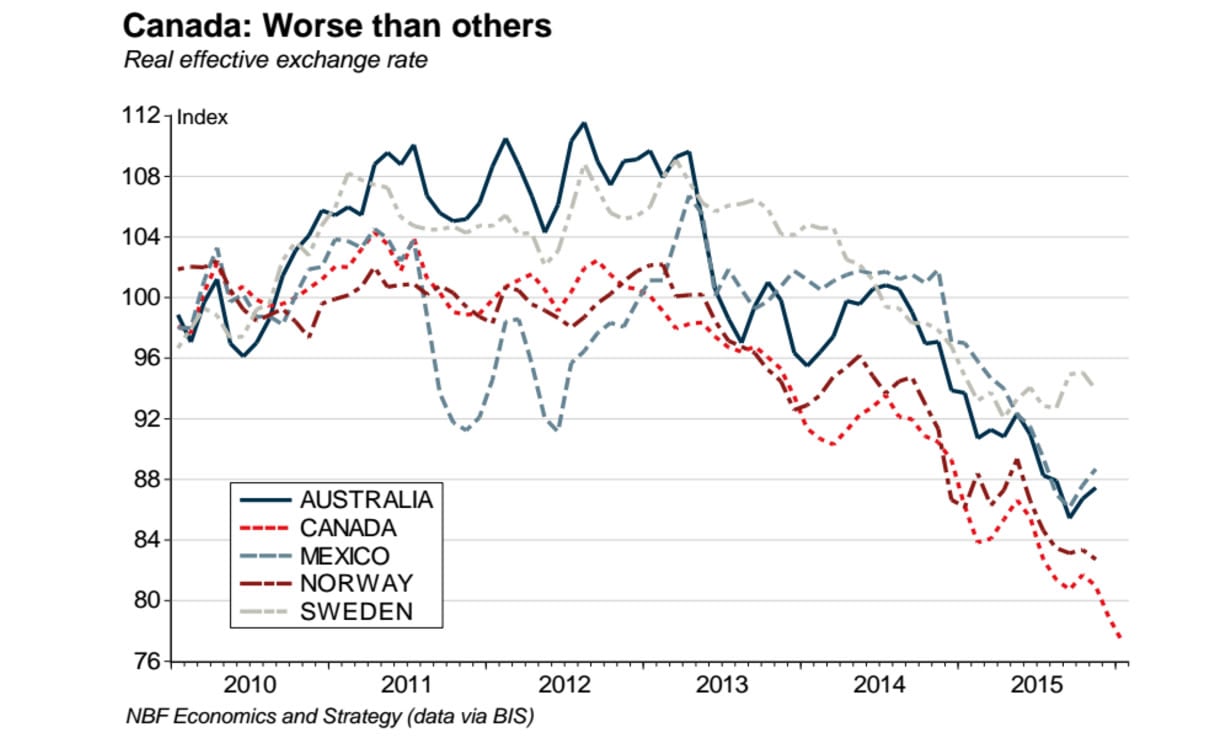
In fact, the Canadian dollar’s decline has been more excessive than those experienced by its fellow commodity dollar brethren:
NBC point out that for Canadian businesses, currency depreciation has already sent the price of machinery and equipment, 73% of which is imported, to a new record high.
“This is bound to complicate Canada’s transition to a less energy-intensive economy,” says Marion. Indeed, Factory GDP, which measures value added (eg, excludes raw materials) is down 1.6% YoY in October.
Furthermore, the latest StatCan data on enterprises shows a 0.4% YoY decline in the number of factory businesses in Canada. This suggests diminishing investment in the factory sector.
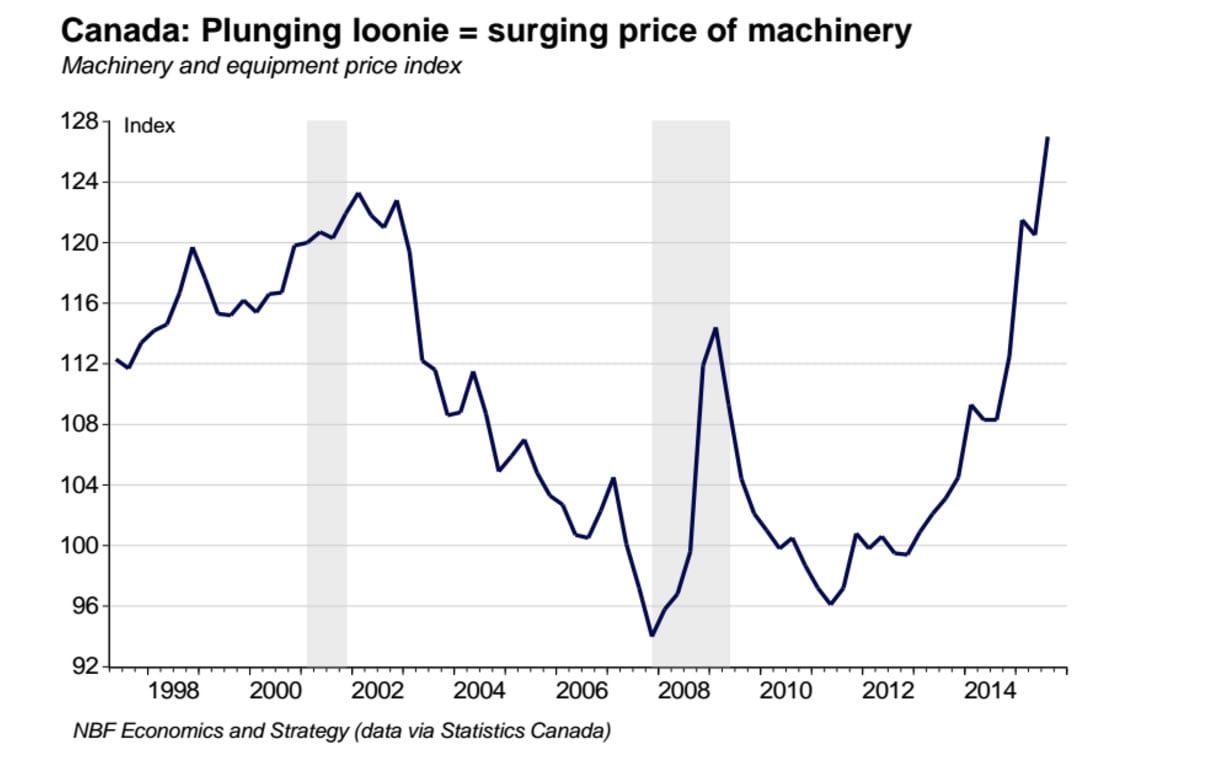
It is worth point out that the above graph shows that machinery is now more expensive compared to 2003 when the USD/CAD was last at present levels, albeit in nominal terms.
“In our view, a January 20 rate cut would risk feeding expectations of negative interest rates in Canada and send USDCAD to 1.50 or higher.” Said NBOC.
What Next for CAD?
The decision to stay on hold was CAD-positive, in the short-term at least, however, the USD/CAD pair is already beginning to rise again, although it has yet to break new highs.
Barclays pointed out that while no cut might be delivered in January 2016, it certainly would mean lower exchange rates.
“There is a risk that the central bank decides to hold for now, but regardless, we believe the BOC will clearly indicate its dovish stance and signal further easing in the months to come,” said a note from the Barclays FX team.
So far Barclays have been proved right in the very short-term but the U.S dollar is already gaining ground against CAD again and the day so far is only showing up as a marginally negative ‘doji’ day.
Given the strength of the current trend it will take more downside to consider the trend lower for Canada has come to an end.