
Above: File image of Bank of Japan Governor Ueda. © European Central Bank, reproduced under CC licensing.
The yen has strengthened following a hawkish surprise from the Bank of Japan, but analysts at MUFG Bank say the move is unlikely to mark a lasting turnaround.
USD/JPY dipped back below 159.00 after the BoJ held rates at 0.75%, with markets reacting to an unusually divided vote that saw three policymakers push for an immediate hike, implying it won't be long before it acts.
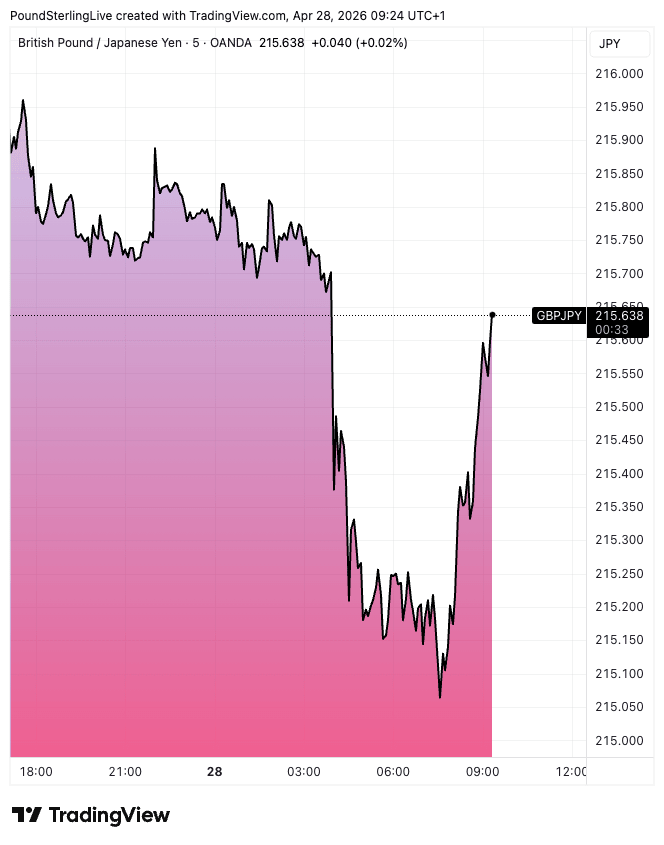
Yen strength weighed on GBP/JPY, which fell back to 215, before paring losses to 215.60. EUR/JPY dipped to 186.20 but is back to 186.58.
The dissention marks the strongest internal push for tighter policy under Governor Kazuo Ueda and has prompted investors to bring forward expectations for the next rate increase, with June now in focus.
Internal headline CPI and core inflation forecasts were revised higher for the coming years, with price pressures now seen running comfortably above target through 2026 and 2027.
Board members voting for a hike pointed to growing upside risks to inflation, including second-round effects from global price shocks.
On paper, the 'hawkish' shift signals should support the yen.
But MUFG says the broader picture remains less supportive: while the policy vote leans hawkish, Governor Ueda struck a more cautious tone, emphasising uncertainty around the Middle East conflict and its impact on the economy.
"Yen rebound likely to prove short-lived," says a response note to Tuesday's decision. "While today’s hawkish hold from the BoJ has helped to provide support for the yen, it is unlikely to trigger a sustained reversal of the bearish trend that has been in place since the Middle East conflict started in late February."
Ueda was cautious about bolstering rate hike bet expectations as he indicated the Bank needs more time to assess how supply shocks feed through to inflation before committing to further tightening.
The BoJ downgraded its economic outlook, cutting its growth forecast for the current fiscal year, highlighting the risk that policy tightening could come into a weakening economy.
Analysts at MUFG say this combination limits the scope for a sustained yen recovery.
The currency has been under pressure since the Middle East conflict intensified in late February, weighed down by rising energy costs and resilient global risk sentiment.
"The combination of still buoyant global investor risk sentiment alongside the deterioration in Japan’s terms of trade have encouraged a weaker yen," says MUFG.
Japan’s deteriorating terms of trade have added to that pressure, while positioning data shows investors have been rebuilding short yen positions in recent weeks.
Against that backdrop, MUFG says the latest rebound is unlikely to reverse the broader trend.