
Image © Adobe Images
The global bond rout that is particularly painful for the UK could have been sparked in Japan.
Economists say Japan could be behind a rout that has wiped billions off the value of global government bonds and sparked a selloff in stock markets.
"The catalyst appears to have been Japanese politics and the intention of LDP Secretary General Hiroshi Moriyama to resign," says David Forrester, Senior FX Strategist at Crédit Agricole.
He explains that Moriyama is a supporter of fiscal consolidation and a key ally of PM Shigeru Ishiba. His resignation raises the risk of a pivot by Japan’s government towards aggressive fiscal stimulus, raising concerns about Japan’s fiscal sustainability.
"Bond vigilantes have returned and are weighing on global bond markets, leading to a tightening in global financial conditions and weighing on risk sentiment," says Forrester.
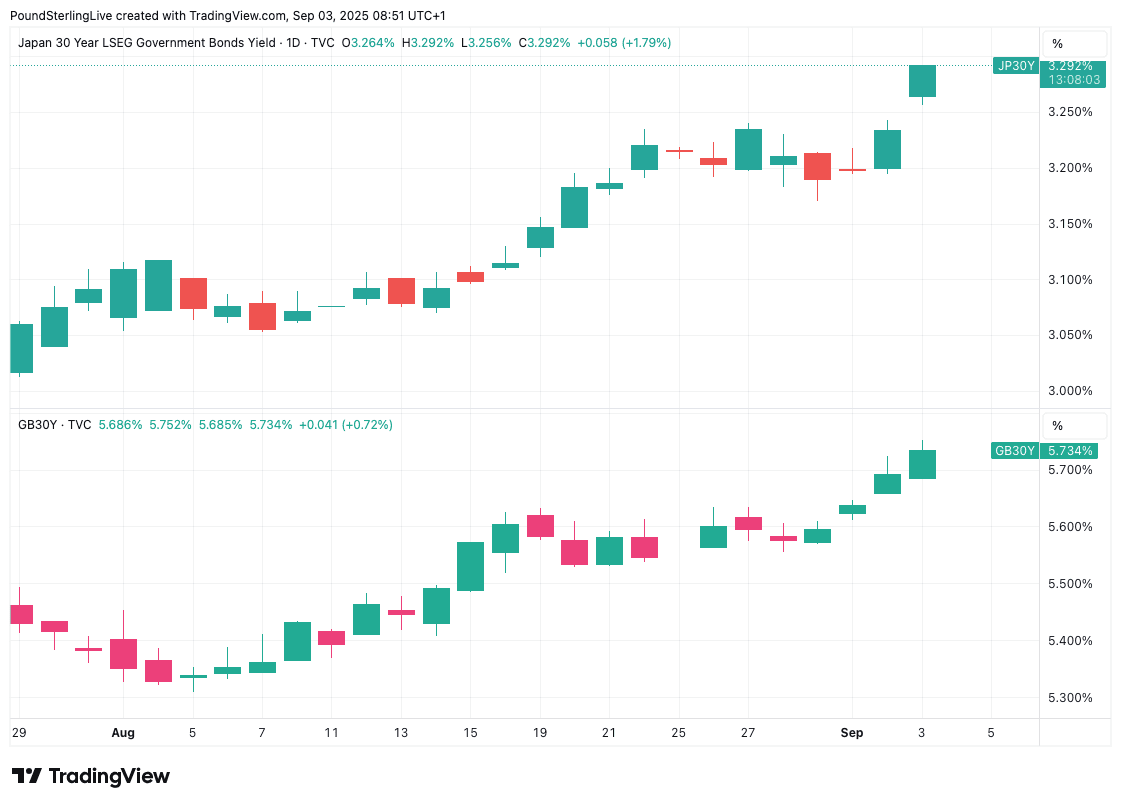
Above: The yield on the Japanese 30-year bond rises, helping the GB equivalent take a leg up. Note the UK's yield is far greater than that of the UK.
"Japanese rates are climbing on news that Liberal Democratic Party Secretary Hiroshi Moriyama intends to resign, threatening to undermine Prime Minister Shiguru Ishiba’s leadership," says Karl Schamotta, Chief Market Strategist at Corpay.
The UK is particularly vulnerable to debt market wobbles, owing to its status as a small, open economy with high domestic debt and a large current account surplus.
Debt concerns have been growing all summer as it became clear the UK government will need to issue more bonds to finance spending as tax income fails to keep up with expenditures.
But the world is awash with debt and investors are becoming increasingly concerned about whether they can absorb the issuance.
Japan is particularly indebted, with its total debt standing at a staggering 234.9% of GDP.
The UK's is smaller, closer to 100% of GDP, but Japan is able to fund its debt by running persistent current account surpluses (exports exceed imports), which means its private sector is a net saver. The UK is the opposite, owing to its current account defict.
"The UK Gilt market followed with investors becoming nervous ahead of the Autumn budget due to be tabled next month. Whether the global bond sell-off continues will determine investor sentiment going forward," says Forrester.