
Image © Adobe Images
Trump threatens a hefty hike on Japanese imports.
Japan is being pressured to agree a trade deal, and it is making the yen nervous.
The Japanese Yen is down against the majority of its global currency peers, with analysts saying rising U.S. yields and concerns over a U.S.-Japan trade deal are the culprits.
A broader strengthening in the U.S. Dollar and U.S. Treasury yields is pressuring USD/JPY higher, but there is a distinct flavour of JPY-specific anxiety in the air midweek.
We interrogate whether this is the case by consulting the daily performance comparison board and get confirmation that the Yen is lower against all its G10 rivals. Analysts at one major Japanese bank say concerns over the status of ongoing negotiations between Japan and the U.S. are indeed a potential factor.
"The yen is underperforming modestly given U.S. yields have held on to yesterday’s gains and given increased investor concerns over the outcome of trade negotiations between the U.S. and Japan," says a note from MUFG Bank Ltd's Global Markets desk.
U.S. President Donald Trump on Tuesday threatened to impose a "30% or 35%" tariff on Japan if a deal between the two countries is not reached before a deadline next week.
That would be well above the 24% tariff Japan was hit with as part of Trump's so-called "Liberation Day" announcements made on April 02.
Trump reiterated the U.S. has "a very big trade deficit with Japan" and that Japan is "very spoiled."
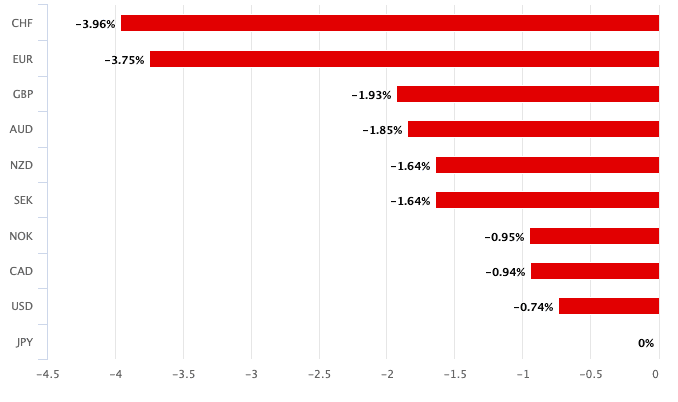
The Yen has fallen against all G10 rivals over the past month.
Japan's economy would face an unexpected shock if its exports to the U.S. suffer under the weight of 35% tariffs. The Bank of Japan, tasked with supporting the economy, would have to reconsider plans to further increase interest rates.
MUFG says this would prompt a move lower in the Yen, especially if other major countries secure deals while Japan is left in the cold.
"A deal could be done prior to the deadline but there seems at this stage a bigger risk of failure that would prompt a bigger market reaction," warns MUFG.
"In that scenario the broader markets would be more risk-on and the bad news would be more Japan specific – a move higher in USD/JPY is therefore much higher," it adds.
However, the yen is less vulnerable if there is a blanket failure of major trading partners to reach a deal.
Here a selloff in global stocks would be met by the classic risk-off demand for safe haven currencies, of which the Yen is a leader.