Image © Adobe Images
Near-term risks to the dollar are tilted lower as a cautious Kevin Warsh meets hopes for further falls in oil prices.
The main event of the week for global foreign exchange is upon us: the first Federal Reserve Open Market Committee (FOMC) meeting of the Kevin Warsh era.
The new Chairman thinks the institution is due a shake-up, and what's communicated, or in this instance, not communicated, could have immediate implications for foreign exchange markets.
The dollar strengthened during the course of May but has lost altitude in the approach to today's meeting as traders have to consider the prospect that Warsh tries to steer the market away from expecting rate hikes.
A run of robust U.S. data and higher energy prices conspired to encourage the market into expecting rate rises, "The USD bull case has become more prominent in recent weeks. Strong US data and a repricing of Fed rate hikes in the year ahead support USD gains," says Dominic Bunning, Global FX Strategist at Nomura.
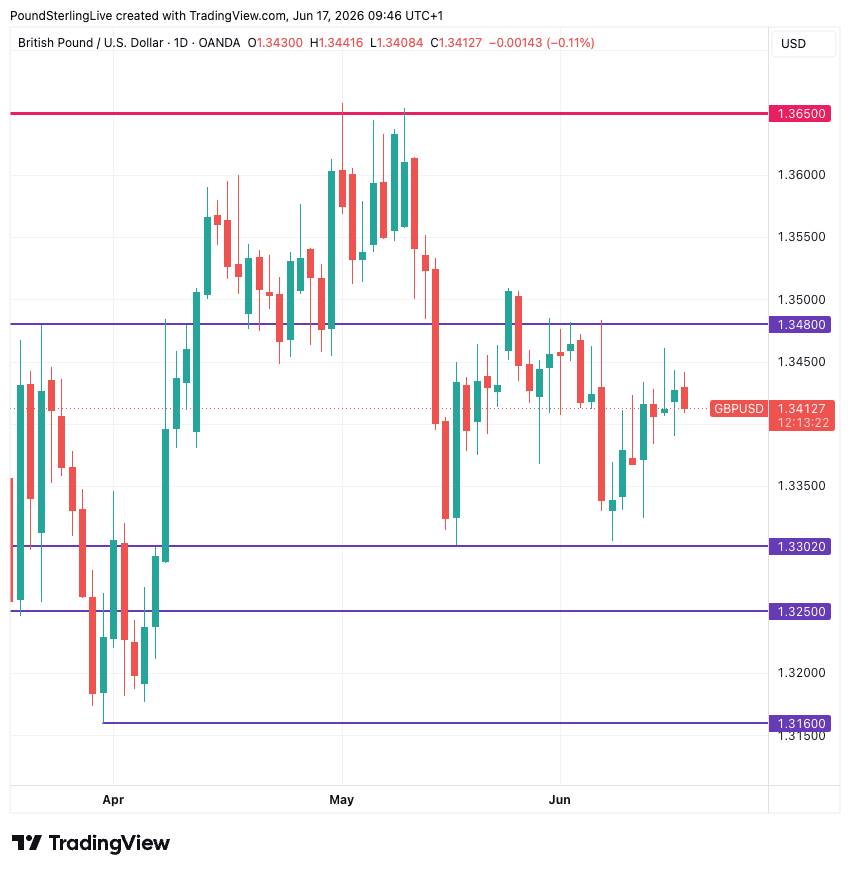
The bet for rate hikes is ripe for testing as Warsh takes control.
"Given he was President Trump's pick, the expectations are this will usher in a more dovish leaning Fed," says Sam Hill, market analyst at Lloyds Bank.
For the dollar, the risk is Warsh's first meeting in charge sees him kill off latent market expectations for a rate hike in the next six months, opening the door for the pound-to-dollar rate's recovery to extend.
"The greenback is increasingly reliant on expectations of Fed tightening this year," says Francesco Pesole, FX strategist at ING Bank.
"If Warsh or the broader FOMC signal a stance that is clearly at odds with market pricing, the dollar would sell off sharply in our view," he adds.
In Defence of the Dollar
Warsh will nevertheless be constrained by the reality of higher inflation rates and solid underlying momentum in the economy, which will be enough to encourage the Fed to drop the easing bias of recent meetings.
That's on balance 'hawkish' and supportive for the dollar, even if it's likely been priced in during May's rally.
Neil Wilson, analyst at Saxo Bank, explains that the U.S. economy remains robust, driven by AI investments and a productivity miracle, and the labour market is humming.
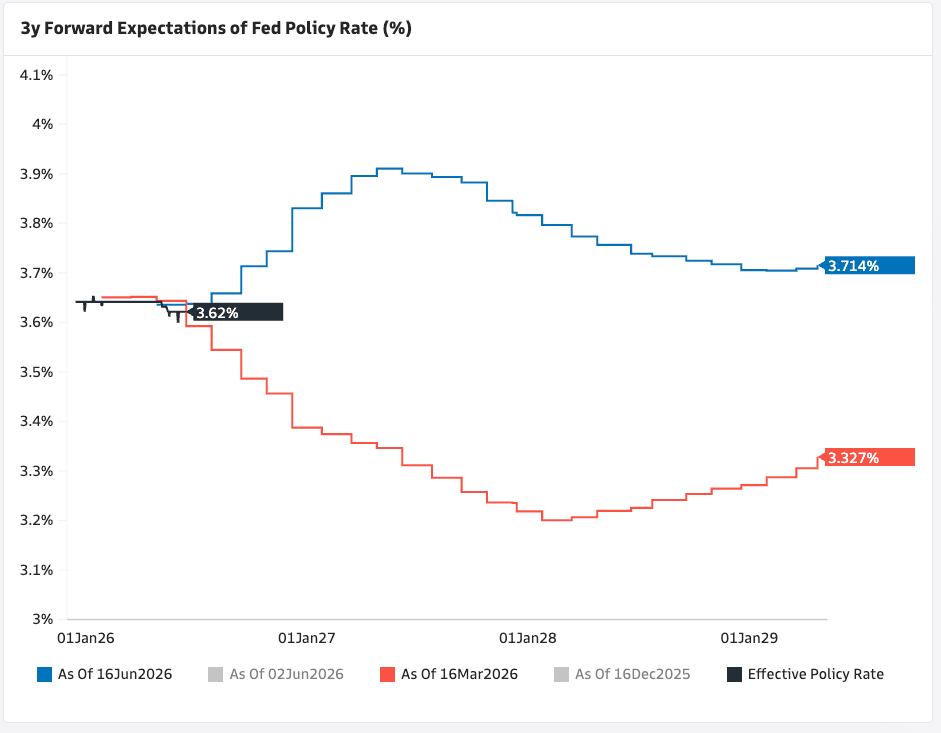
Above: The drastic shift in expectations for the future of Fed rates since March.
This should encourage the Fed to raise its projections for growth, inflation and future levels of interest rates.
"Warsh may not want to provide a dot to plot but the rest of the FOMC will and will likely have to revise up inflation and growth outlooks. So, I think we get a hawkish-looking summary of economic projections but given Warsh puts no credence in the dots the main focus will be what he says in the press conference, which may be very little," says Wilson.
A New Captain, a New Route
The new Chairman of the Federal Reserve will usher in a new management style and a shift in how the central bank communicates.
It's widely known that he wants the Fed to communicate less; he told the Senate Banking Committee, "I don’t believe in forward guidance. I don't believe that I should be previewing for you what a future decision will be."
That's exciting for volatility seekers as it means the market will have to make up its own mind as to how interest rates will evolve.
"De-emphasising forward guidance fits neatly with current policy requirements and Warsh's own view that the market should have to make its own bets, so it is one change that could show immediately," says Hill.
To be sure, don't expect too much on day one, as the process to readjust the Fed's communication function will take some time.
That could cushion any initial FX market reactions.
It's also worth remembering that interest rates are set by committee, meaning Warsh's 'dovishness' will be balanced by other voters who will be cautious about inflation, and might want to not encourage an easing in monetary conditions via any early easing bias.
Outbreak of Peace Tilts USD Risks Lower
The Fed meeting will fall just two days before the signing of a comprehensive peace agreement between Iran and the U.S., provided there are no last-minute disputes between the belligerents.
Signs point to the signing of a Memorandum of Understanding on Friday, which will reopen the Strait of Hormuz, with the deal committing the U.S. and Iran to returning traffic through the Strait to pre-conflict levels within 30 days.
"We admit the balance of risks does appear tilted to the downside for USD after the US-Iran deal announcement," says Pesole.
The evolving Fed-Iran combination therefore looks to be leaning towards further GBP/USD upside, with the 1.3480 resistance line being the first short-term objective.
"The consensus has turned more bullish on USD, but there are signs that a reversal lower in the USD could be more probable in the next few months," says Nomura's Bunning. "The latest headlines from President Trump about a deal being signed over the coming weekend will obviously test USD resilience in the near term."