Image © Adobe Images
Pound sterling is seen struggling into the weekend and could be set to lose further ground against the dollar.
The setup for further dollar outperformance is intact and should remain that way for a while yet, amid signs that the Iran crisis will get worse before it gets better.
The U.S. has realised it has to commit to the fight with more intensity if it is to take the exit that U.S. President Donald Trump wants.
The U.S. is now actively fighting to establish order over the Strait of Hormuz as it is reported that low-flying jets and Apache helicopters have been deployed to strike Iranian vessels and drones near the important shipping lane.
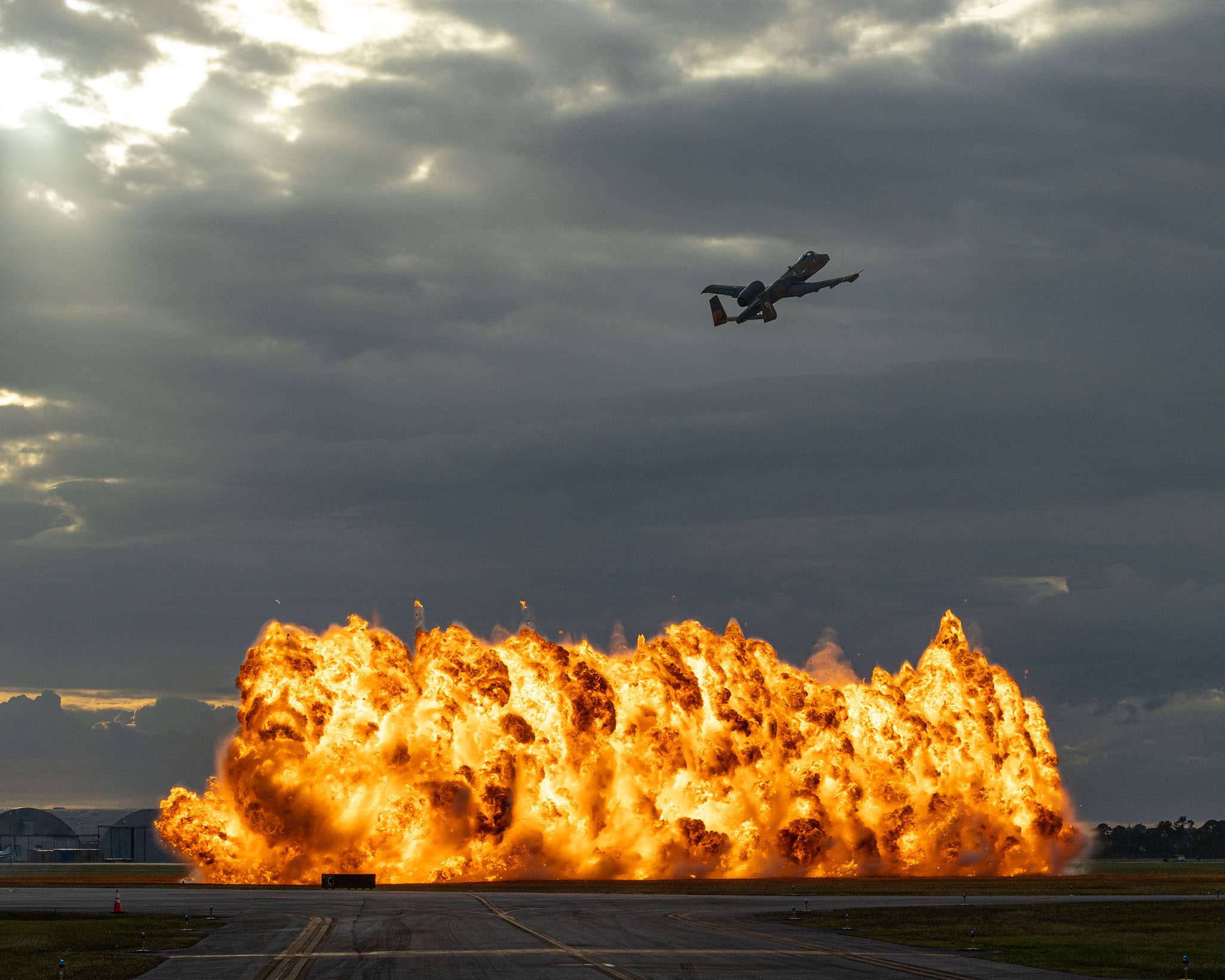
A10 Warthog aircraft - which specialise in air-to-ground offence - are meanwhile targeting Iran's seaborne forces in the strait.
On Thursday night, Israel's Benjamin Netanyahu suggested that troop deployments may be imminent.
News reports add that U.S. President Donald Trump also sees it that way and is considering invading or blockading Iran's Kharg Island to pressure Tehran into reopening the Strait of Hormuz. The Island is a critical Iranian asset in the Strait for both defence and export of domestic oil.
A fifth of the world's oil and gas flows through this Strait, and its blockage has led to a surge in global oil and gas prices.
For markets, it means there's no likely resolution in the immediate future, and that's bullish for the dollar and bearish for the pound.
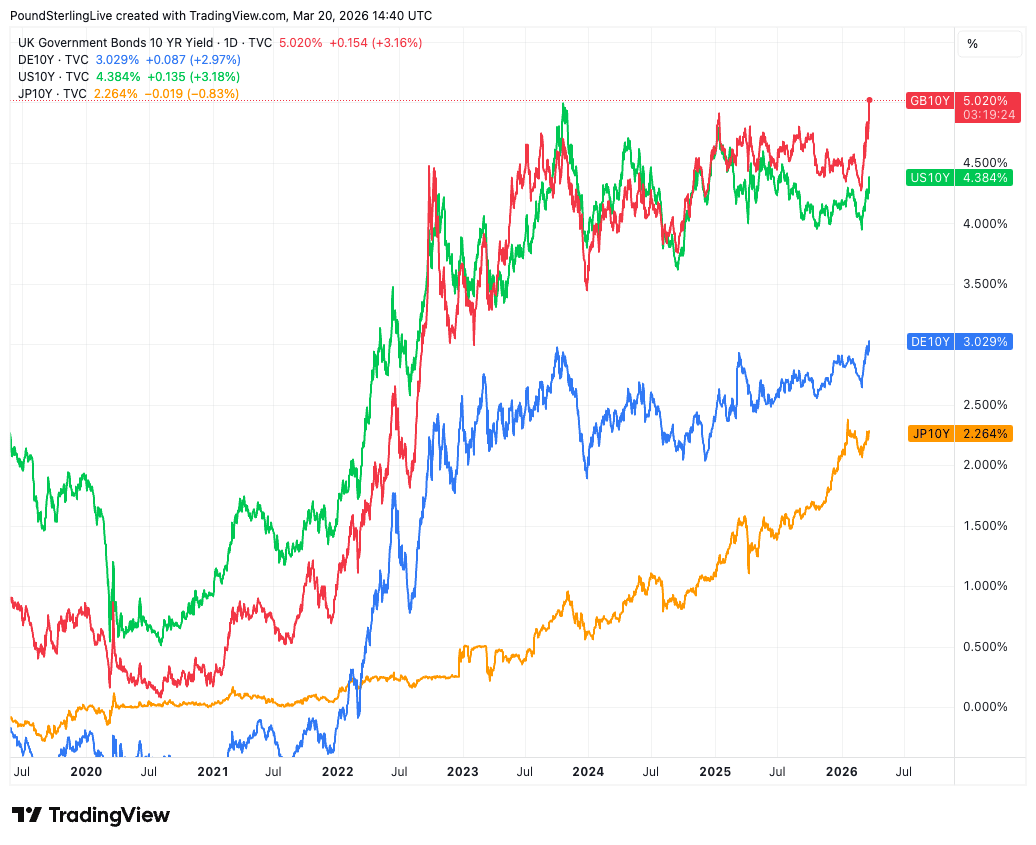
Above: UK ten-year bond yields trade at a premium to major peers.
"We need about a month to weaken the Iranians more with strikes, take the island and then get them by the balls and use it for negotiations," an administration source told the Axios news agency.
General Dan Caine, the chairman of the joint chiefs of staff, said the effort could take "weeks" to sufficiently degrade Iran’s network of threats in and around the Strait.
Meanwhile, Iran's targeting of regional oil and gas infrastructure continued Friday, with an attack reported on an oil refinery in Kuwait. It comes a day after an Iranian retaliatory strike on Qatar's natural gas processing hub caused damage that will leave the world's biggest exporter of natural gas below operating capacity for years to come.
Although sterling has risen against a number of currencies during the war, we're seeing signs of stress in the UK currency on Friday.
UK bond yields are surging as bond markets target countries with weak fiscal dynamics. The U.S. ten-year yield is at its highest level since the 2008 crisis and commands a distinct premium over comparable countries.
That means traders see the UK as particularly vulnerable to another inflationary episode.
The UK is by Developed Market standards a high inflation economy, says Simon French, economist at Panmure Liberum, "because it rations energy, land and capital".
"Inflation has averaged 3%/year since 2010. An energy shock hits UK hardest, so inflation premia on short-dated Gilts quickly emerges," he explains.
We would be very cautious of exposure to GBP upside at this juncture, fearing that another selloff in both bonds and the pound is at the door.