
Image © Adobe Images
The British pound will come under pressure against the euro next year as the UK economy suffers rising unemployment.
Given this, strategists at CIBC Capital Markets make buying EUR/GBP a top trade for 2026, judging that a recent pound sterling rebound will falter.
"Sterling witnessed something of a relief rally in the wake of Chancellor Reeves second Budget; the uptick in the fiscal headroom was greeted by some relief by Gilt investors," says CIBC in a strategy note detailing top trades for the coming year.
"However, we would note the downgrade to GDP assumptions, deterioration in labour market trends and or substantive CPI base effects which are set to impact into Q2," it adds.
EUR/GBP is has fallen during November and December as the 2025 selloff unwinds. Part of that weakness was linked to fears for UK economic growth and fiscal stability owing to the November budget.
The contents of the budget were well telegraphed by a series of leaks from the Treasury, and with no real surprises being announced on the day, the market has covered some of its bets against the pound.
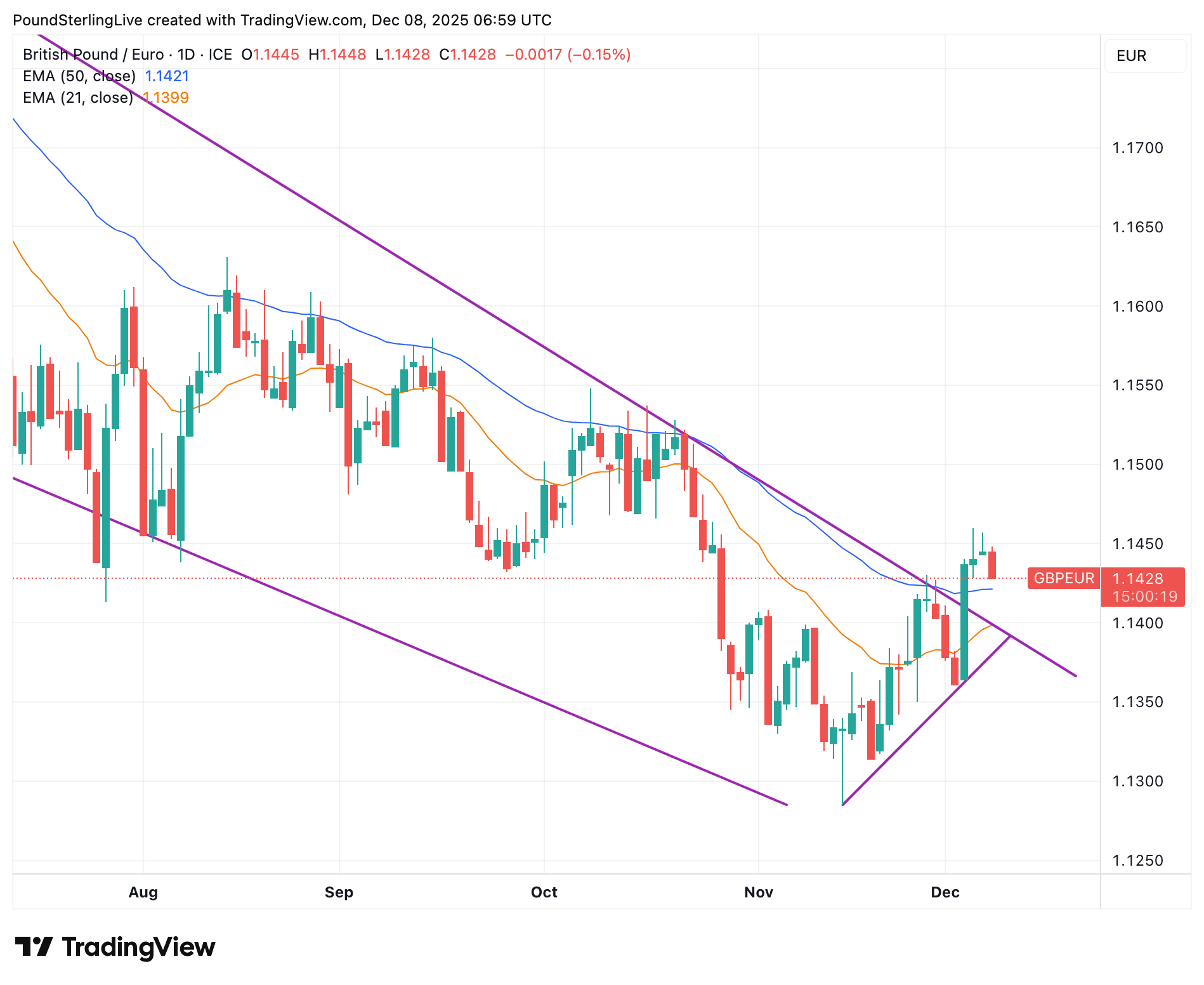
For now, GBP/EUR upside is seen as a counter-trend bounce.
In our Pound to Euro Week Ahead Forecast, we note near-term momentum remains in favour of further upside, fulfilling earlier expectations for a year-end post-budget bounce in the pound.
However, upside will ultimately be limited by unhelpful fundamentals. CIBC's analysts cite the following headwinds:
- Slower GDP trajectory
- Subdued gains in real disposable incomes
- A rising tide of unemployment (dragging on earnings growth)
This "supports a faster pace of BoE adjustment; we assume 50bps of easing by the end of Q1, beyond the current 39bps priced by the market," says CIBC.
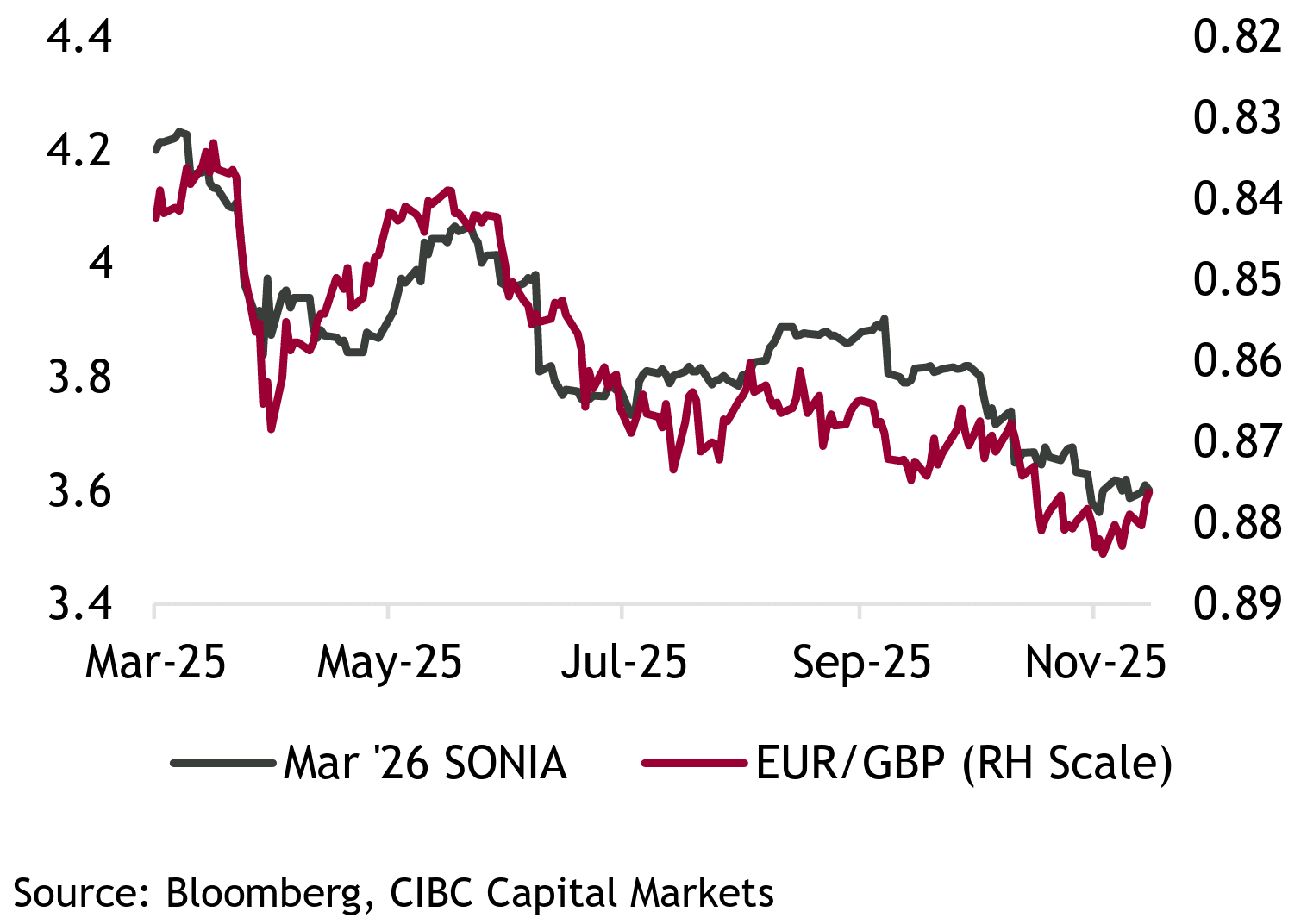
Above: The Bank of England will cut interest rates faster than anticipated, warns CIBC.
"A more aggressive BoE profile supports the notion of EUR/GBP gains, given we expect the eurozone to benefit from German fiscal expansion, defence spending under the ReArm process in addition to ECB inertia, given policy remains in a good place," it adds.
CIBC economists consider 3.50% to be the landing zone for Bank Rate.
This "supports EUR/GBP heading back towards 2023 highs." The EUR/GBP high is 0.8865 (Nov. 14), giving a GBP/EUR low of 1.1280.
Consensus projections for the next four quarters, compiled from leading investment banks.
Access the full forecast →
Against the Tide
Weak GBP is a consensus expectation for 2026, but some analysts are taking the other side of that bet, suggesting lower UK interest rates could be supportive.
"Pessimism toward the UK is too high in our view. We believe the Bank of England now has more scope to cut rates, and retail sales appear to be on an uptrend. Economic growth could surprise positively in 2026 and support UK markets," says Brian Levitt, Chief Global Market Strategist at Invesco.
Bank of America is also contrarian, saying the pound will outperform peers in 2026, as consensus positions tend to fizzle out early in the year.
With the budget having passed without drama, the pound is at a fork in the road: does that risk premium dissipate or does it become entrenched?
Bank of America thinks the former is the most likely: that premium can continue to lift, and the pound will recover as a result.
"This Budget has the buy-in from the OBR (who prepare macro forecasts for the Government) and the Chancellor has reinforced the commitment to keep the Fiscal Rule and raise the Fiscal Headroom. These are important anchors which should lead to a relief rally in GBP as the release valve of event risk has passed," reads Bank of America's year-ahead outlook.
BofA forecasts EUR/GBP at 0.84 by year-end, which gives a pound to euro conversion of 1.19.