Image © Adobe Images
PMI survey data indicates an economy that's rapidly losing traction.
The euro's outlook is deteriorating alongside the eurozone's economic prospects, with a flash survey of activity for May showing a notable cooling in activity.
The Eurozone Composite PMI fell to 47.5 from 48.8 in April, missing estimates for 48.8. That was driven by a slowing in the services PMI from 47.6 to 46.4, a 63-month low.
Manufacturing held above the 50 level that marks the boundary between growth and contraction, hitting 51, down from 52.3 in April.
S&P Global, compilers of the report, say the headlines point to a deepening downturn, characterised by falls in output, new orders and employment, while business confidence slipped lower.
"May’s flash PMI survey data show the eurozone economy taking an increasingly severe toll from the war in the Middle East," says Chris Williamson, Chief Business Economist at S&P Global.
The survey reports declining activity levels largely reflect a further intensification of cost pressures; input prices increased at the fastest pace in three-and-a-half years and selling price inflation quickened.
“Job losses are also starting to become worryingly widespread as business confidence in any swift turnaround in the adverse economic climate fades further," says Williamson.
This creates a difficult payoff for the European Central Bank: the deterioration would likely accelerate if it chose to raise rates, something markets expect in the coming months.
The labour market situation will convince many members of the ECB's Governing Council that the risks of second-round inflation effects will be limited, diminishing the need to hike rates.
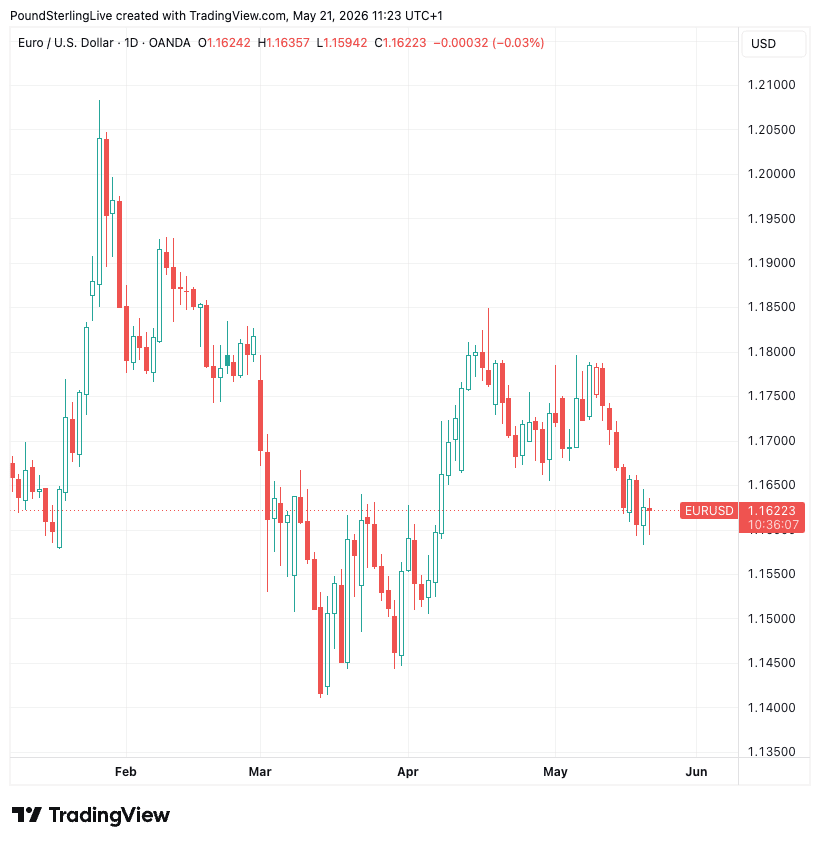
If expectations for rate hikes fall, Eurozone bond yields would be expected to move lower.
All else equal, that would weigh on the euro. The euro-dollar exchange rate, in particular, would come under pressure if Eurozone rate hike expectations retreat as the odds of a Federal Reserve rate hike increase, which we have seen of late owing to firm activity in the American economy.
The U.S. is more insulated to the impact of higher energy costs thanks to its status as a net oil and gas exporter, which shores up its balance of trade during the Middle East crisis.
The Eurozone economy is a net energy importer and price taker, which is why the impact of the Middle East war is being felt more acutely and why the PMI survey revealed sharp input cost increases.
"The region’s supply shock from the war is also intensifying, as indicated by increasingly widespread supply chain delays. Supply shortages threaten not only to constrain growth in the coming months but also have the potential to add further upward pressure to inflation," says Williamson.
Jane Foley, Senior FX Strategist at Rabobank, says in the absence of positive news regarding a peace deal in the Iran war, euro-dollar would risk dips to 1.15.
"Assuming a gradually reopening of the Strait of Hormuz in the month ahead, we expect EUR/USD to edge higher. However, faced with slower growth in the Eurozone, we do not expect a move to EUR/USD1.20 this year," she adds.
If you own a UK property, Envelop can release bridging funds in days, so you can convert sterling on your timetable instead of waiting months on a slow foreign lender. You set the timing.