Image © Adobe Images
Pound sterling looks vulnerable to further losses.
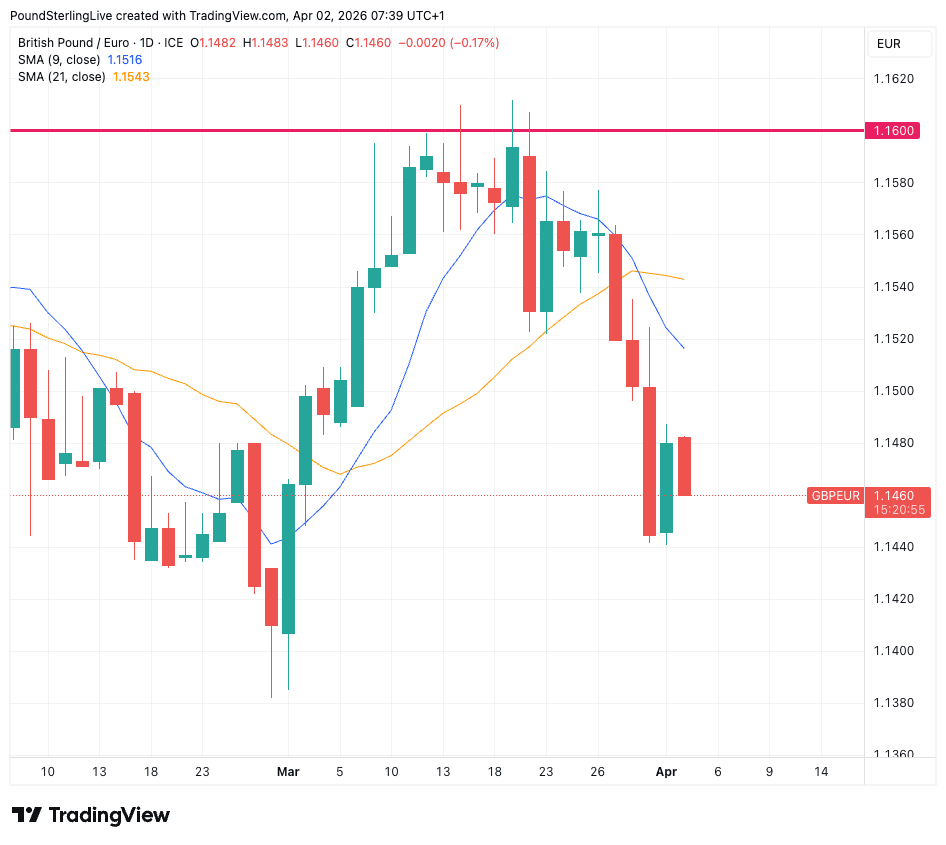
The rallies of March are behind it, and the pound-euro conversion is under pressure, with a move below 1.15 risking an imminent test of the 1.1440 support zone.
Pound sterling falls as gilts - UK government bonds - hugely underperform, having done the opposite yesterday. That's tied to worries that a lasting war would trigger UK inflationary outperformance and damage public finances.
Bank of England governor Bailey contributed too having delivered an interview where he pushed back against "markets that get ahead of themselves" in expecting up to three rate hikes this year. (Full story here).
With 1.1440 beckoning, bank transfer rates risk falls towards 1.13 and competitive 0%-fee transfer rates to approximately 1.1410 (see how it works and benchmark your payments here).
Thursday's GBP losses also look to be a response to a broader deterioration in sentiment across global markets, with stocks coming off recent rebound highs and oil prices trending higher again.
That follows a speech made by U.S. President Donald Trump overnight that warned there were still two to three weeks of conflict ahead.
Equity markets had stormed higher ahead of the speech, betraying an investor suspicion that the President would announce the exit strategy to the American people.
We always thought that was optimistic: as much as he wants other nations to open up the Strait of Hormuz, it's ultimately the U.S. that blocked it up, such a status quo would mean any exit by the U.S. would be framed as retreat by a President who is under pressure at home.
"Feels like escalation and fear into the weekend and then we see what happens," says Brent Donnelly, strategist at Spectra Markets. "While the President suggested a timeline of two to three weeks for the war to end, nothing the U.S. or Iran says is credible. We are in a war. It’s propaganda."
For the GBP/EUR, this means an atmosphere of uncertainty will prevail.
Payment Strategy
GBP/EUR: Multiple Headwinds, One Direction
War uncertainty, fading interest rate appeal and domestic political risk are now all pulling in the same direction. Julius Baer put a 1.1360 target on GBP/EUR within three months; the technical picture has 1.1440 in play this week. Those with euro payments due face a straightforward risk: the longer the wait, the worse the converted amount. Securing today's rate removes that exposure – or a forward contract can lock in a rate now for a payment weeks ahead.
Interestingly, the exchange rate has shifted focus of late: in the first half of March it rose as the war in the Middle East meant higher inflation and higher interest rates at home.
Analysis from Julius Baer, the Swiss private bank, explains that pound sterling's "appeal endures thanks to a higher carry" (carry being the UK's relatively higher interest rates).
"Higher energy prices provoked a hawkish shift by the BoE, which called off the March rate cut and opened the door to monetary policy tightening," says Julius Baer.
However, in the latter part of March and into April, the interest rate appeal appears to have lost its influence over GBP/EUR, and it has fallen from levels near 1.16 back to 1.1460.
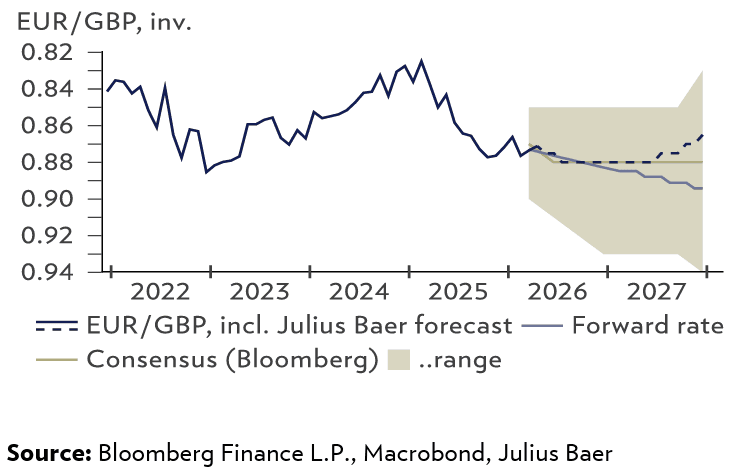
Above: The path forward for EUR/GBP.
Thursday's stock market selloff could signal that a deterioration in broader risk sentiment - traditionally a headwind to GBP/EUR - is exerting some control.
The technical indicators suggest 1.1440, a level of previous support, is now in play short-term and sub-1.14 in the coming weeks. With rate direction unclear and sentiment turning, those with imminent euro payments may want to speak to a specialist dealer before the next leg lower confirms itself.
Analysts warn that domestic issues can't be ignored: the pound is also likely to be bothered by the looming local elections in May, which threaten to destabilise the government's commitment to fiscal responsibility.
"Political uncertainty has risen due to declining voter appeal for the Labour Party and a loss in a sensitive byelection. A bad performance in May's local elections could trigger a leadership change," says Julius Baer.
Julius Baer forecasts GBP/EUR will fall to 1.1360 over a three-month timeframe.