Consensus projections for the next four quarters, compiled from leading investment banks.
Access the full forecast →
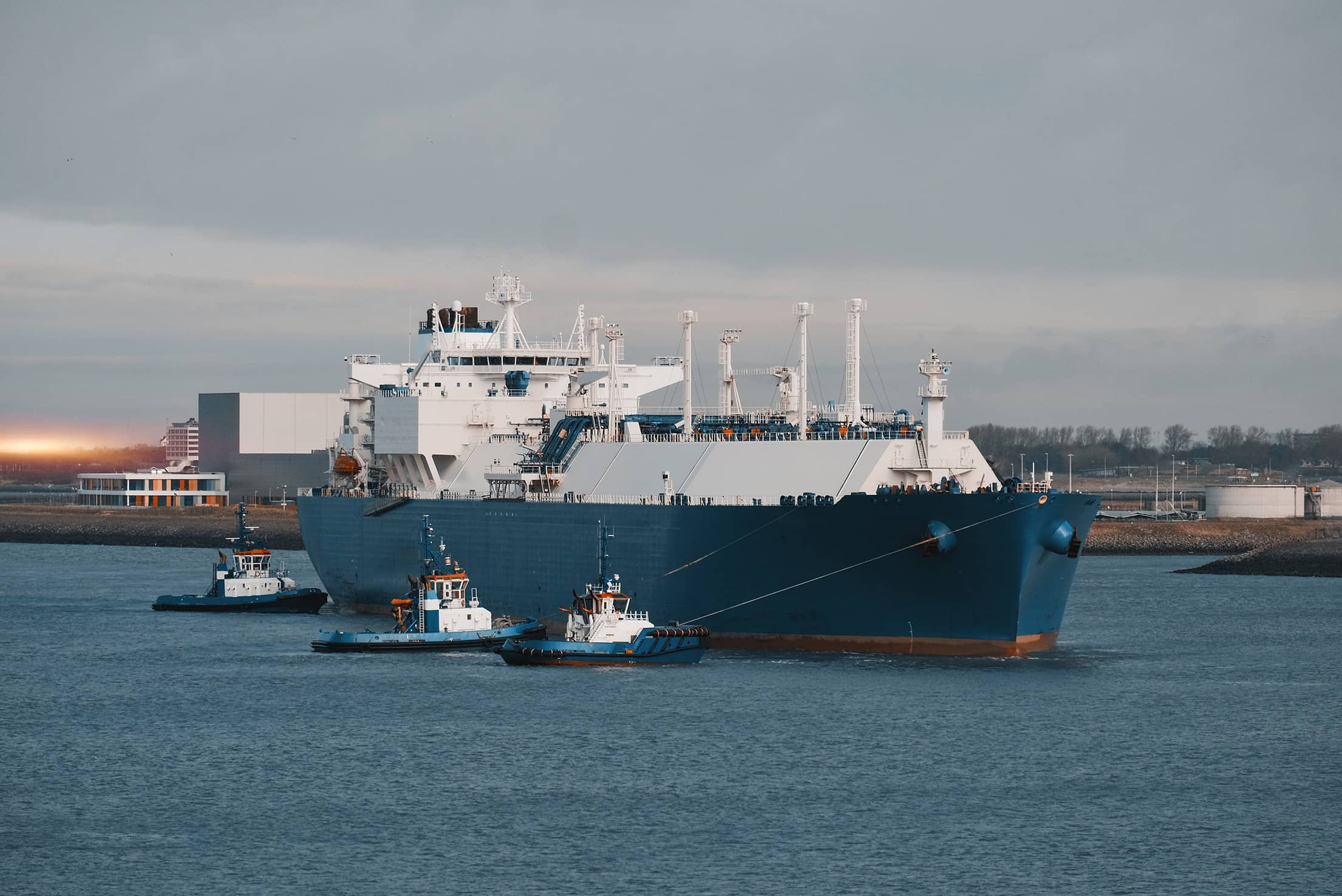
LNG carrier arriving in Rotterdam, Netherlands. LNG carrier arriving in Rotterdam, Netherlands.
The euro has come under sustained pressure this week as surging energy prices triggered by the Middle East conflict weigh heavily on Europe’s economic outlook.
Strategists at Barclays explain that the performance is tied closely to the Eurozone's reliance on energy imports, which leaves industry and households particularly exposed when fuel prices spike.
"Highly sensitive currencies to oil and/or natural gas, such as the EUR, the yen or parts of industrial Asia (eg, the KRW) have been hit hard, as one would expect given their sensitivity to energy prices," the bank says.
EUR/USD has dropped around two per cent since late last week, a move that analysts say reflects the eurozone’s vulnerability to rising oil and gas prices.
EUR/GBP has fallen three-quarters of a percent this week, and the single currency is on course to record a first weekly decline against sterling since the final week of January.
Barclays adds that historical precedents suggest the recent euro decline is broadly consistent with the scale of the current energy shock:
"As a reminder, the broad dollar gains c. 0.5-1% for a 10% move higher in oil prices, while the EUR tends to drop by c.0.25% for a 10% move up in natural gas prices, based on the Ukraine invasion precedent. The c. 2% move lower in EURUSD since late last week is well within the estimated impacts for the c. 15-20% move higher in oil and 80% in natural gas."
The mechanism is straightforward: higher energy costs worsen Europe’s trade balance and increase inflation risks, creating a difficult environment for policymakers at the European Central Bank.
The European wholesale gas benchmark surged 40% this week as the closure of Middle East natural gas export hubs and shipping lanes severely curtailed global supply and triggered competition for available supplies.
GBP/EUR
Samara Hamoud at Commonwealth Bank of Australia says Europe’s exposure lies more in global price dynamics than in direct supply disruptions.
"Europe is a net energy importer but is not heavily reliant on oil from the Middle East. Around 11% of the major European economies’ oil imports are from the region."
Nonetheless, she warns that higher global energy prices still feed through to inflation and policy expectations.
"The market is currently pricing around a 30% chance that the ECB hikes interest rates by year end."
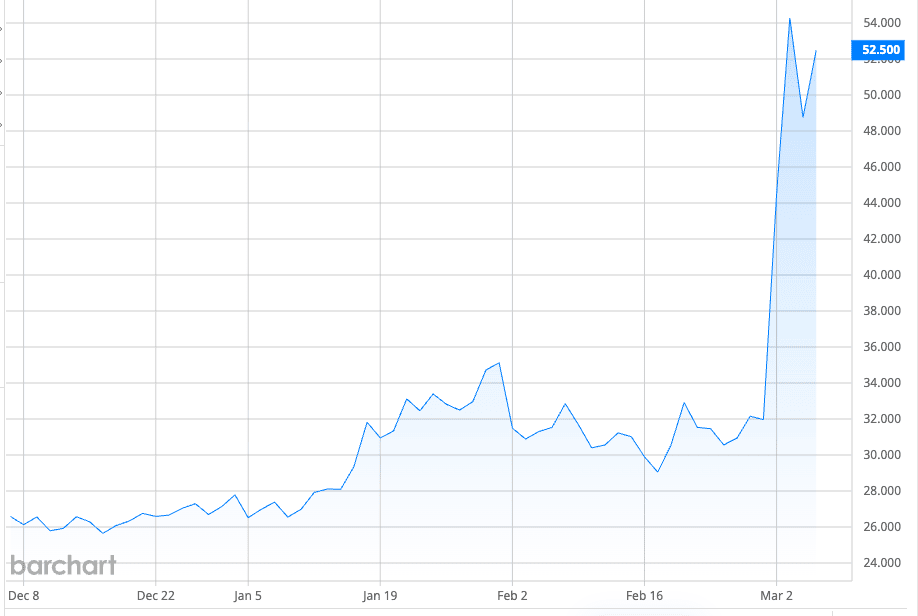
Above: TTF natural gas prices surge.
Jeremy Stretch at CIBC Capital Markets says the surge in energy prices is creating multiple macroeconomic challenges for the eurozone.
"The energy price spike remains problematic for the Eurozone. Rising import costs drag on the trade surplus, while the ECB is mindful of the inflationary consequences of a protracted energy price spike."
He notes that markets have already begun adjusting interest-rate expectations in response to the inflation risk.
“Building price pressures has witnessed the market starting to price in ECB hikes. We have long assumed that policy inertia would extend into 2027, the market is now pricing in around 7bps of tightening by September, we view such pricing as too aggressive.”
Stretch argues the euro could remain vulnerable if gas prices stay elevated.
“If and until the Dutch gas price materially corrects, we can expect EUR rallies to prove temporary and providing scope to fade.”
Unless energy prices begin to retreat, the single currency may continue to struggle as markets weigh the twin risks of weaker growth and renewed inflation pressures.