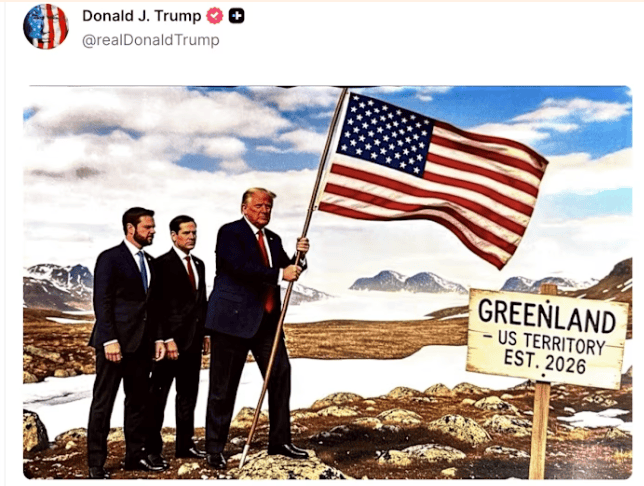
Image source: Truth Social.
The 'Greenland Trade' extends into a second day as traders start to fear this is no TACO trade.
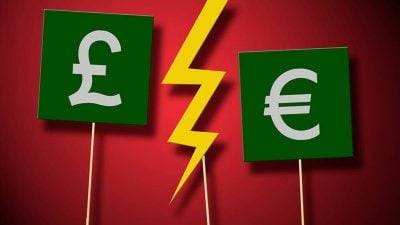
Pound sterling falls against the euro but rises against the dollar as markets see rising risks associated with a standoff between the U.S. and Europe over the question of Greenland.
As of Tuesday, Trump doesn't look as though he is ready to back down over the issue of securing Greenland for the U.S., which means the UK and European Union face a 10% tariff hit on February 01.
The dollar tends to fall as investors price in the negative economic impact of tariffs, which are largely borne by U.S. consumers. The euro meanwhile tends to benefit as the alternative 'big' liquid non-USD currency, even if it is the recipient of Trump's tariffs.
"Markets tend to be unkind to what they perceive to be self-defeating policies. Even in the absence of widespread retaliation, the dollar continues to trade with a negative premium versus where it should be trading in the presence of unretaliated tariffs," says Barclays in a note out Tuesday.
The antipodean currencies of New Zealand and Australia - which are geographically removed from the standoff - are also advancing.
This leaves the pound to euro exchange rate down on the day by a quarter of a per cent at 1.1499 and the pound to dollar exchange rate higher by 0.40% at 1.3476.
Against the New Zealand dollar the pound is lower by a further quarter of a per cent at $NZ2.3094 and against the Australian dollar it is down 0.15% at A$2.0021.
Latest developments:
● "Greenland is imperative for National and World security. There can be no going back" - Donald Trump, Jan 20.
● Trump makes his most strident criticism of the UK and Keir Starmer over the UK's surrender of the strategic Chagos Islands. Source.
● The volatility index (VIX) - the so-called fear guage now stands above 20 points, the first time since November.
● Trump floats 200% champagne tariff in response to French President Emmanuel Macron's refusal to join his Board of Peace.
"We have argued that the more the U.S. pursues an isolationist policy (and generally less consistent approach to historic norms) the more its external financing will come into question and investors will reassess their heavily built-up exposure to US assets," says Dominic Bunning, a strategist at Nomura.
Consensus projections for the next four quarters, compiled from leading investment banks.
Access the full forecast →
The initial market reaction to Saturday's bombshell tariff announcement was one of guarded caution when markets opened on Monday.
We ascribed that to the TACO phenomenon, where initial market reactions are faded as Trump Always Chickens Out.
The risk to TACO lies in naivety and misplaced optimism: Does Trump always chicken out? Tuesday's extension of the Monday selloff shows traders are taking the threats more seriously than was initially the case.
On the basis of his social media posts alone (see top image) he is clear he wants Greenland. The UK and EU aren't backing down either, for the simple fact that they can't on such a black-and-white issue.
If traders realise TACO is misplaced, the negative market reaction will build.
For GBP/EUR this means downside, for GBP/USD it means upside.
Highly accurate consensus projections for the next four quarters, compiled from leading investment banks.
Access the full forecast →