Image © Gov.uk
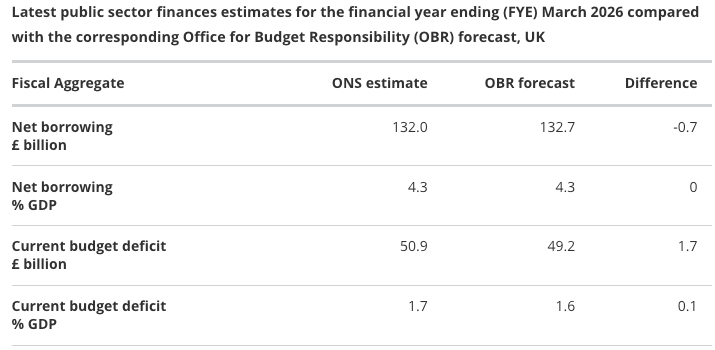
Government borrowing was higher than expected in March, and the Chancellor will have to borrow more than she was expecting to in the coming year.
These are the top-line takeaways from Thursday's public sector borrowing data that showed £12.6BN was borrowed in March.
That's the lowest March borrowing in three years and, on the face of it, good news for Chancellor Rachel Reeves.
However, that outturn was more than the market was expecting, with the consensus of economists pencilling in a £10.4BN outcome.
And, we're seeing a sizeable rise in UK debt costs on Thursday: UK bond yields have risen, with the ten-year rising to 4.198%, its highest level in two weeks. Global bond yields are also rising, but the UK's are rising by more; perhaps a sign that lenders to the UK government want greater compensation for holding their debt.
Elliott Jordan-Doak, Senior UK Economist at Pantheon Macroeconomics, says Reeves "will need to borrow more than expected in the upcoming fiscal year."
"The majority of the fiscal pain facing the Chancellor will be short-term, given that market-based medium-term rate and inflation expectations are little changed since before the war in Iran started. But we estimate that the Government will still need to shell out around £12B more in interest repayments in 2026/27, than expected at the time of the Spring Statement," explains Hordan-Doak.
This suggests the debt office - which will shortly outline its issuance plans - will need to potentially commission more bonds than existing forecasts suggest.
More borrowing could mean higher borrowing costs, particularly in a world awash with bond issuance, raising risks that UK debt dynamics deteriorate in the coming months.
Nabil Taleb, economist at PwC, says due to the conflict in the Middle East, the outlook for the UK is set to become more challenging.
"A more stagflationary backdrop is forecast to take shape, with speculation already building about the impact of weaker growth on the Chancellor’s headroom," says Taleb.

Above: The cost of borrowing as per the 10-year bond yield.
Recent growth forecast updates from the IMF and OECD were downgraded, while higher energy costs are set to keep inflation elevated into next year.
Headline inflation rose to 3.2% in March, according to ONS data out on Wednesday, which leaves the Bank of England with little choice but to sit on interest rates at current levels.
"Interest rate cuts discussed earlier in the year now look unlikely and could give way to further increases. Recent moves in bond markets, with gilt yields briefly touching 5% for the first time since 2008 before easing, also highlight the UK’s vulnerability to uncertainty," says Taleb.