Image © Adobe Images
"Europe is quietly preparing to emerge from its post-pandemic underwater years like a nymph turns into a stunning dragonfly" - BNP Paribas.
Europe’s economy may be entering a period of structural improvement that investors are still failing to appreciate, according to new research from BNP Paribas.
The French banking giant says a series of economic, political and geopolitical shifts are creating "Europe’s moment", challenging the long-held view that the continent is destined to underperform the United States.
“Europe isn't just emerging as the alternative safe haven of choice," says BNP Paribas. “It can count on five powerful boosters: rebounding industrial strength, established services dominance, tech acceleration, a governance sea-change, and favourable geopolitical winds."
The call is a counter-consensus one that contrasts to a prevailing narrative that Europe’s economy remains burdened by weak growth, fragmented policymaking, geopolitical vulnerability and 'old-world' industries.
However, BNP sees a continent undergoing a quiet transformation.
The first pillar of that argument is industry.
"Reports of the death of European industry are greatly exaggerated," the bank says, noting that industrial production has been recovering since early 2025 and now sits above pre-pandemic levels.
While the 2022 energy shock inflicted significant damage, Europe remains a net exporter of industrial goods and retains competitive strengths in aerospace, pharmaceuticals and advanced manufacturing equipment.
A second underappreciated strength lies in services.
"Europe’s industrial legacy obscures a crucial fact: the European Union is a services export giant."
According to BNP, the EU is now the world’s largest services exporter, generating a surplus of $173.5 billion through business services, telecommunications, information technology and transport.
The bank also challenges the perception that Europe is falling irreversibly behind in technology.
"Europe is not a tech dwarf. It is a fast-moving catch-up story."
The sector has expanded from 4% to 15% of GDP over the past decade, while venture capital investment now exceeds levels seen in China.
BNP says France is emerging as a major centre for artificial intelligence and cloud infrastructure, while talent flows have begun moving in Europe’s favour.
Policy is another area where there's constructive change: "Competitiveness is no longer secondary; it is becoming a central policy objective."
The bank points to industrial policy initiatives, technology sovereignty programmes, capital markets reforms and a more pragmatic approach to economic management as evidence that Europe is finally prioritising growth and strategic autonomy.
The implications extend well beyond the economy.
The ECB recently reported that the euro is increasingly behaving as a safe-haven asset during periods of market stress, while demand for German government bonds has surged.
"On multiple occasions, during recent episodes of market turmoil, the euro behaved more like a safe asset than the US dollar."
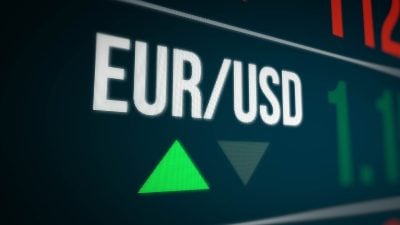
That dynamic is particularly relevant for currency markets as a stronger growth outlook, improving capital flows and rising international demand for euro-denominated assets all provide support for the single currency over the medium term.
For fixed-income investors, increased demand for euro-area assets also helps lower borrowing costs across the region, supporting growth and investment.
BNP acknowledges that Europe’s well-known problems have not disappeared; "growth remains too weak, fragmentation too real, and policy execution too slow for triumphalism.”
However, Europe is quietly evolving and will "emerge from its post-pandemic underwater years like a nymph turns into a stunning dragonfly."