Image © Adobe Images
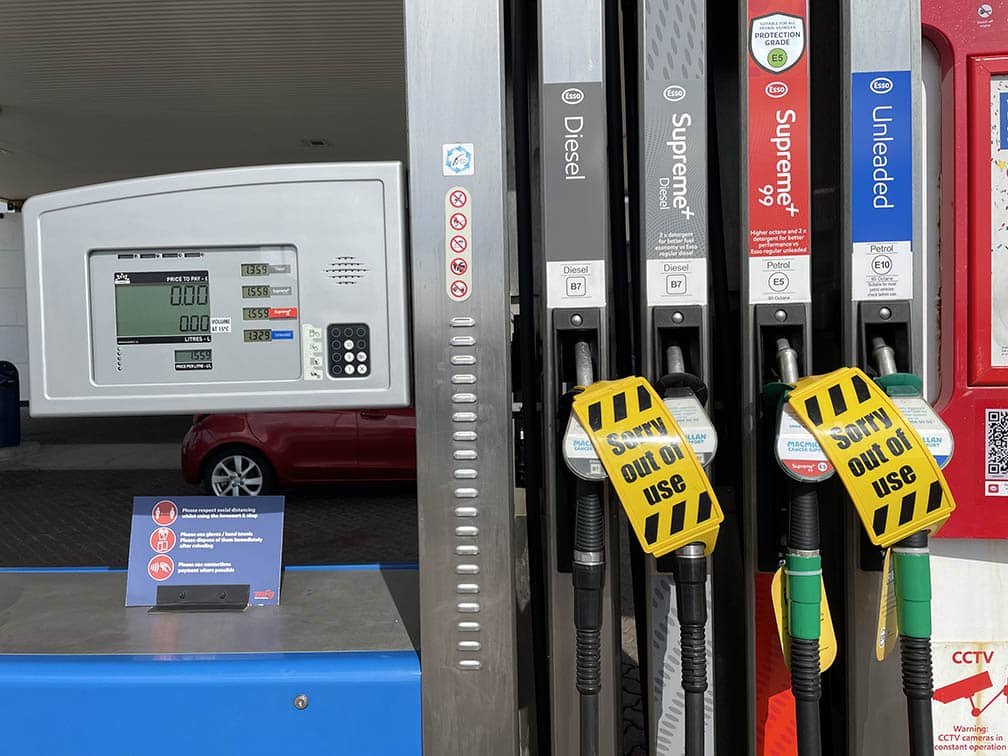
Surging oil prices are making electric vehicles look more attractive than ever before.
Since the outbreak of the conflict involving Iran on 28 February 2026, UK fuel prices have surged significantly in a very short period due to disruption in global oil markets.
According to the latest data from the RAC Fuel Watch as of mid-March 2026, the cost of diesel increased by 18.8p per litre, reaching a UK average of 161.20p. This is a 13% rise in just over two weeks.
Petrol (Unleaded) increased by 8.6p per litre, reaching a UK average of 141.74p. This represents roughly a 7% increase.
The cost of charging an EV has meanwhile remained constant and it's little wonder some resale platforms have reported a 20% jump in EV search traffic immediately following the start of the conflict.
Nearly 473,000 new fully electric cars hit UK roads in 2025, and that number keeps climbing. This is not a niche movement. It is Britain actively ditching the pump.
Economics drives most of the switch: running an EV costs around 8p per mile, roughly half what a petrol car demands. Add the government's firm 2030 deadline on new petrol and diesel sales, and the direction of travel becomes clear.
But cost and policy are only part of it. ChargeUK has committed over £6 billion to expand the public charging network before 2030.
More charge points mean fewer excuses to wait. And with over 130 electric models now available in the UK, you have real choice for the first time.
How Much Does It Really Cost to Own an EV?
You usually pay more upfront, but spend less over time, so it's smart to compare the monthly
picture (energy, insurance, tax, upkeep), not just the sticker price.
If you're choosing between an EV and a similar petrol car and want to keep cash aside for things like a home charger or a higher first-year premium, it can help to see how cars on finance affects affordability in real life, e.g., a steady monthly payment on a used Nissan Leaf or Kia e-Niro versus paying outright and then juggling insurance and setup costs.
EVs cost around 18–20% more than comparable petrol cars, but a driver doing 10,000 miles/year can save about £847 by charging at home, and maintenance is typically 30-40% cheaper (no oil changes, slower brake wear).
Insurance is still higher, around £1,200-£1,500 in 2025 and EVs now pay road tax: £10 in
year one from April 2025 registrations, then the standard rate, with the £40k Expensive Car
Supplement applying if relevant. Overall, many UK drivers save roughly £1,400/year, with the upfront premium often paying back in 3-4 years.
Charging at Home and on the Road: What You Need to Know
Home charging is cheapest. Full stop. A smart overnight tariff brings your cost down to around 9 to 14p per kWh, compared to 35 to 75p per kWh on public rapid chargers. Most drivers simply plug in at night and wake up to a full battery.
To charge at home properly, you need a wallbox.
A 7kW unit costs around £800 to £1,500 installed, and most homes complete the job in two to three hours. Renters and flat owners can apply for a government grant of up to £500 towards installation costs from April 2026. No driveway? You still have options.
Over 15,000 lamp-post chargers now operate across London, Manchester, and Birmingham, and workplace charging covers the gap for many commuters. Public charging costs more, but even drivers relying entirely on public chargers still pay roughly half the cost per mile of a petrol car.
On longer journeys, rapid motorway chargers top up most EVs to 80% in 20 to 40 minutes.
Apps like Zap-Map show live prices and availability before you set off. Plan one stop, and you cover almost any destination in the UK.
How Far Can You Actually Go on a Charge?
Further than you probably think.
The real-world average across all EVs on sale today sits at around 234 miles, and the typical UK driver covers just 127 miles per week. For most people, range is simply not the problem it used to be.
But the advertised figure tells a different story.
WLTP range estimates exceed real-world performance by 20 to 30%, because manufacturers test in a lab at a steady 23°C with no heating, no hills, and no headwinds. Britain rarely obliges. Cold winters alone can cut range by up to 40%, so treat the official number as a ceiling, not a guarantee.
Speed matters too. Motorway driving typically delivers 20 to 30% less range than the official
figure, as air resistance rises sharply above 60mph.
City driving actually performs better, because regenerative braking feeds energy back into the battery every time you slow down.
The fix is straightforward. Pick a car whose WLTP range comfortably exceeds your regular daily mileage, and you will rarely feel stretched. Premium models now push well beyond 400 miles on a single charge, but for most drivers a mid-range EV hits the sweet spot between price and practicality.
Is Your Lifestyle a Good Fit for an EV?
For most UK drivers, yes. The average person covers just 20 miles a day, and any modern
EV handles that on a single charge with ease. The real question is not how far you drive. It is how you charge.
Home charging makes EV ownership straightforward.
You plug in overnight, and the car starts every morning with a full battery. But if you park on a street without off-street parking, you rely entirely on public chargers, and that changes the economics considerably.
It still works, but it demands more planning.
Your driving mix matters too. UK drivers make journeys over 100 miles just two to three times a year on average. An EV handles those occasional long trips perfectly well, particularly now that rapid chargers sit at 97% of motorway service areas.
But if you drive 300-plus miles daily for work, you need a long-range model and a solid charging routine at home.
Rural drivers sometimes hesitate, and with good reason. Public charging in remote areas lags behind cities.
And if you rely on a three-pin socket in a barn rather than a proper wallbox, overnight charging becomes painfully slow. A home wallbox installation solves that immediately.
The honest answer: if you commute regularly, park off-street, and charge at home, an EV fits your life almost perfectly.
If two or more of those conditions do not apply, dig deeper before you commit.
How to Choose the Right EV for You
Start with three questions. How much do you want to spend? How far do you drive in a typical week? And do you need a small runabout, a family hatchback, or a full-size SUV? Answer those, and you cut the choice of 130-plus models down to a manageable shortlist fast.
Range matters, but do not chase the biggest number on the page. The average UK driver covers just 20 miles a day, so a real-world range of 200 miles covers most people comfortably. Spend the extra money on faster charging instead.
A car that adds 100 miles in 20 minutes at a motorway charger beats one with 50 extra miles of range but a slow charge rate on a long journey.
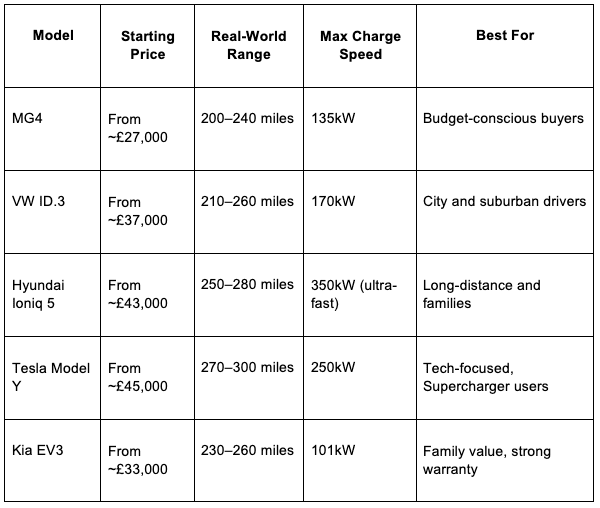
Charging speed splits the market clearly. Budget models top out at 50 to 100kW, which means longer stops on the road. The Hyundai Ioniq 5 charges from 10 to 80% in around 18 minutes on a 350kW charger, making it one of the fastest-charging mainstream EVs you can buy. For daily commuters who rarely leave the region, that speed is irrelevant.
For frequent long-distance drivers, it is everything.
Use the table below as your starting point, not your final answer. Test-drive at least two models before you commit:
Pound Sterling Live