Image © EC - Audiovisual Service
The European economy is in recovery mode as it enters the second half of the year.
The ending of a manufacturing recession, improving trade clarity and slowing input inflation helped private sector activity in the Eurozone rise to an 11-month high.
Eurozone private sector activity accelerated in July, with the S&P Global Composite PMI rising to 51.0 (from 50.6 in June), marking an 11-month high. This was ahead of consensus expectations for 50.8.
Growth was driven by services, where the business activity index climbed to 51.2, the strongest reading since January.
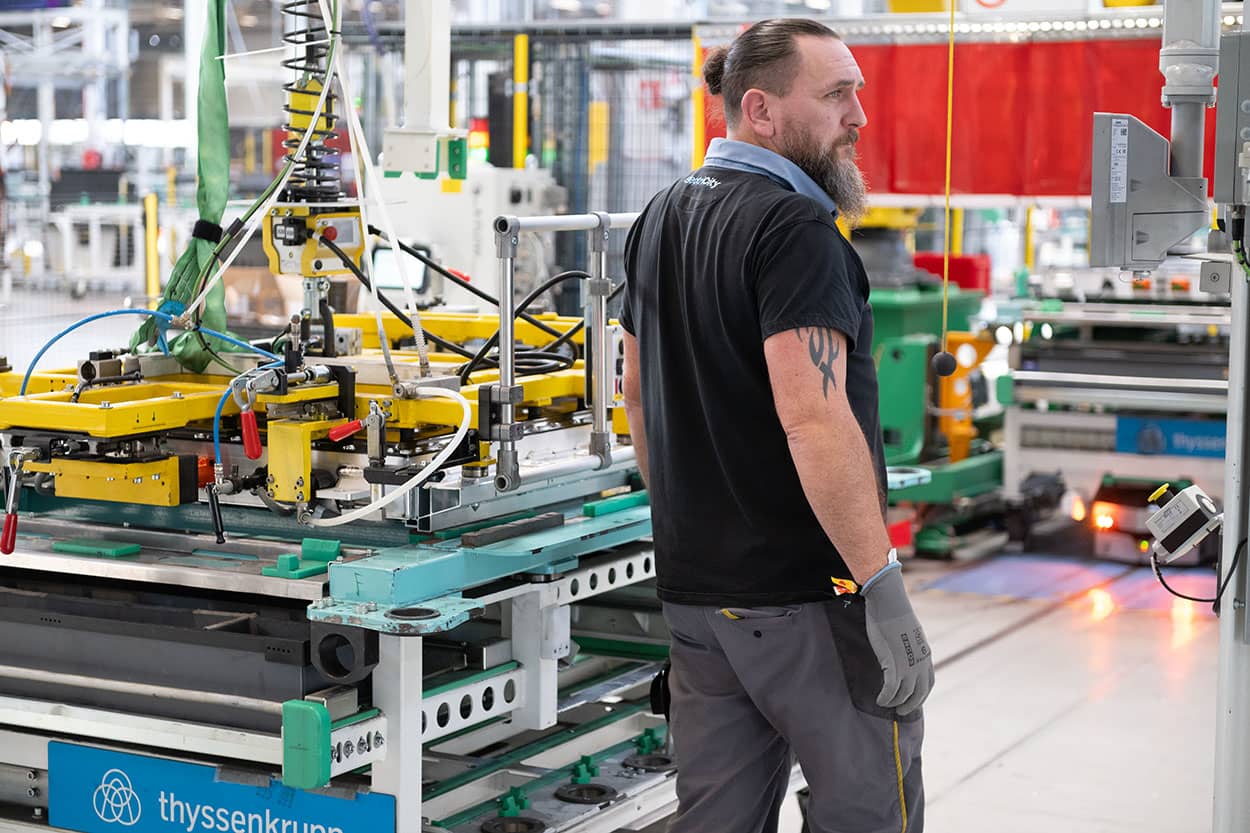
Manufacturing output remained just above 50 at 50.7, though the broader manufacturing PMI rose to 49.8, a 36-month high. New orders stabilised after 13 months of decline, while employment rose modestly, led by services. Price pressures eased further, with input inflation at a nine-month low.
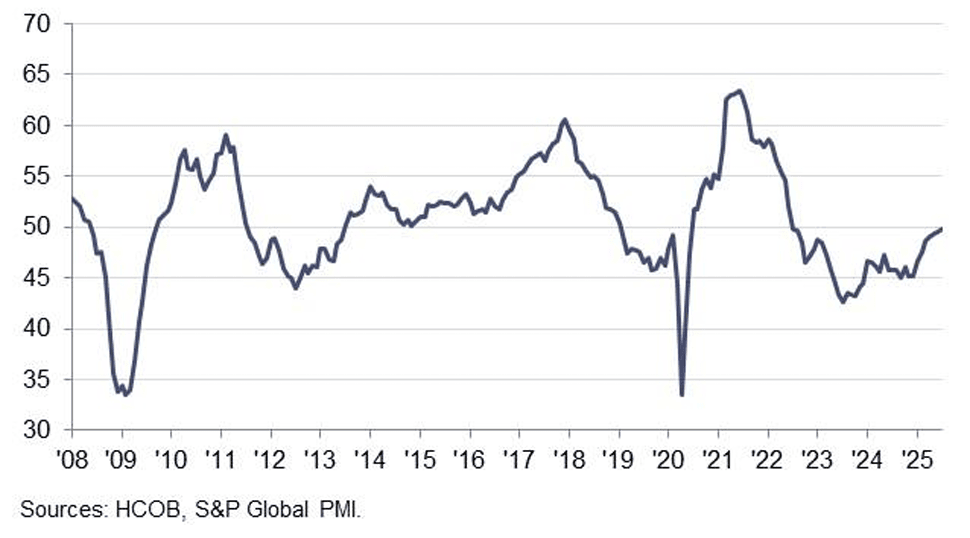
Above: Eurozone Manufacturing PMI.
Helping businesses, was a fall in the pace of inflation to a nine-month low, which is also weaker than the series average.
Confidence dipped slightly overall, with sentiment falling in France but rising in Germany, where growth prospects appear firmer.
Chief Economist at Hamburg Commercial Bank, Dr. Cyrus de la Rubia, says, "the recession in the manufacturing sector is coming to an end," but cautioned that political uncertainty in France could limit recovery.
France is increasingly seen as the Eurozone's main laggard, with the headline French Composite PMI reading at 49.6, which is below the 50 level that is the divide between contraction and expansion.
France’s private sector economy continued to deteriorate at the beginning of the third quarter, with business activity shrinking for an eleventh successive month, said S&P Global.
Worryingly, some of the survey’s sub-indices signalled ongoing malaise in France. Demand for French goods and services declined at the sharpest pace in three months in July.
However, the improvement experienced by the wider Eurozone is likely to extend through the second half of the year, amidst signs that a trade deal between the EU and U.S. is imminent.