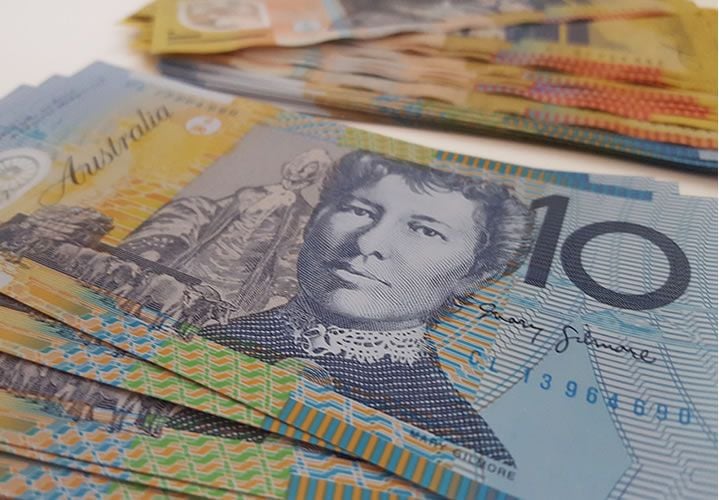
The Aussie Dollar is likely to retain a positive bias over coming months as Australia's high interest rates remain seductive for yield-hunting global investors.
- Pound to Australian Dollar exchange rate today (14/9/16): 1.7655
- Australian to US Dollar exchange rate today (14/9/16): 0.7482
The Australian Dollar remains pressured against the EUR, USD and even the GBP as the currencies of Asian and commodity-exporting countries continue to suffer amidst falling sentiment amongst global investors.
This currency class has taken a knock as markets prepare for the withdrawal of stimulus at the US Federal Reserve via impending interest rate rises.
Such a move would not only raise the cost of borrowing in the US, but also across the world where vast sums of loans are denominated in Dollars.
The resultant slowdown in growth is therefore bad for demand, which hits commodity prices, which then hits the currencies of commodity-exporting nations such as Australia.
Nevertheless, we hear that this damage may be short-lived and the Australian Dollar will likely continue rising thanks to supportive foreign exchange inflows into the countries.
According to analysis from RBC Capital Markets global investors should continue fuelling the ‘carry trade’ which sees investors borrowing money in a low interest rate currency then using that money to buy a currency with a higher interest rate.
Funding currencies include as the Dollar (0.5%), Yen (-0.1%) and the Euro (0.0%), and beneficiaries include the Aussie (1.50%) and the New Zealand dollar (2.0%).
The procedure results in a profit from the difference between the two rates, since the cost of borrowing the funding currency is less than the interest earned in the higher interest rate environment.
RBC Capital's Adam Cole says the recent fall in the Australian interest rate, which would normally have resulted in a fall in carry volumes, has been offset by a corresponding fall in funding currency’s rates, sometimes, as in the case of the yen, into negative territory.
Latest Pound / Australian Dollar Exchange Rates
  | Live: 1.88▲ + 0.07%12 Month Best:2.0851 |
*Your Bank's Retail Rate
| 1.8161 - 1.8236 |
**Independent Specialist | 1.8537 - 1.8612 Find out why this is a better rate |
* Bank rates according to latest IMTI data.
** RationalFX dealing desk quotation.
This essentially means carry traders using the yen to fund their trades are being paid to invest in the Aussie which they are then pair interest for – so they get paid twice.
This phenomenon has maintained carry demand if not increased it recently leading to a rise in the Australian dollar, due to its relatively high 1.50% interest rate.
The fact that equities look overvalued after a long bull-market, that bonds provide ever meagre returns and commodities remain in the doldrums has further increased the attractiveness of carry trading for investors.
“The fact that investors are paid to short a number of G10 currencies has compensated for the decline in yields on the long side of carry trades," says Cole.
“So relative to the yield on conventional assets, FX carry trades look more and more attractive. This shift in market drivers has changed the balance of risks for AUD significantly in the short term.”
As a result RBC expect the AUD/USD exchange rate to rise to 0.79 by the end of 2016, before peaking and then falling down to 0.72 by the end of 2017.
“Our revised forecasts now show AUD outperforming in the next 3-6 months, with AUD/USD rising back to the top of the year’s range late this year (0.79).”
Over the longer-term horizon in 2017, Cole sees a the Reserve Bank of Australia being forced to cut interest rates to 1.25%, which will result in a pull-back in the Aussie versus the Dollar, which will no doubt benefit from a boost if the Fed raise rates as they are likely to do in December.
“RBA will need to do more of the work in supporting growth, we look for another rate cut in 2017 taking the cash rate down to an historical low of 1.25%,” says Cole.
While carry demand will continue to be an influence offsetting loses the currency is still highly overvalued (by 10% above its long-run average) and therefore only tenuously ‘borne aloft’ with a possibility it may come back down to earth, if carry trades suddenly unwind and the market environment changes.