
Image © Adobe Stock
The Australian dollar has rallied on improvements in the geopolitical sphere, but currency specialists warn of a potential reversal.
The Australian dollar surged against the pound through the midweek session as international investors heaved a sigh of relief at the news that a ceasefire had been reached between the U.S. and Iran.
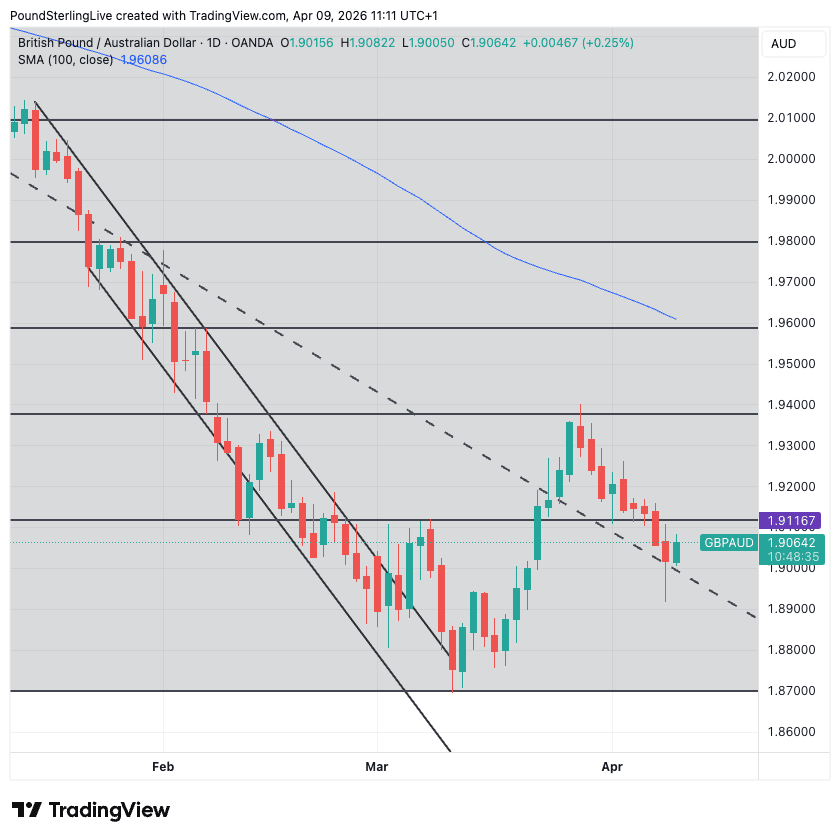
GBP/AUD fell to 1.8918 at one point on Wednesday and AUD/USD rose to a daily high of 0.7050.
"This week’s gains have taken AUD/USD to just about 1% below its pre‑war level. For now, hopes of a lasting diplomatic solution is likely to keep the risk sensitive AUD/USD supported," says Carol Kong, a strategist at Commonwealth Bank of Australia (CBA).
The Aussie has given back some gains over the course of Thursday, amidst clear signs that this is a strained ceasefire, with newswires reporting ongoing hostilities and that the Strait of Hormuz remains effectively closed to maritime traffic.
Australia's dependence on Asian fuel refiners - who source their oil from the Middle East - has proven to be something of an Achilles heel for the Aussie dollar.
Despite the ceasefire proving to be a strained one, there remains enough hope to ensure high-beta FX plays like the Aussie dollar retain most of their gains.
"Investors took advantage of yesterday’s improved risk sentiment but remain exceptionally wary of the short-term outlook," says Achilleas Georgolopoulos, Senior Market Analyst at Trading Point. "There appears to be an incentive from both sides to maintain the current ceasefire, with the next step being the direct talks in Pakistan."
However, CBA's Kong warns that optimism can only go so far. In a daily briefing, she explains the reported ceasefire violations highlight the risk of re‑escalation, and in turn, a potential reversal in AUD/USD.
"AUD/USD can return to around 0.69 quickly if market participants lose hope of ships passing through the Strait of Hormuz," she says.
Such a move in AUD/USD would take GBP/AUD back to 1.93, all else being equal.
Medium term, CBA says it still expects AUD/USD to fall this year because of weaker fundamentals, led by a stronger USD because of U.S. exceptionalism, a soft Chinese economy, and narrowing Australia minus U.S. interest rate differentials.
Should AUD/USD come under pressure, we would anticipate GBP/AUD to be better supported, although drawing a direct inference here is more difficult considering pound sterling's domestic vulnerabilities.