Image © Adobe Images
Analysts at independent research house TS Lombard explain why the dollar has strengthened, despite the angst and intrigue provided by the Middle East.
The dollar has long been known as a 'safe haven' currency that would stand to benefit during times of crisis, as we are witnessing in the Middle East.
The impact of that crisis is profound: the strangulation of at least 20% of the world's oil and natural gas exports will weigh heavily on global growth and bolster inflation.
The dollar has gained as the broad risk-off in markets, and the global terms-of-trade shock has benefited it, owing to the role of the U.S. as the world's largest crude oil producer and biggest exporter of LNG.
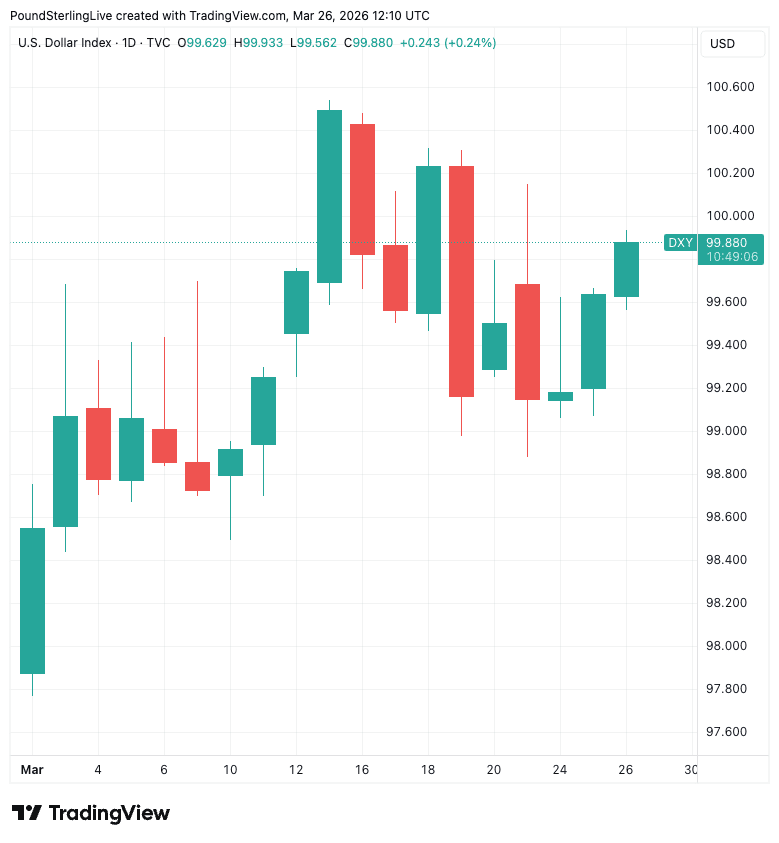
The dollar, as measured by the dollar index, is up 2.0% as we near the one-month mark of the crisis. Should it not be higher?
"Considering the scale of the shock, the dollar's advance has been far more modest than what might have been expected," says Daniel Von Ahlen, analyst at TS Lombard.
He's looked into the Greenback's failure to launch and explains there are a few things that might have crimped its progress:
● A tarnished haven: "Policymaking under Trump's second Presidency is characterised by capriciousness, which does not sit well with many investors," explains Von Ahlen. He says this diminishes the flight to U.S. safety mechanisms during financial, economic or geopolitical crises.
"The decoupling of the U.S. 10y yield and the terminal SOFR rate since 'Liberation Day' is a good illustration of this," he adds.
● Expectations for higher inflation have meanwhile caused a surge in expectations for global central banks to hike interest rates. For instance, the UK entered the crisis with two rate cuts baked into the outlook, fast forward a month and we are looking at two rate hikes.
That's a material shift that traditionally works in GBP's favour. If that's being replicated against most non-USD currencies, then the USD's room to advance becomes limited.
● Other factors cited by Von Ahlen include resurfacing U.S. labour-market concerns, which would limit the scope for Federal Reserve rate hikes, and a healthier global economy than was the case in the last energy shock of 2022.
"If the consensus is right about the duration of the hostilities, then the macro reacceleration theme will not be derailed; and this will likely cap the upside for the dollar," says Von Ahlen.