✳️ Secure today's exchange rate for a future payment. You may also book an order to trigger your purchase when your ideal rate is achieved. Learn more.
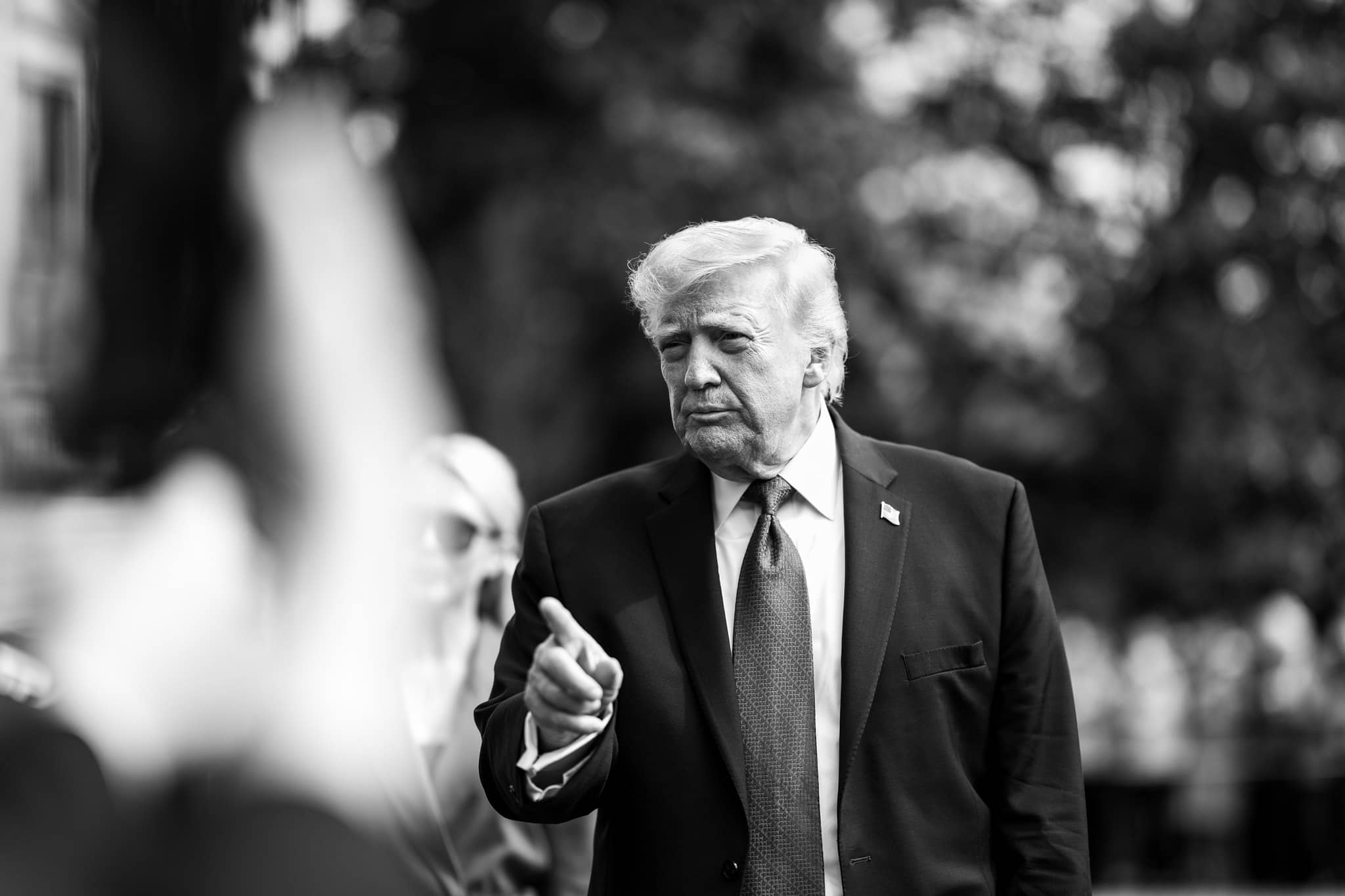
Official White House Photo by Molly Riley
The British pound has fallen 0.65% against the dollar this Friday.
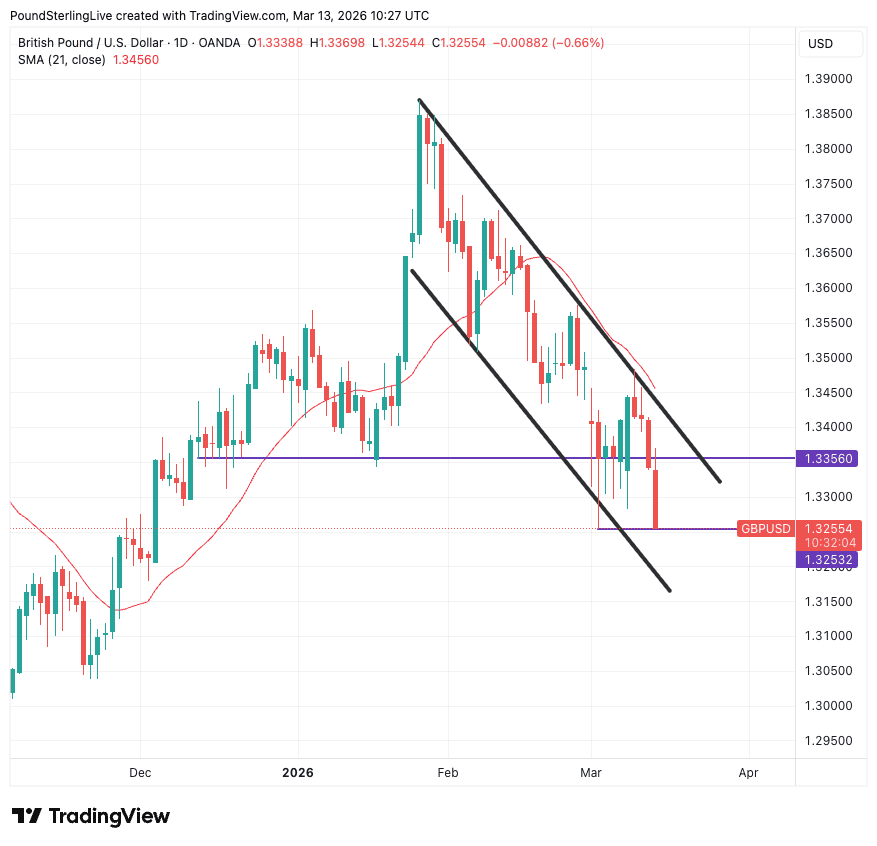
GBP/USD trades at 1.3257, putting it at the Iran crisis low reached last Tuesday as the dollar continues to benefit from ongoing turmoil in the Middle East and a still-blocked Strait of Hormuz.
Oil and gas prices are elevated with Brent holding near $100 a barrel, with upside risks persisting after U.S. President Donald Trump warned overnight "we have unparalleled firepower, unlimited ammunition, and plenty of time."
This marks a departure from comments made earlier in the week that he believed the end of the conflict was nearing and underscores the ongoing USD-supportive backdrop.
For the dollar, ongoing uncertainty and elevated energy prices are supportive. "The trade-weighted US dollar has strengthened by around 3% over the past month," says Sara Midtgaard, a strategist at Nordea Markets.
As the daily chart shows, GBP/USD maintains a clearly defined downtrend with odds favouring lower levels in the coming days.
Iran's new Supreme Leader, Mojtaba Khamenei, said Thursday his forces would ensure the Strait of Hormuz remains effectively closed to seaborne energy transit. Strategists at Alpine Macro, a geopolitics specialist, warn the "maximum panic" moment for markets is still yet to come as they now expect the conflict to last for roughly two months.
Dan Alamariu, Chief Geopolitical Strategist at Alpine, says markets are expected to experience "maximum panic" within the next 1-3 weeks.
The interim uncertainty and a potential market capitulation will provide ongoing tailwinds for the dollar.
"Elevated uncertainty keeps USD bid while the conflict persists, particularly against high-beta and energy-importing currencies. A quick resolution allows selective USD selling, but a prolonged war drives broad USD strength, EUR downside," says a note from TD Securities.
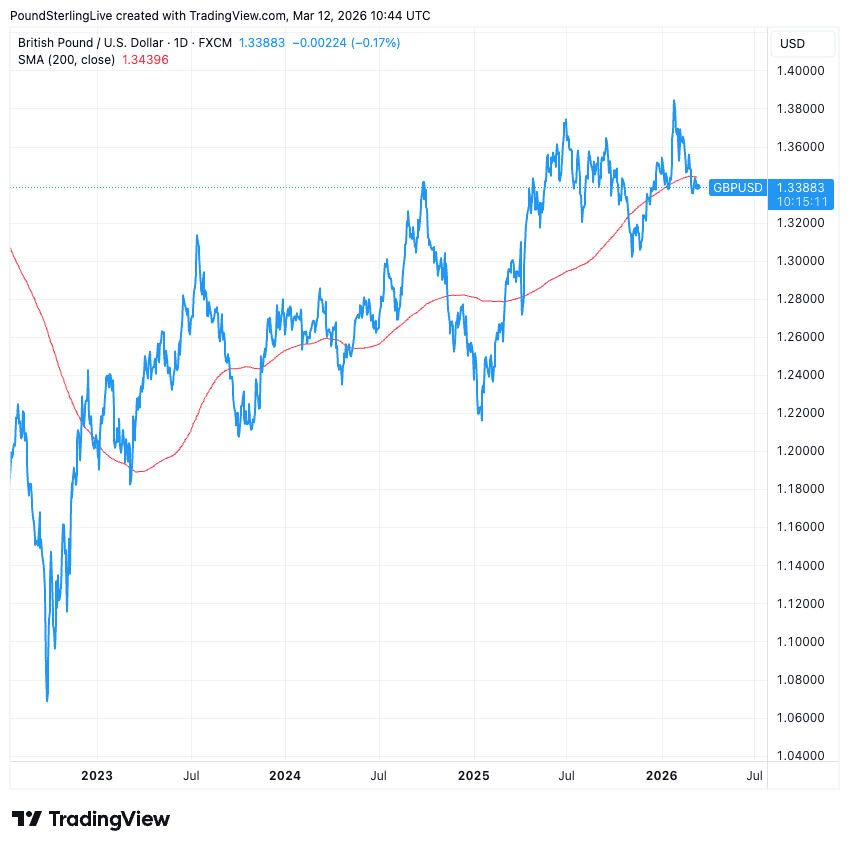
Stepping back, we're still in a pullback within a broader uptrend.
Markets are yet to display signs of real panic or capitulation and if the coming weekend does bring some optimism on the war ending, then next week could see the dollar retreat.
"Despite the turmoil of war in the Middle East, it would be fair to say that equity markets remain resilient, e.g. the S&P Composite is hovering only 3% below its all-time high," says Albert Edwards, a strategist at Société Générale. "It seems the market has gone all-in with the optimistic view of the war."
Longer-term, the GBP/USD is still in a multi-month uptrend and the recent declines look to be a setback to the trend rather than a major turning point, meaning timeframe perspectives are important for those with USD payment requirements.
"Over the longer term, however, we believe the structural drivers still point towards a weaker dollar," says Midtgaard.