Highly accurate consensus projections for the next four quarters, compiled from leading investment banks.
Access the full forecast →
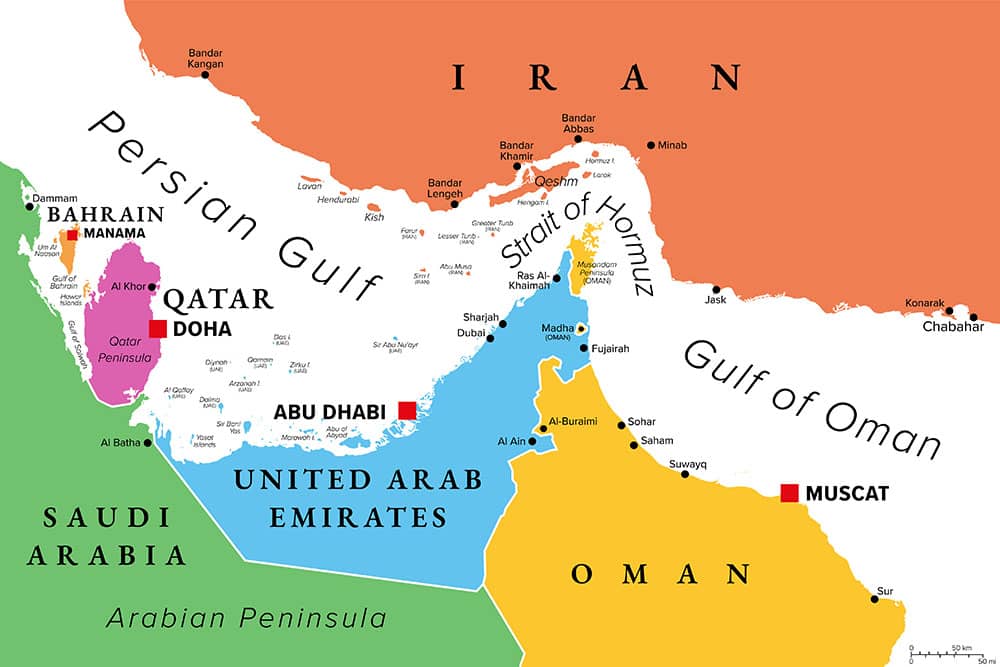
Image © Adobe Stock
The dollar has finally rediscovered its safe-haven credentials.
When the bombs fall, the real financial safe-haven assets emerge, and the dollar is reminding us on Monday that it still fits the bill.
The currency is widely bid as oil prices surge in response to military actions across the Middle East as the U.S. and Israel strike Iran.
In response to the killing of its leader, Iran has struck numerous targets across the Gulf, with a British base as far afield as Cyprus being hit by an Iranian drone.
The action has severely disrupted global air travel and the operations of multi-nationals based in the UAE. Crucially, it has effectively stemmed the flow of oil and gas through the Strait of Hormuz that separates Iran from the Arabian Peninsula and therefore acts as a chokepoint.
With oil prices surging and global markets under pressure, the safety of cash is sought, and there's only one true global currency: the dollar.
"The escalation in Iran over the weekend adds to recent dollar tailwinds via higher energy prices - to the tune of 0.5-1% for every 10% increase in oil - and elevated risk aversion," says Leonardo Crimella, an analyst at Barclays.
Demand for the dollar pressured the GBP/USD exchange rate as low as 1.3365 on Monday, confirming the pair will likely experience further losses in the event of the war dragging on.
To be sure, the U.S. President has indicated he is willing to talk to a new Iranian leadership, but that's a difficult proposition given the entire head of the Iranian government was eliminated on the weekend.
GBP/USD
But who is there to talk to, and what mandate would they carry in a government that is in flux? There's enough uncertainty as to what an off-ramp out of this conflict would look like to ensure there's no quick resolution.
And of course, traders would prefer there was a quick resolution that would allow them to fade recent moves and re-engage the equity market rally.
Until then, it's a risk-off environment and the dollar should benefit.
The pound, on the other hand, is proving to be one of the real losers of this conflict as it simply has nothing going for it: the CHF, JPY, USD and EUR all have safe-haven qualities about them, while the likes of NOK and CAD tend to benefit when oil prices are rising.
Even AUD and NZD benefit via the 'commodity dollar' status they tend to enjoy, as well as via their geographical and political remoteness from the conflict.
For the pound, rising oil prices threaten to arrest the disinflation process that has been bolstering business and consumer sentiment of late. It also means the window of opportunity for the Bank of England to lower interest rates will be a lot smaller than hoped: one cut is expected this month and another was expected before year-end.
But with inflation pressures building again on account of rising oil prices, that second cut will now be less likely, making for a less rosy domestic outlook.