
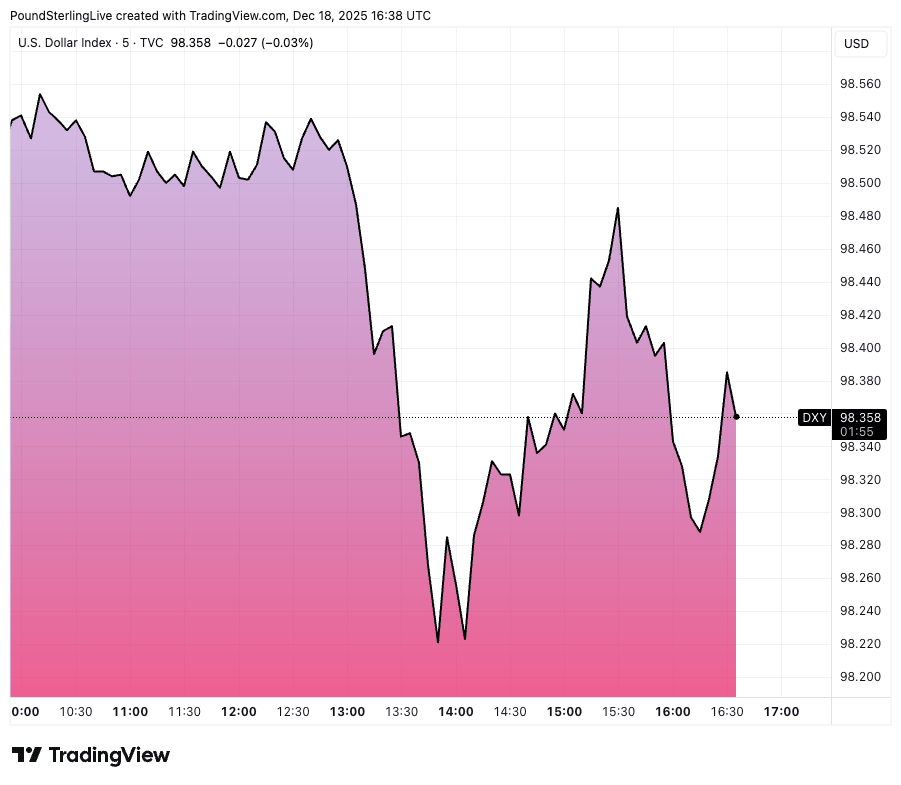
The dollar fell after it was announced U.S. inflation fell to 2.7% y/y in November, down from 3% in October.
This defied consensus expectations for a rise to 3.1%.
The implication is that the Federal Reserve should feel more comfortable lowering interest rates again in the coming months.
Responding to the data, the dollar index, which is a measure of broad dollar performance, fell 98.58 to 98.20. (See above chart).
Euro-Dollar rose to a daily high at 1.1750 and pound-dollar printed the day's peak at 1.3440.
Core CPI inflation fell to 2.6% from 3.0% in October, which is where it was expected to remain again last month.
The inflation undershoot is being treated with a degree of scepticism by economists, which perhaps explains why the dollar pared some of its earlier losses.
"We would advise market participants to look through the November report's dovish signal, and wait for what's likely to be more reliable December numbers. We think Fed officials will probably aim to do the same," says TD Securities in a response note.
"Very weak CPI numbers drove some USD weakness, but the reaction was moderated by shutdown noise and questions around data calculation," says Jayati Bharadwaj, Head of FX Strategy at TD Securities.
Highly accurate consensus projections for the next four quarters, compiled from leading investment banks.
Access the full forecast →
Fawad Razaqzada, analyst at City Index, says there will be some scepticism about this particular inflation report, given what the government shutdown meant for data collation.
"So, markets may be better off not to overreact to one month's worth of data and await the December report, due in January," he says.
Markets are nevertheless happy to take today's numbers at face value, buying stocks and selling 'safe havens' as investor confidence in the Fed delivering more rate reductions grows.
The Federal Reserve is mandated to target inflation around 2.0% on a sustained basis while protecting the labour market.
If it feels inflation is under control, it will lower interest rates to help bolster businesses and households to preserve jobs and encourage hiring.
"Taking at face value developments in the core CPI, results were encouraging," says Lawrence Werther, an economist at Daiwa Capital Markets.
✳️ Secure today's exchange rate for a future payment. You may also book an order to trigger your purchase when your ideal rate is achieved. Learn more.
He explains the latest data revealed positive developments with respect to both goods and services.
"More broadly, the recent results for core goods suggest that anticipated impacts from tariffs may be far less than previously assumed," he adds.
Lower interest rate expectations make for a softer dollar.
"US dollar resilience is likely to fade... as Fed rate cuts erode the interest advantage and structural outflows start to dominate again," says David Alexander Meier, FX analyst at Julius Baer.