
Image © Adobe Images
The British pound is back under pressure ahead of the weekend.
The UK currency started the day on a steady footing, helped by news that UK retail sales comfortably beat expectations in March.
The ONS said sales fell last month - by 0.4% month-on-month - but that outcome was less severe than a -0.8% m/m the market was looking for. Retail sales rose 2.5% in the year to February, which was comfortably above the 2.1% expected by markets.
Although the data precedes the war in the Middle East, and is therefore somewhat dated, it does indicate that there was an underlying resilience in the economy pre-crisis.
The GBP/EUR exchange rate rose to 1.1560 following the release, making for a quarter of a per cent gain for the week. But, selling pressure has since built and the pair is back down at 1.1549.
GBP/USD rose to 1.3331, but has fallen back to 1.3305.
The dollar is expected to maintain its strength over the coming days as the world awaits some kind of resolution to the Middle East war.
The good news for markets is that U.S. President Donald Trump has extended by ten days his deadline for Iran to negotiate an acceptable settlement, or he ramps up attacks again.
However, that's the extent of the positivity and Iran has rejected the initial 15-point plan offered by the U.S., while also saying it will maintain full control over the Strait of Hormuz after the war, which is hardly acceptable to Saudi Arabia and the UAE.
So there are ten days of anxiety ahead, and the dollar is the only real winner under such circumstances, which should keep GBP/USD under pressure.
Turning to the outlook, Bank of America is out this week with some updated forecasts, saying the pound continues to face near-term headwinds, but from May, the conditions for a more sustained rally will emerge.
In the new forecast update, the bank says "we are most constructive GBP (post May local elections), but cautious near-term)." Near-term headwinds include the war in the Middle East and May's local elections that should see the ruling Labour Party receive a drubbing from all sides.
City analysts are wary that the Labour Party responds by tacking leftward - in response to Zack Polansk's Greens - and engage big-spend social policies that put the country's finances at risk.
Should the government weather the storm and stay the course, Bank of America forecasts Pound-Dollar at 1.43 by year-end, and pound-euro at 1.19.
Those bullish FX forecasts will be challenged by the headwinds posed by the war, with the OECD warning the UK is set to be hit hardest by the effects of the Middle East war amongst the G20 economies.
The organisation downgraded 2026 growth forecast to 0.7% from a previous estimate of 1.2% and upgraded inflation forecasts, saying it will rise to 4% later this year.
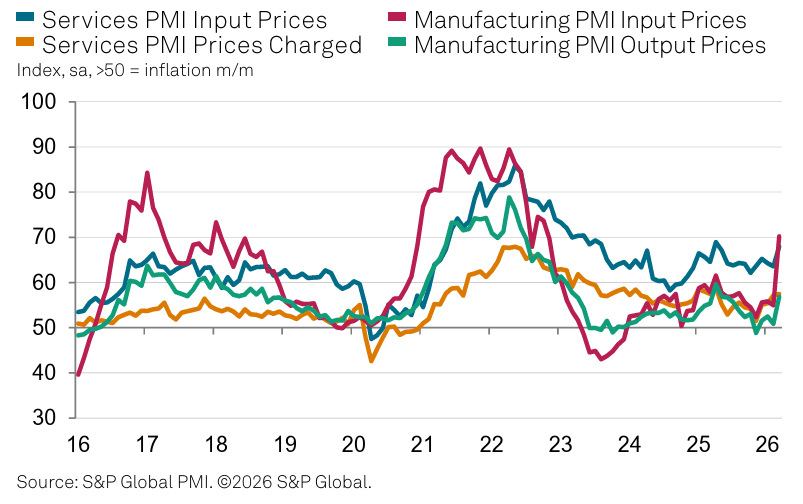
Above: PMI data shows businesses have seen a spike in costs this month, which signals an uptick in inflation is coming.
"The UK is now on track for one of the highest inflation rates in the G7 this year, according to the latest OECD forecasts, threatening input costs for retailers as energy and transport costs rise," says Phil Monkhouse, UK Country Manager at Ebury. "Consumer confidence is also likely to remain subdued, as rising mortgage rates, higher borrowing costs and renewed inflation concerns linked to the Iran conflict all add up to a rocky outlook for consumer spending."
On Thursday it was confirmed by the British Retail Consortium that consumer confidence has plummeted this month, which bodes for a slowdown in economic activity.
Earlier, on Tuesday, the S&P Global PMI survey showed businesses faced a significant uptick in cost pressures, confirming that an inflationary hit is building.
The pound has thus far weathered the downbeat data because money markets see heightened expectations that the Bank of England will raise interest rates in response to these developments. That lift in interest rate expectations traditionally feeds into a stronger pound.
The risk is that higher interest rates and fuel costs push the economy into a downturn, putting the government's finances under pressure. The Labour government will find it difficult to resist calls by its left-wing MPs for some kind of assistance package for low earners, which would only heap pressure on public finances.
But with the UK's lenders already wary about the outlook, the prospect of a major selloff in bonds and the pound will grow if they choose this route.