Image © Adobe Stock
Trump's ten-day extension for Iran leaves markets in limbo, which is broadly USD-supportive.
The pound-dollar exchange rate is down for a fourth consecutive day at 1.3311 as markets get used to a drawn-out period of uncertainty over the Iran war.
Sure, a more aggressive selloff was arrested by U.S. President Donald Trump's desire to negotiate peace, but the dollar will remain in demand as long as Iran resists his demands.
Trump extended his stay on attacking Iranian energy sites by ten days, saying talks with the country were going "very well".
But, Iran has indicated it is still awaiting a response after rejecting a US 15-point plan to end the war and has offered its own conditions.
The Wall Street Journal also says the U.S. is set to send as many as 10K more troops to the region as some form of ground invasion will be necessary if Iran doesn't give Trump the wins he needs to exit.
The very real problem for markets is that Iran is signalling it will seek to permanently gain control of the Strait of Hormuz, through which 20% of the world's oil and natural gas flows.
Iran's Foreign Minister Abbas Araghchi said Iran would impose a new order in the strait after the war, insisting that the country exercises sovereignty over it "even if some might like to view it as international waters".
"In the future, we seek to establish new arrangements for safe passage," he said.
That is an outcome that will be unacceptable to the UAE and Saudi Arabia, who share the Strait with Iran. They will not allow this, raising the prospect of another escalation.
"The low probability of a reopening of the Strait of Hormuz... is supportive of higher energy prices and keeps bearish forces intact in the bond market. A ground offensive could trigger further drawdown in risk assets and tighten financial conditions," says a daily strategy note from Société Générale.
"The heightened likelihood of a more persistent energy shock raises financial stability risks because it traps central banks in restrictive policy and puts government debt on a more fragile and unsustainable path. As such, USD can continue to benefit driven by dollar funding needs, not safe haven flows," says Elias Haddad, Global Head of Markets Strategy at Brown Brothers Harriman.
The dollar maintains a safe-haven status in times of conflict, while America is a net oil and gas exporter, which means the crisis offers a boost to American foreign exchange earnings.
Other currencies belonging to fuel-importing nations, such as the pound, are meanwhile exposed to higher gas and oil prices, ensuring the GBP/USD should remain offered.
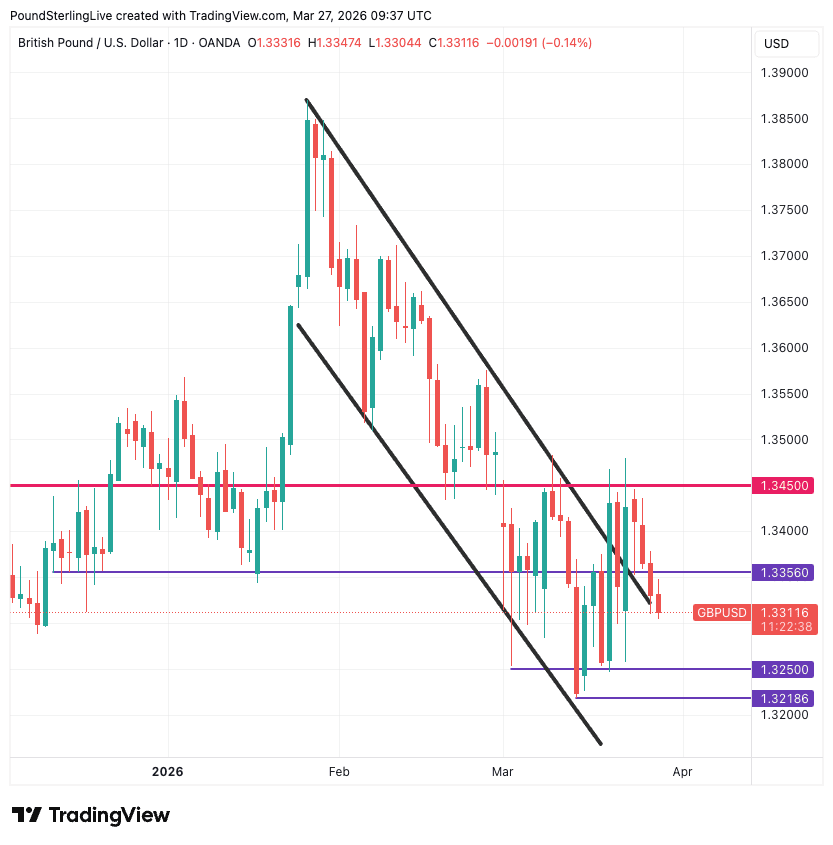
The daily chart shows GBP/USD is positioned for a move to 1.3250 next, ahead of the crisis lows at 1.3218.
"GBP Resilience gives way to vulnerability," says Kamal Sharma, FX analyst at Bank of America. "We think the "short-term" conflict narrative has now been replaced with a concern that the conflict is likely to be more protracted. As a result, we believe that markets are transitioning towards a risk-off/cyclical macro environment."
Sharma says under such a scenario, pound sterling is likely to be increasingly vulnerable to losses.