
Image © Adobe Images
The euro-dollar exchange rate starts the new week with a spring in its step, rising to 1.1740, with all eyes on upcoming central bank decisions.
The pair had fallen to 1.1676 on both Thursday and Friday last week, which is where the 200-day moving average is located; on both occasions, selling was arrested here.
Monday's gain to 1.1740 is an extension of a rebound from the 200-day MA, confirming it to be a solid source of support that will continue to underpin near-term price action for the pair.
With EUR/USD well supported on dips, gains to 1.18 and then 1.1830 (a key horizontal resistance line) are invited in the coming week.
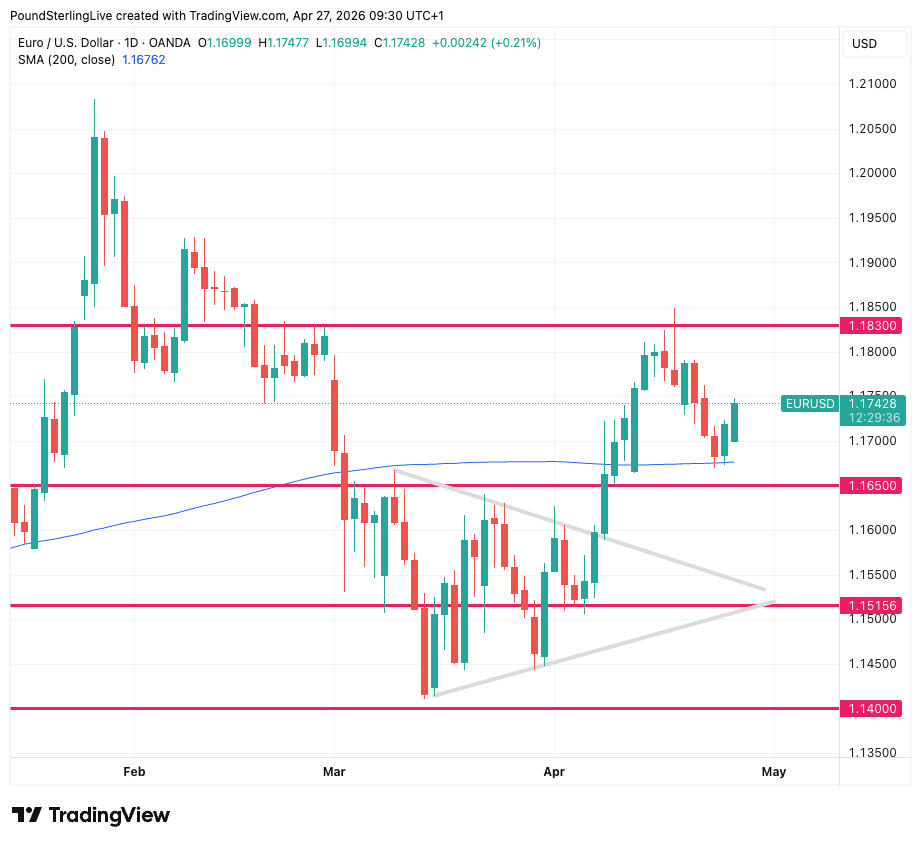
However, for a break above 1.1830, we would need to see a fresh impulse of USD selling, and for that, a meaningful trigger is required.
Will the situation in the Middle East provide that trigger? We think this week is too soon for a real breakthrough. The situation has entered a bit of a holding pattern: there were no talks on the weekend between the U.S. and Iran, but both sides are talking about talking.
This suggests talks will inevitably happen, but that we are still in a phase of headline watching that leaves markets interpreting nuances, even as they ultimately believe that the worst of the conflict is firmly behind us.
With the risks of significant escalation fading, euro-dollar will remain supported. But a new bout of dollar selling would probably need headlines indicating that a comprehensive deal is in the works.
With the Middle East simmering away in the background, market attention will on Wednesday turn to the Federal Reserve decision, which is then followed a day later by the European Central Bank.
So it's a central bank-heavy week ahead, albeit one that won't see any actual changes in interest rates, meaning markets will be reacting to the updated guidance from the respective institutions.
The Federal Reserve is expected to keep the federal funds target range at 3.50-3.75%. Regarding guidance, various speeches and interviews suggest rate setters will judge the recent rise in inflation as a one‑off, with limited second‑round effects, meaning the higher energy costs aren't expected to trigger meaningful price rises elsewhere.
"The Fed still signals that the next move in rates is more likely to be a cut, though not in the near term," says a note from Lloyds Bank.
Consensus projections for the next four quarters, compiled from leading investment banks.
Access the full forecast →
But should the Fed be confident that inflation will be contained, we could see rate cuts bets increase, which would potentially weigh heavily on the dollar through the second half of the week.
The European Central Bank (ECB), by contrast, will be more inclined to signal it is willing to raise interest rates. Analysts think there is a chance the ECB strikes a 'hawkish' tone, i.e. verifies bets that a precautionary rate hike is preferable given rising inflation threats.
With the Fed signalling a willingness to consider rate cuts in the future, and the ECB taking the opposite stance, we should receive enough policy divergence to lever euro-dollar higher.
"The tone at the ECB is likely to be more cautious, with the Governing Council set to repeat it willingness to tighten policy as needed," says a preview note from Lloyds Bank. "There is more room to use rates as a signalling/insurance mechanism to reinforce credibility, without generating significant trade-offs on the demand side."
The ECB is, therefore, on balance, likely to be a supportive event for the euro.