✳️ Secure today's exchange rate for a future payment. You may also book an order to trigger your purchase when your ideal rate is achieved. Learn more.
Image © Adobe Images
Pound sterling rises against the euro on Monday on signs the U.S. is de-escalating the conflict with Iran.
The pound-euro exchange rate rose to 1.1570 on Monday and in doing so recovered more than half of Friday's sizeable loss on the news that U.S. President Donald Trump was de-escalating the conflict with Iran.
"I am pleased to report that the United States of America, and the country of Iran, have had, over the last two days, very good and productive conversations regarding a complete and total resolution of our hostilities," said Trump in a social media post.
That sparked a sudden drop in oil prices and a recovery in the pound as markets judged an end to the conflict would limit the considerable damage the UK economy was facing under a lengthy and prolonged conflict.
The pound and UK bonds were punished on Friday as rising oil and gas prices linked to the war raised the prospect of another damaging round of inflation in the UK.
The UK economy is particularly constrained on the supply side (successive governments have crimped its energy production) and entered the conflict with higher inflation than in many comparable economies.
"The UK is by DM standards a high inflation economy (because it rations energy, land and capital). Inflation has averaged 3%/year since 2010. An energy shock hits UK hardest, so inflation premia on short dated Gilts quickly emerge," says Simon French, economist at Panmure Liberum.
Friday's dual bond and pound selloff was unusual as typically the pound and bonds move in opposite directions. The breakdown in relationship was a warning that markets were getting nervous about the UK's prospects, and the pound was entering dangerous territory.
Trump's pullback therefore comes in the 'nick of time' and prevents any serious fallout. With just one Truth Social media post, the weekly GBP/EUR outlook flips from bearish to bullish, highlighting just how event-driven the pound currently is.
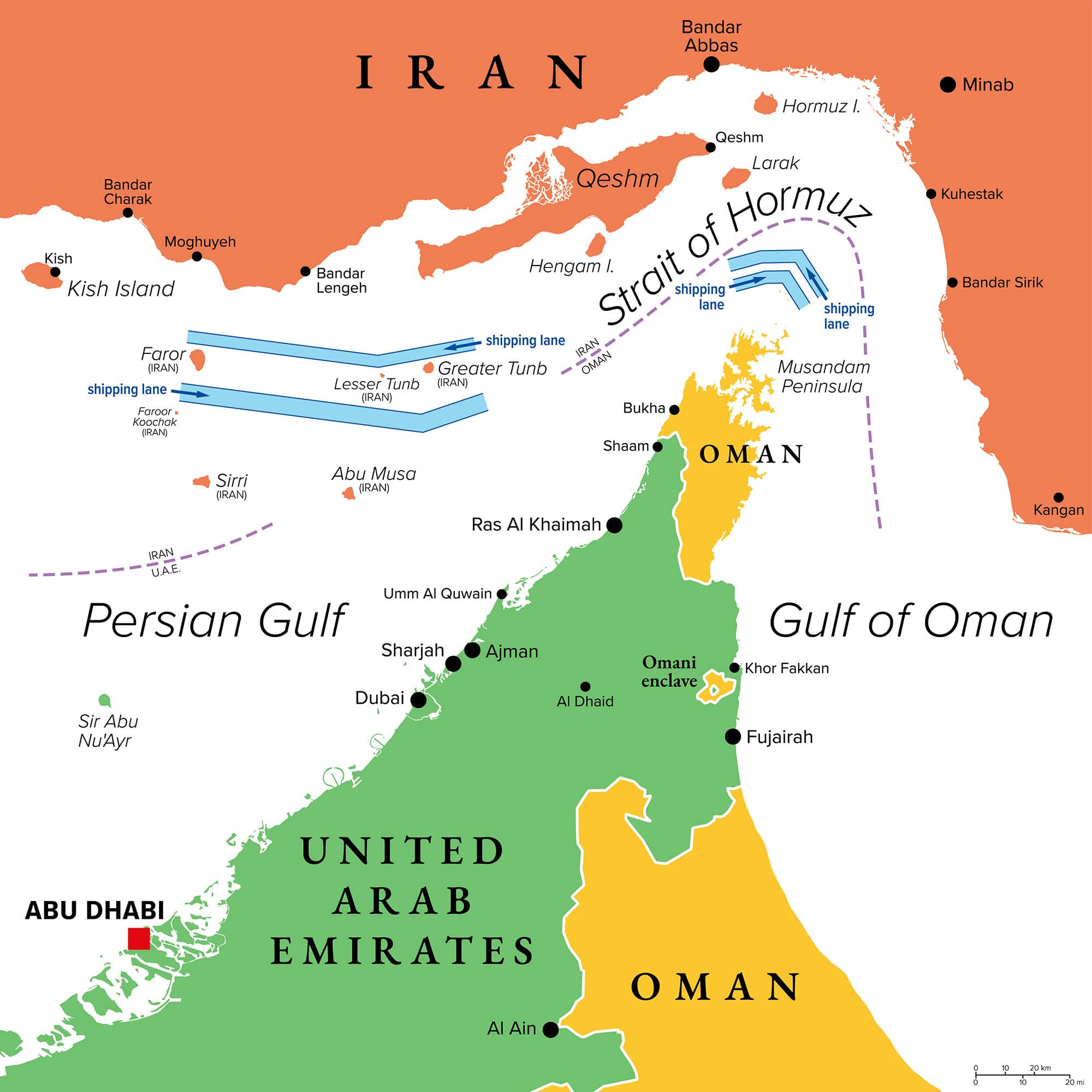
Above: Whatever happens from here, it's clear Iran's chokehold over the Strait of Hormuz is as tight as ever.
And that event-linked volatility is likely to remain a feature of the coming days.
Interestingly, Iran strenuously denies it is talking to the U.S., which raises the question of whether Trump is left with little option to take a more confrontational approach again.
"For now, I am sticking with the idea that the old 'TACO' concept does not apply here because Iran has leverage, too. Iranian TV is now running a headline: "US President Retreats After Iran's Decisive Threats" and saying there have been no talks with Washington," says Brent Donnelly, a strategist at Spectra Markets.
(TACO - Trump Always Chickens Out - means traders never take Trump at his word as he doesn't have the pain threshold to drive worst-case scenarios).
To be sure, even with an end game to the war in sight, elevated energy costs will still be felt as it will take time for energy supplies from the Middle East to recover. In the meatime government borrowing costs and inflation reset higher and growth resets lower.
"We revise down our forecasts for real GDP in 2026 and 2027, but revise up inflation and unemployment in light of an intensifying energy shock," says a note from Barclays.
Barclays economists revise up their inflation forecast for 2026 to 2.9% (+0.7pp) and for 2027 to 2.4% (+0.4pp). They expect real GDP to grow 0.7% in 2026 and 1.2% in 2027 (previously 1.1% and 1.7% respectively).
"We expect Bank Rate to stay at 3.75% for the rest of this year," say economists at the bank.
Last week's Bank of England decision reflected the changed environment, with the Bank voting 9-0 to maintain interest rates, and markets expect rate hikes in the coming months as it battles inflation.
"A factor that is affecting gilts more than some other markets is a recalibration of policy rate expectations. A week ago there was less than one 25bp hike by the BoE priced in but following the hawkish MPC minutes this week starts with over three 25bp hikes priced by markets for the rest of 2026," says a daily market briefing from Lloyds Bank.
For the pound-euro exchange rate, the question is whether or not rising bond yields prove supportive, or detrimental.
If market volatility eases, then they become supportive, but if bond buyers grow on strike, we could be looking at the beginnings of another crisis.
Any re-escalation in the war could trigger such a negative outcome.