Image © Pound Sterling Live
Pound Sterling was unable to build a meaningful recovery, and risks are tilted lower this week, in which the Bank of England (BoE) dominates.
Our stance this December was that the pound to euro exchange rate (GBP/EUR) would deliver a year-end rally, offering euro buyers some tactical buying opportunities.
However, the euro has proven to be an outperformer amongst the world's major currencies over the course of the past week, stymying GBP/EUR's ambitions.
The pair peaked at 1.1463 last Tuesday and we were confident upside momentum was building as it had crossed the 55-day exponential moving average (EMA); typically a sign that an uptrend is building.
However, last Thursday's 0.30% drop in GBP/EUR sliced through the 55-day and 21-day EMA, both of which are likely to act as resistance levels in the coming days.
Momentum is turning lower again and we are left considering the possibility that the year-end rally burned out before the mid-month mark.
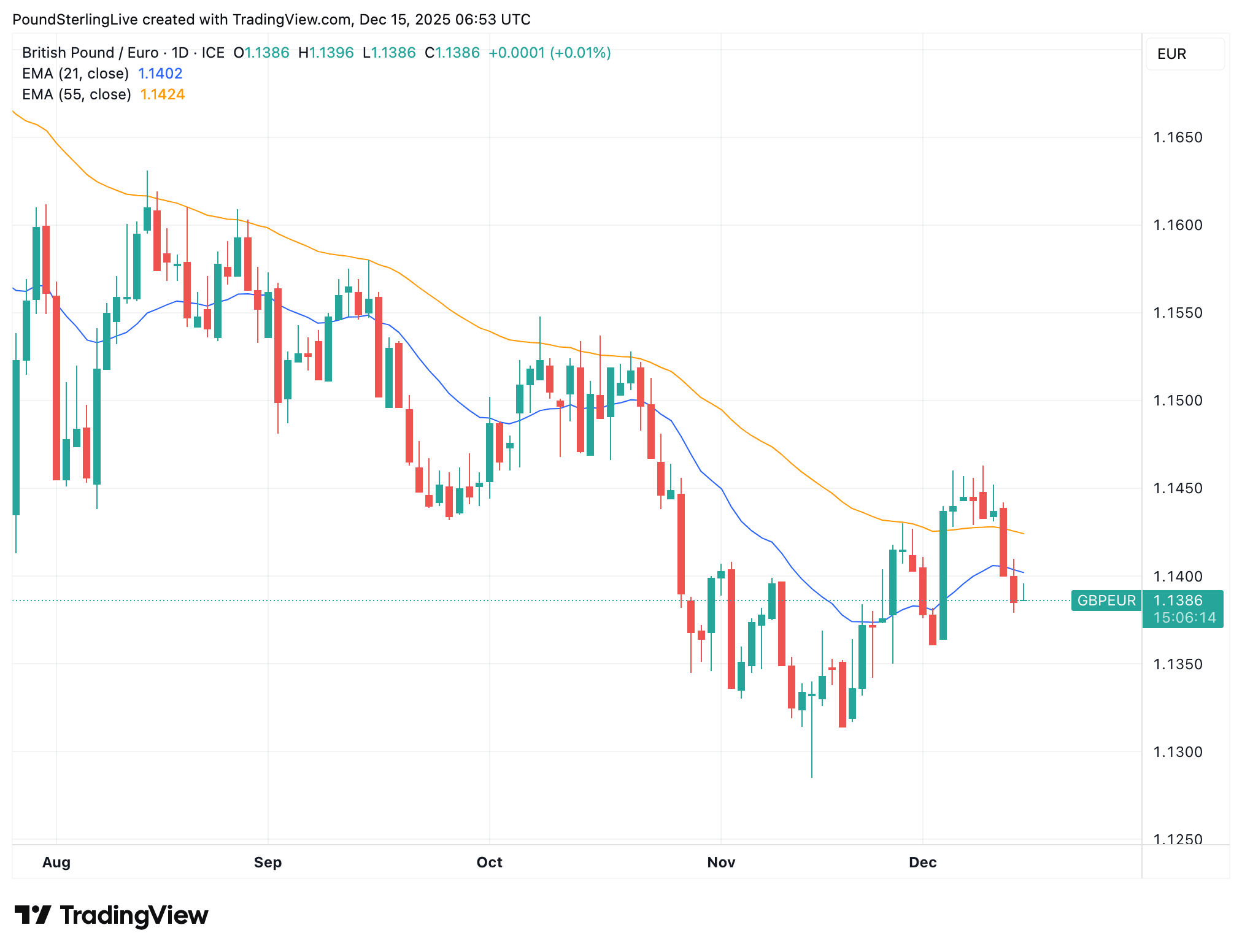
Above: GBP/EUR at daily intervals.
Losses to 1.1360 are possible this week, ahead of a move back to 1.1320 support early in the new year.
The problem for those wanting a stronger pound is that fundamentals are pitted against it: the economic data has deteriorated, as confirmed by four successive months of no economic growth, and this is raising the odds of further BoE interest rate cuts.
This is unhelpful to sterling, given most G10 central banks have ended their rate cutting cycles and many are expected to raise interest rates at some point next year.
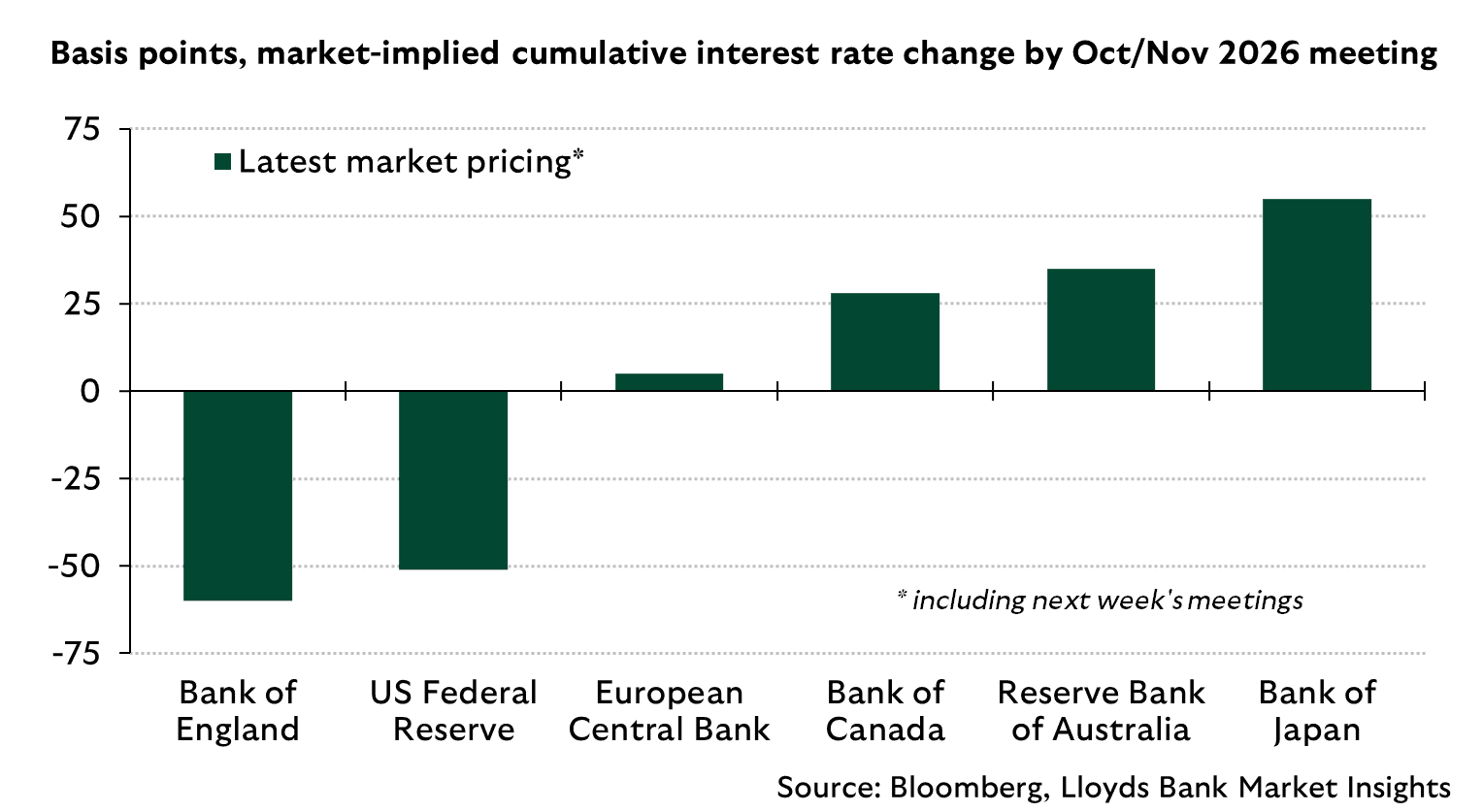
Image courtesy of Lloyds Bank
The BoE is almost certainly set to lower Bank Rate by 25 basis points on Thursday, meaning the decision itself won't come as a surprise.
Instead, what will be of interest is how the Bank shapes expectations for what happens early next year.
Ahead of the decision, we will receive labour market and PMI data (Tuesday) and inflation numbers (Wednesday).
Consensus projections for the next four quarters, compiled from leading investment banks.
Access the full forecast →
The market is presently priced for one further BoE cut before April 2026, but if the data disappoints, more cuts will be built into the outlook, which would inevitably weigh on the pound.
"A BoE cut combined with the market adding to expectations of another cut in Q1 26 can weigh on the GBP," says a note from TD Securities.
Economists look for the UK's unemployment rate to rise to 5.1% when labour market statistics are released Tuesday, confirmation of an ongoing deterioration in the jobs market.
✳️ Secure today's exchange rate for a future payment. You may also book an order to trigger your purchase when your ideal rate is achieved. Learn more.
The Bank will believe it can address this by lowering rates, which would take pressure off households and businesses.
In short, if the data undershoots, the pound will sink to 1.1350 and lower.
However, lowering interest rates could prove risky if it stimulates inflation: Wednesday should see the ONS confirm inflation comes in at 3.6%, which is well ahead of the Bank's 2.0% target.
If the data comes in ahead of expectations, we would expect pricing for further Bank rate cuts to halt and reverse, helping the pound recover.
A series of above-consensus data prints would help pound-euro recover back above 1.14 and restart the year-end rally.
But given the nature of survey data that showed the economy struggled ahead of the November budget, we see this as a lower probability outcome.