UK CPI inflation breached the Bank of England’s 2% target for the first time since 2013 in February and focus turns to how far it will rise.
The assessment from UK high-street lender Lloyds Bank is that we are in for a sustained period of price rises above the 2% mark.
Indeed, inflation towards 3% might be one of the more memorable features of Christmas 2017.
According to analysts at Lloyds, energy-related base effects have been a key driver in the decline of CPI inflation in 2015 and its subsequent recovery in 2016.
While Brent crude oil prices have fallen back to around $52 per barrel, rises in domestic energy tariffs are expected to continue to support inflation in the coming months, providing a partial offset.
“The dominant driver of the upswing henceforth will be the lagged effect of past currency depreciation, as the Sterling exchange rate in effective terms languishes around 19% below its 2015 peak,” say Lloyds.
Analysts expect food prices – with around half of UK food and feedstock imported – to experience particular upward pressure as supermarkets attempt to maintain margins under threat from rising import costs.
“Inflation is likely to remain elevated for an extended period of time. On our current forecasts, we do not expect a return to the Bank of England’s current 2% CPI target before the end of 2020,” say Lloyds.
A switch of target measure from CPI to CPIH is likely to come well before then.
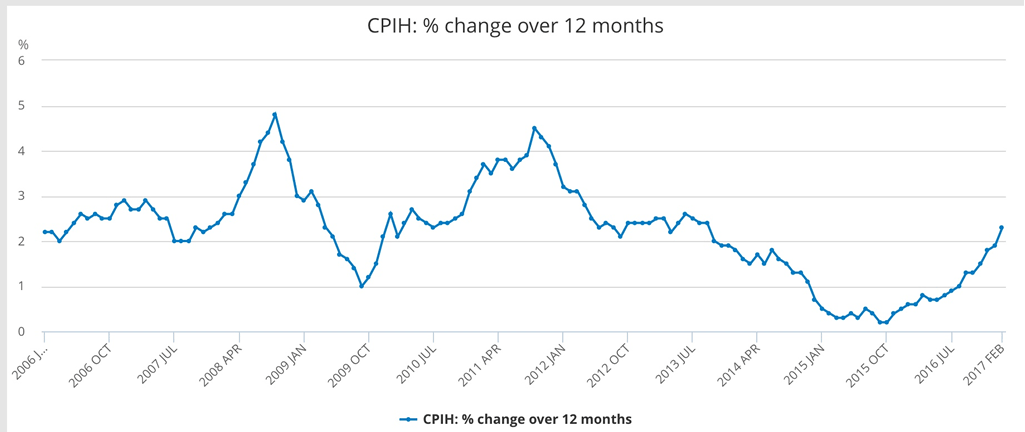
Lloyds expect the Chancellor to announce a switch to a 2% CPIH target at the 2017 Autumn Budget, following the re-accreditation of CPIH as a National Statistic.
The adoption of a looser inflation target – which would lessen the upcoming trade-off between rising inflation and decelerating growth – is a risk.
Lloyds forecast UK inflation to peak at 3.3% in the fourth quarter of 2017.