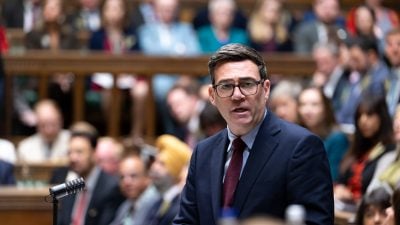
Above: File image of Rachel Reeves. Picture by Kirsty O'Connor / Treasury
We're closer to knowing the scale of likely tax rises.
The Financial Times reports Chancellor Rachel Reeves will be dealt a severe blow by updated economic forecasts from the Office for Budget Responsibility (OBR).
Citing "people familiar with the matter", the FT says the OBR is "expected to cut its trend productivity growth forecast by about 0.3 percentage points" at the November 26 Budget.
"This is a more severe revision than the 0.2ppt adjustment we (and many others) had thought would be the compromise outcome," says Sam Hill, Head of Market Insights at Lloyds Bank.
Productivity is the engine that drives sustainable increases in economic growth over time. And, it's economic growth that spawns the tax proceeds the government needs to finance spending and debt repayments.
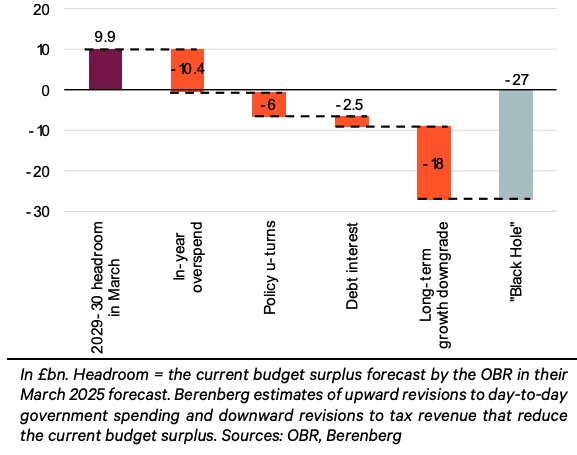
Above: The makings of a budget black hole. Image by Berenberg Bank.
Understandably, productivity downgrades speak of disappointing future revenues for the government, raising questions about debt sustainability.
Based on calculations used by the Institute for Fiscal Studies, the FT finds the OBR's downgrade to productivity creates a hole of £21BN, before any other considerations.
Economists at Lloyds Bank think forced policy changes (e.g. July's abandonment by the government of welfare spending changes), mean the total fiscal effort needed to restore just £10BN of projected headroom could easily be at least £30bn.
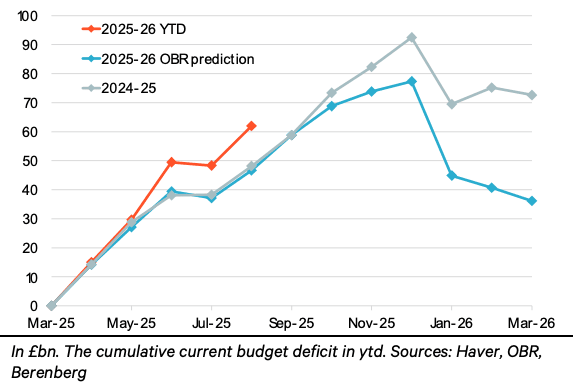
Above: This year's budget deficit is bigger than forecast. Image courtesy of Berenberg.
Headroom is the breathing space markets want to see Chancellors keep in their pockets to protect against shocks.
"Meeting the objective of building a larger fiscal buffer to guard against future shocks opens up the possibility of an even larger fiscal consolidation," says Hill.
Fiscal consolidation is achieved through spending cuts and tax rises.
Given the government has stated it won't radically alter welfare spending, by far the government's largest expenditure bill, the weight of consolidation must fall on tax rises.
Lloyds thinks that the only way to achieve this is to target one of the big earners: income tax, VAT or corporation tax.
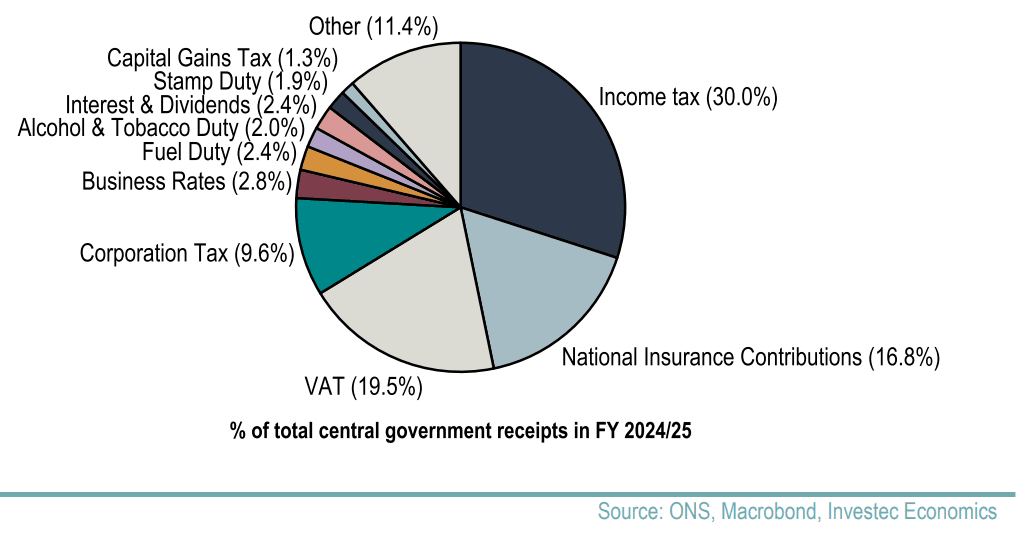
Above: The government's biggest earners are exempt from increases owing to Labour's manifesto pledges.
However, Labour's manifesto committed itself to not raising these big levers.
"It becomes harder to imagine that it doesn’t involve tax increases that at least challenge the spirit of the manifesto commitments, and maybe even the letter of them," says Hill.
UK debt repayments are amongst the highest in the world's developed economies, owing to fears about the future trajectory of the country's debt burden.
Although the UK's overall debt is lower than in many comparable countries, a set of unique circumstances makes the UK more vulnerable to high debt dependency.
For instance, the UK doesn't enjoy the current account surpluses that Japan does, nor does it have the protective umbrella of the ECB and Germany that France enjoys.
Given this, the pound has traded nervously ahead of the budget, and there is enough uncertainty about the outcome to ensure this continues.