File image of Sanae Takaichi. Source: UN DDR. Licensing CC 2.0.
The sell Japan trade is here, with the yen proving the cleanest expression.
Concerns continue to mount about plans to grow Japan's huge debt pile amidst fears that the new government of Sanae Takaichi will clip the Bank of Japan's wings.
"The honeymoon is over for new PM Sanae Takaichi as investors begin to assess the policy shift under her leadership," says Valentin Marinov, head of FX strategy and research at Crédit Agricole.
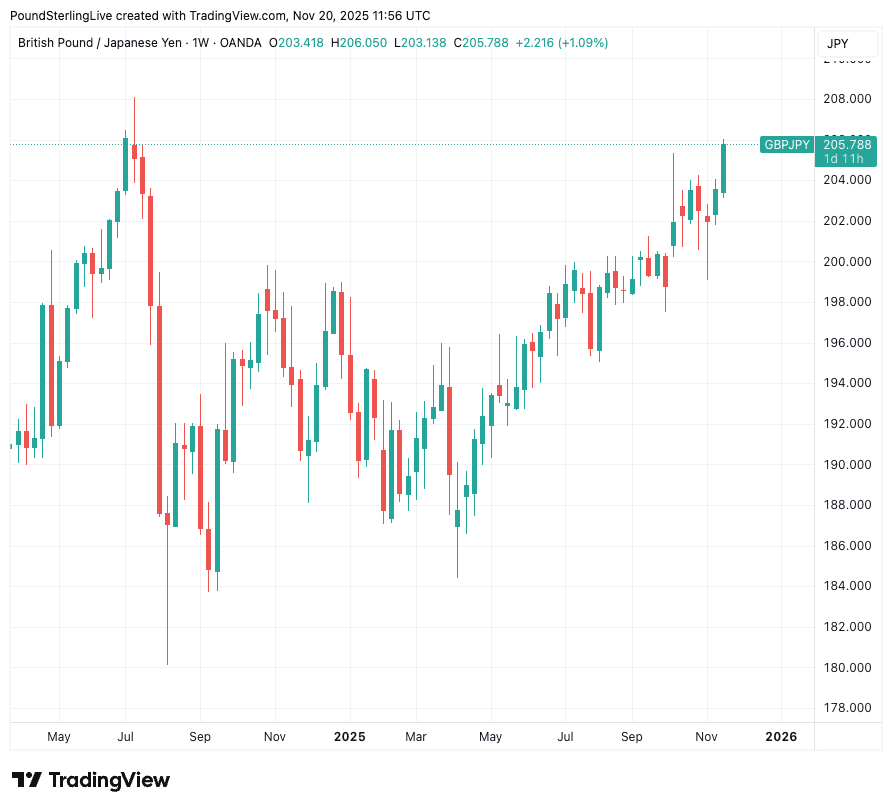
The Yen is printing fresh all-time lows against the euro and could soon fall to its lowest levels ever against the pound.
The dollar is advancing, pushing USD/JPY above 156 on Thursday, placing just below the January peaks at 158.
"The Japanese yen continues to be undermined by fiscal concerns and BoJ rate hike uncertainty. We remain cautious as intervention is more likely to come," says a spot market note from Natixis.
Marinov explains a new "sell Japan" trade is taking hold:
"This assessment has led to a breakdown in the negative correlation between the JPY and the Nikkei, as investors are engaging in the ‘sell Japan’ trade leading to a weaker Nikkei, JPY and JGBs."
The trade rests on three pillars, these are:
1) Bank of Japan Independence:
Takaichi will pursue a policy of stimulating the Japanese economy that requires the Bank of Japan to keep interest rates as low as possible.
These fears were confirmed after a panel of advisors to Takaichi said the BoJ is not likely to hike rates further before March.
The message was the BoJ would delay hikes to allow for the government to proceed with its own spending and borrowing plans. It points to the risk of a delay in the timing of the BOJ’s next rate increase even as most economists see a hike by January.
Coordination between the government and the central bank completely undermines the notion of its independence.
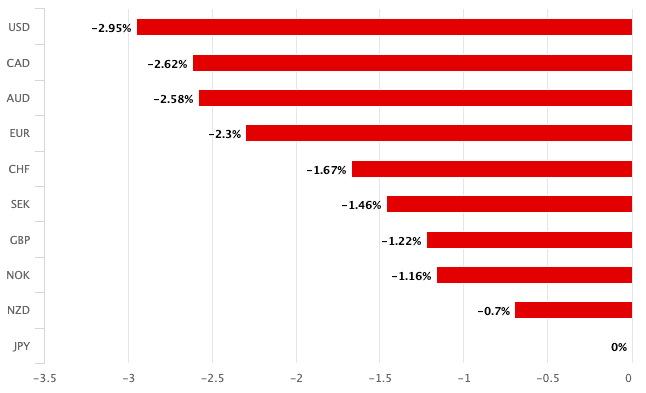
Above: JPY performance over the past month.
2) A spat with China.
Tensions are rising between China and Japan after Takaichi said that a Chinese attack on Taiwan threatening Japan’s survival could trigger a military response.
This spat has continued to worsen with China banning Japanese seafood imports.
"But what has investors most concerned is that China could restrict the flow of rare earths to Japan’s economy hurting its car and electronics industries," explains Marinov.
✳️ Secure today's exchange rate for a future payment. You may also book an order to trigger your purchase when your ideal rate is achieved. Learn more.
3) Debt sustainability.
The Japanese government is soon expected to finalise a monstrous fiscal stimulus in the region of $110BN, maybe more.
"Such an enormous sum would undoubtedly provide fresh a fresh liquidity injection for financial markets, but there are questions over the viability of such a package in an environment where Japanese CPI is above target, debt to GDP is already at eye-watering levels and bond yields are already reflecting concerns," says Benjamin Picton, Senior Market Strategist at Rabobank.
A 20Y Japanese government bond auction yesterday was weak as investors fret over the size of the stimulus package to be announced on Friday.
In a world awash with debt, the risk is that demand stalls.
"Worries over Japanese debt levels are usually met with a shrug and a comment that most of the debt is owed internally and balanced out by large asset holdings, but with the numbers getting this high and markets already showing signs of indigestion how long can that show go on?" asks Picton.
"Investors may have been in a 'Sell Japan' mood lately, and it remains to be seen whether the BoJ will indeed decide to raise interest rates soon or whether authorities will intervene into the market and buy the yen as dollar/yen approaches the 160.00 psychological zone," says Charalampos Pissouros, Senior Market Analyst at Trading Point.
✳️ Secure today's exchange rate for a future payment. You may also book an order to trigger your purchase when your ideal rate is achieved. Learn more.