
Image © Adobe Images
Markets have sold off heavily over recent days, but the Japanese Yen has failed to take advantage.
Normally, when global equities come under pressure, Japan’s currency strengthens as investors rush into traditional safe-haven assets.
But this time, the yen is sliding even as stock markets wobble.
So what’s going on?
Karl Schamotta at Corpay says the currency is acting "uncharacteristically weak, given the worsening risk backdrop."
A big part of the story is geopolitics.
New Prime Minister Sanae Takaichi has taken a far firmer pro-Taiwan stance than her predecessors, and that has triggered unease in Beijing.
Schamotta argues that "tensions with Beijing over newly installed Prime Minister Sanae Takaichi’s support for Taiwan" are weighing on sentiment around Japan, diluting the yen’s usual safe-haven magnetism.
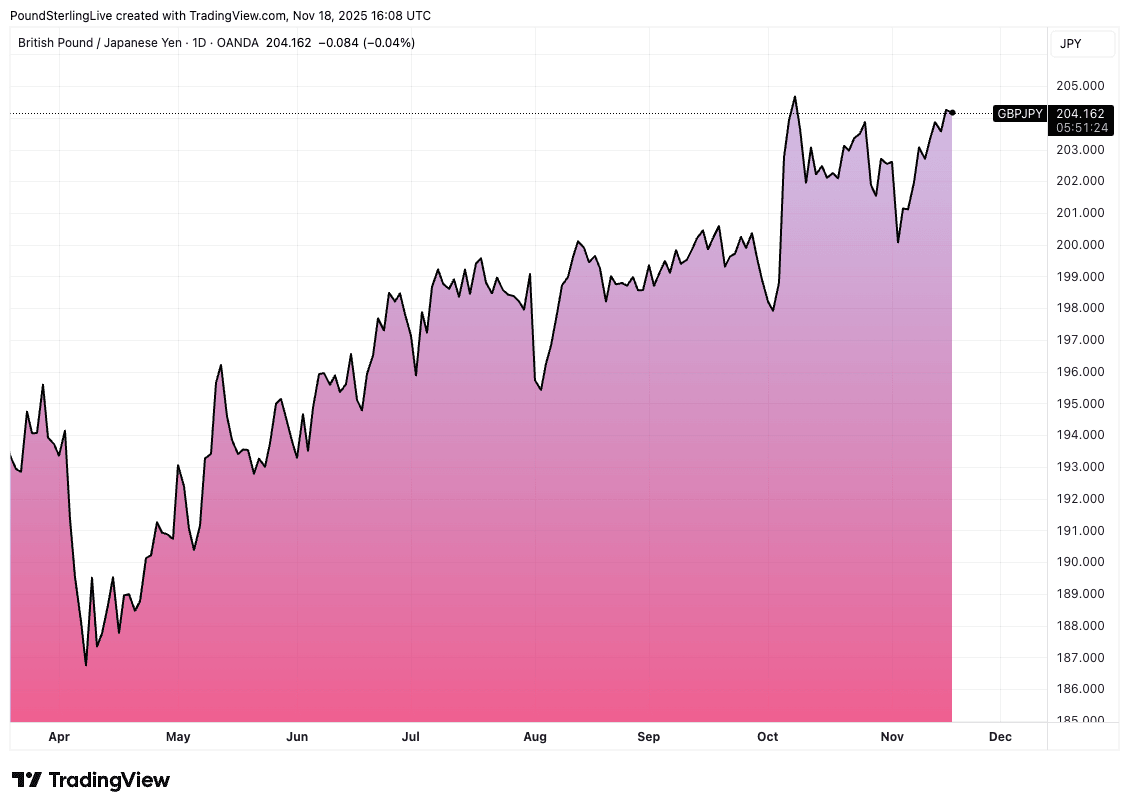
Even the pound continues to march higher against the yen.
At the same time, Japan’s government is preparing a large economic stimulus package.
That spending is raising eyebrows among investors who worry about the country’s already stretched finances.
As Schamotta puts it, "worries about the scale of the government’s planned stimulus" are adding to pressure on the currency.
Then there's corporate Japan.
Many Japanese companies are deeply intertwined with the US technology boom.
If Wall Street sneezes, Japan's earnings outlook can wobble.
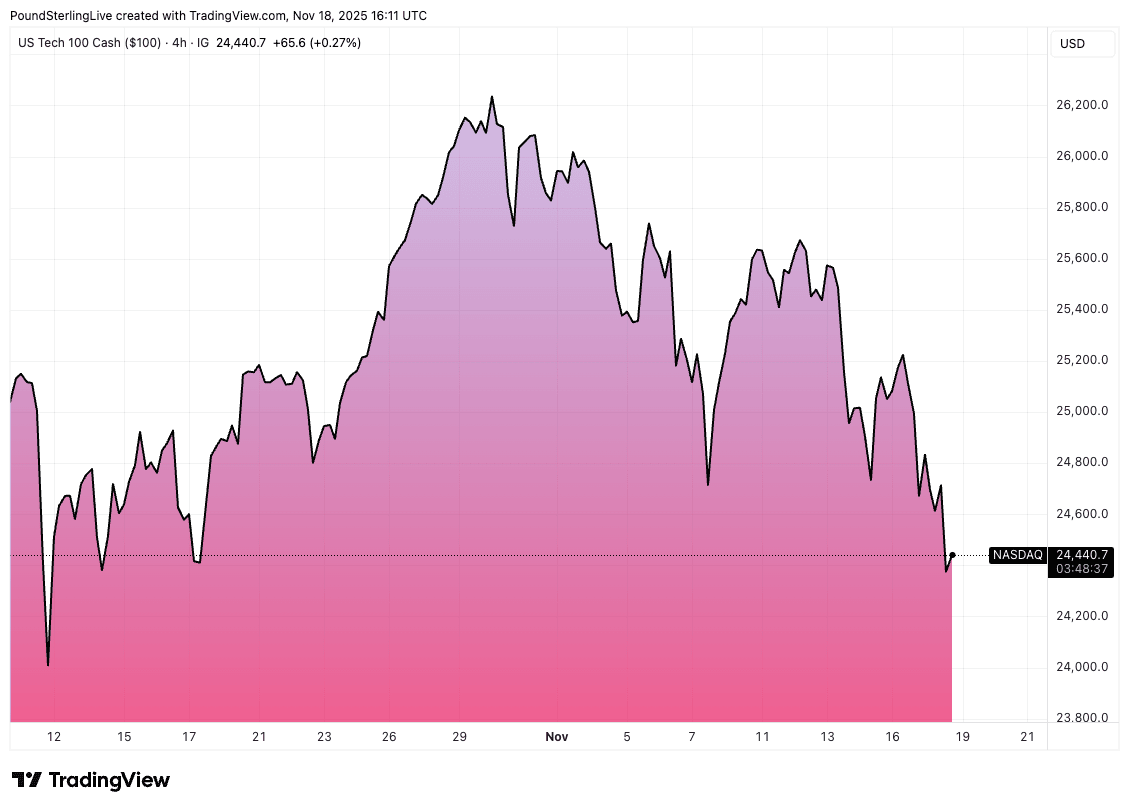
Above: The Nasdaq stock index has fallen through November.
According to Schamotta, "corporate vulnerabilities tied to the US technology boom are eroding the currency’s traditional safe-haven appeal, muting its response to negative headlines.”
Put all of this together and the yen’s underperformance begins to look less mysterious.
✳️ Secure today's exchange rate for a future payment. You may also book an order to trigger your purchase when your ideal rate is achieved. Learn more.
It’s still a safe-haven currency, but those haven instincts are being drowned out by a cluster of political, fiscal, and corporate worries.
That creates an unusual setup for companies with yen exposure.
Schamotta notes that “this may present tactical opportunities for hedgers,” because the currency is behaving out of character relative to risk conditions.
But he stresses that this phase is unlikely to last.
If markets take another sharp leg lower, the traditional gravitational pull into the yen should re-assert itself.
As he says, "the effect is unlikely to persist if markets lurch lower again—Japan’s enormous net international investment position and its central role in funding global carry trades still make the yen, alongside the Swiss franc, the principal counterweight in the global currency risk pendulum."
In other words, the yen hasn't lost its safe-haven DNA.
It's just being overshadowed, for now, by a very specific set of domestic and geopolitical anxieties.
If risk aversion deepens meaningfully, expect the old dynamics to come roaring back.