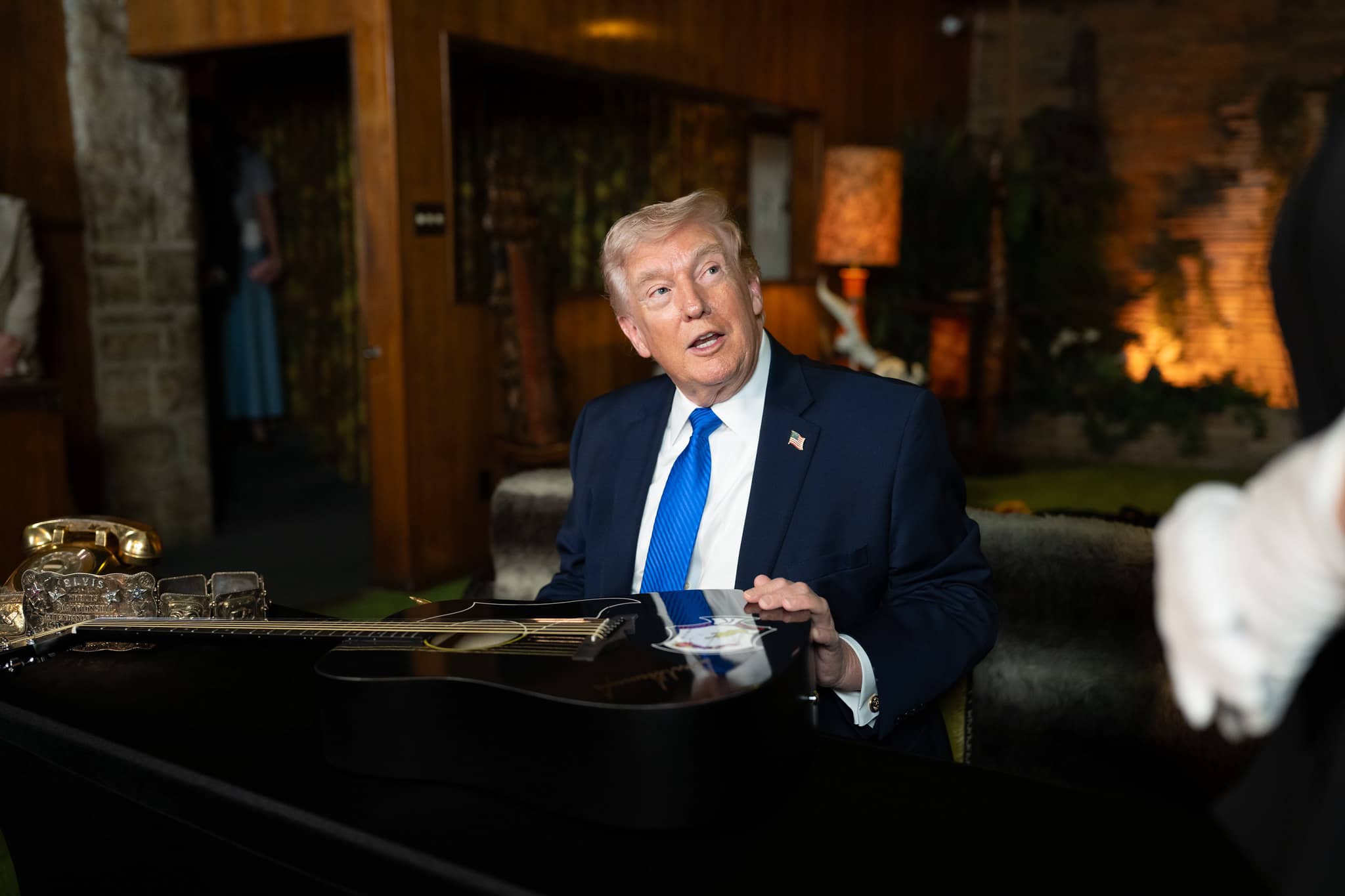
White House photo by Molly Riley
A 15-point peace plan to end the war in the Middle East has done little to bolster the pound-dollar exchange rate, which hints at underlying difficulties for the pair.
Midweek, sterling retreats to $1.3384, and we would have expected the GBP/USD pair to be higher given there are now clear signs of the U.S. advancing a diplomatic solution to end the conflict:
The U.S. has announced a 15-point offer for the Iranians. Conditions include the closure of nuclear facilities at Natanz, Isfahan, and Fordow, and transparency and oversight by the International Atomic Energy Agency (IAEA) over activities in Iran.
Iran is also required to abandon the use of armed proxies in the region and stop its funding and arming of regional affiliates.
In response, Iran has said the U.S. is negotiating with itself.
The dollar's resilience reflects a distinct market scepticism that the plan will work. As the major FX beneficiary of the conflict, we would expect it to give back a good chunk of recent gains as investors factor in the end to hostilities.
"It is probably too early to expect any big drop in energy prices or a much softer dollar this week. In effect, the US and Israel have military leverage, but Iran has clearly shown it has the economic leverage," says Chris Turner, head of FX analysis at ING.
What This Means for Your Money Transfer
The lack of a meaningful GBP/USD rebound despite improving geopolitical conditions suggests the dollar remains well supported.
For those planning a transfer, this introduces a slightly negative bias for the pound in the near term:
If you are buying dollars, the current environment increases the risk that GBP may struggle to improve significantly in the short term.
If you are selling dollars, ongoing dollar strength may continue to support favourable rates, although gains could be gradual rather than sharp.
📈 You can check how your bank's rate shapes up against a more competitive specialist provider's rate here.
That the dollar is holding its gains could suggest markets are looking past the conflict and assessing the damage to the global economy that has already been wrought.
For instance, both the UK and the Eurozone's PMI survey data for March saw a sharp deterioration in conditions and a surge in inflationary pressures.
If this is repeated, then the dollar simply has no counterparts to fall against, confirming it's evergreen status as a beneficiary when the global economy is in retreat.
For the dollar to retreat more agressively, we would probably need to see oil prices dump as Iran looks to engage the U.S. peace plan. That would mean a more rapid resolution is underway and that could limit the damage the conflict has caused on ex-U.S. economies.
But we suspect Iran is going to be very difficult in the upcoming negotiations, and this should keep markets on edge, which gives little reason to sell the dollar.
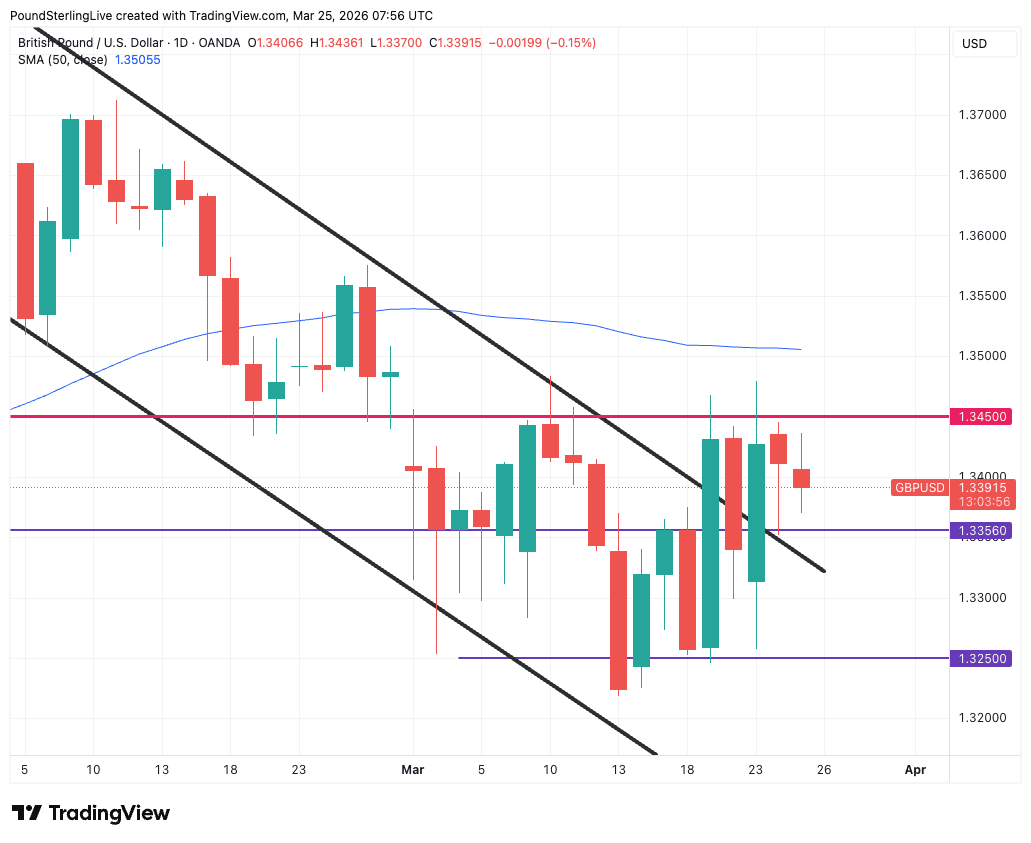
From a technical perspective, GBP/USD is locked below 1.3450, a level that now looks to form a significant area of resistance for the pair and will stifle the advance.
During March, GBP/USD has risen above 1.3450 on no less than twelve occasions, but has failed to actually end any day above here.
Selling interest tends to push the pair down into the mid-1.33's.
Take Control of Your GBP/USD Transfer
With GBP/USD struggling to gain momentum and resistance holding, the balance of risks currently favours stability or modest dollar strength.
If you need certainty: 👉 Lock in a rate today
If your timing is flexible: 👉 Get a quote
Securing a competitive rate can help protect against further downside while keeping flexibility if conditions improve.