

Image © Adobe Images
Currency moves can occur at a very fast pace, with minor changes in order fills and profitability margins having a huge impact on them within milliseconds. When running multiple terminals, it is crucial for the operator to maintain stable sessions to follow rapid exchange movements. High-volume operators are more likely to use a static residential proxy in their terminal configuration to ensure steady operations.
This is a special routing setup that ensures access to critical trade data from anywhere in the world. And as network identities change, an exchange environment will punish it, so choosing a stable network endpoint is a critical decision for an operation.
The Importance of Static Residential Proxy for Maintaining Connection Integrity
Constant line stability is required when placing high-frequency orders. Household addresses may change periodically in regular household settings and can cause problems with software that is running during execution.
This is where a static residential proxy can really come in handy. The specialists use ISP-issued residential IPs rather than shared hosting centre pools, which allows them to maintain a consistent virtual footprint. This uniformity helps maintain session persistence for long trades, avoiding execution drops at the wrong time. Moreover, the system route is unaffected and is perceived by external servers as a stable, domestic home endpoint.
Removing Interruptions in Regional Feeds / Order Fulfils
Local pricing pools need to be accessible through rapid, continuous information flow. Specialists rely on uninterrupted forex data feed access to assess rate movements. A reliable node, for instance, helps to monitor region-specific currency news directly from the local server hubs. This allows for a local presence that reduces latency, preventing orders from missing out on price changes.
Indeed, one recent research report from MetaQuotes states that 86% of trade execution specialists prefer network delays of less than 4 ms. With network delays reduced, the integrity of scalping systems is maintained during significant interest rate announcements. The lower the latency, the lower the slippage.
Solving Latency Problems Through Regional Server Proxies
To ensure low network latency to execution destinations, intelligent routing is needed. If a brokerage firm is running the match engine in London, then an operator based in Singapore may see the time delay in transit to be more than 150ms.
However, a response time of less than 5 ms is achieved when the route passes through a local node within the same urban area. This quick execution time is essential for scalp trades that need to be executed quickly. And since residential addresses flow just like domestic traffic, routing queries to endpoints local to the user will avoid traffic caps. This helps to maintain smooth and reliable execution flows.
Boost Your Setup With a Static Residential Proxy
With broker systems, if you log in from multiple locations, the system will alert you to suspicious logins. Although the market is volatile, it is important to maintain strong trading platform login security to avoid account suspension.
Market participants use a static residential proxy to ensure they have a single trusted routing point. Currency experts tend to opt for a high-quality residential proxy to ensure a continuous trading flow. A static residential IP comes with a unique benefit: it doesn't have to compete with anyone already blacklisted. A static one ensures the terminal stays connected to the liquidation engine without triggering false risk signals.
Reviewing Discrepancies in Broker Prices and Spreads
The brokers tailor their spreads according to the geographic source of the incoming connection. A careful comparison of broker spreads across regions can help to determine best pricing structures. A stable routing path means a clean IP reputation on financial platforms, ensuring they don't receive false-positive flags when collecting real-time quotes. This dependable mapping enables analysts to track volatility in GBP pairs accurately across the world's liquidity pools.
If you are issuing software requests simultaneously to multiple servers in the same region, using clean nodes will prevent servers from blocking requests. As a result, experts get accurate valuation data to perform arbitrage trades.
Choosing the Optimal Home Proxy Configuration
The right setup is key to optimal trading. When searching for the best residential proxy, you should consider the provider's uptime and IP pool quality.
A static residential IP proxy is far more efficient than dynamic proxies that randomly rotate their coordinates for continuous operation. The typical monthly cost of a high-performance static routing block is roughly $2.00 to $3.50 per dedicated address, depending on the required bandwidth. When you invest in dedicated resources for your residential business, you can guarantee you won't have to share your bandwidth with other users, resulting in low ping to the broker's matching engines. This low latency is essential during periods of significant economic releases, when milliseconds can make the difference between a successful session and one that fails.
Comparison
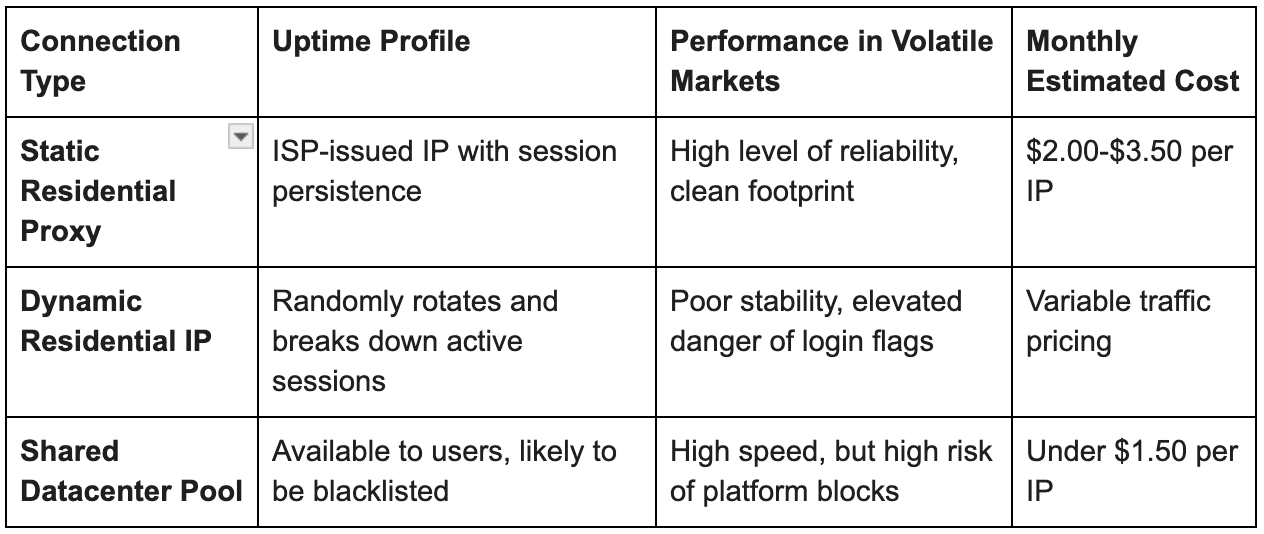
Market specialists look at various routing options and their stability and speed to choose the right network path:
Market specialists look at various routing options and their stability and speed to choose the right network path: Expert currency analysts use specific tools to analyse and compare specialist money transfer brokers and pricing models in different areas:
- Spread evaluation: Examining the differences between the buy and sell quotes of various locations.
- Order fill rates: Assess the speed at which orders are fulfilled during busy periods.
- Session reliability: Ensure that the path is reliable for hours
How to Make Your Static Residential Proxy Work
Operators need to go through a certain sequence to integrate a static residential proxy successfully:
- Determine the server's location: Find a trading node and choose a proxy node located close to it
- Set up terminal parameters: Enter the dedicated address, port and credentials in the MT4/MT5 network parameters.
- Perform latency testing: Run a ping test during trading hours to confirm latency is less than 10ms.
- Watch session logs: Ensure that the address does not change over extended time periods.
Properly Managing Session Stability for Professional Currency Dealing
In the end, using a static residential proxy will be a powerful tool for professionals to ensure complete platform stability. This setup allows the market to stay open during key liquidity periods without needing to drop connections or avoid log suspensions. And because the quality of the execution largely depends on the fraction-of-a-second difference, it's very useful to have a dedicated routing path. This comprehensive solution safeguards active trading terminals, ensuring stable operations in global currency networks.