
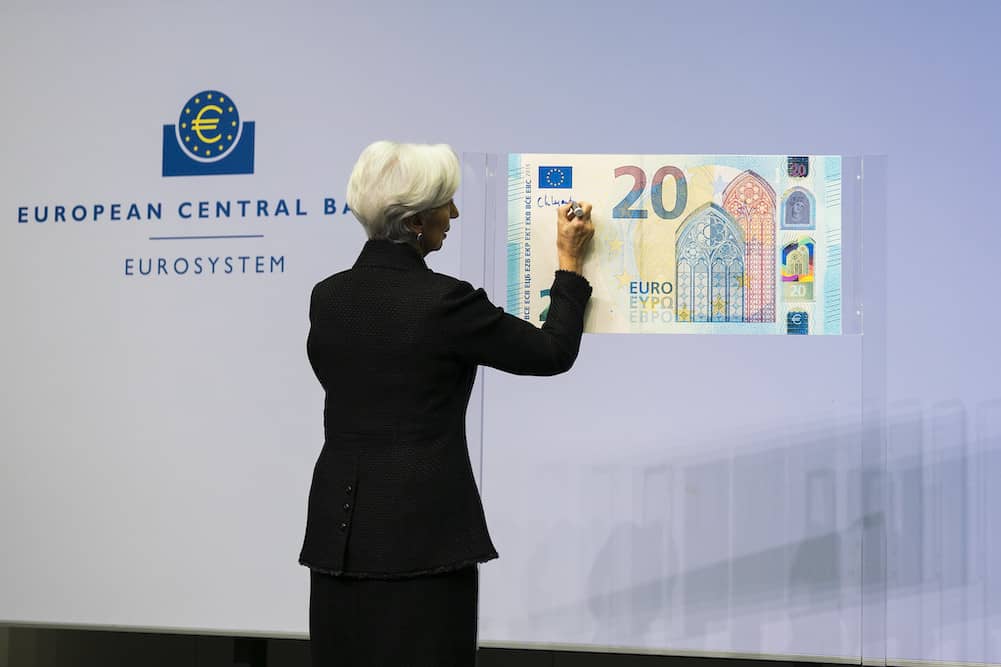
Above: File image of ECB President Christine Lagarde. Copyrights: Angela Morant/ European Central Bank.
The European Central Bank maintained its base rate, analysts respond with their predictions for the future of European interest rates.
📈 "Eurozone growth continues to outperform expectations, with domestic demand gaining momentum as lower interest rates and fiscal support filter through the economy," says Irene Lauro, a senior economist at Schroders.
She adds that although inflation has dipped below target, the ECB will largely look through this, given the volatility in energy prices.
"Instead, policymakers will remain focused on services inflation, which is still running uncomfortably high and set to be exacerbated by the expected end of the slowdown in wage growth this year. Today’s decision has confirmed our view that the next move from the ECB will be up, rather than down."
📈 "We also see increasing risks that the next move from the ECB could be a hike rather than a cut, as is priced in, albeit in the distant future. ECB President Lagarde played down the idea that recent FX movements would create dovish risks for monetary policy," says Dominic Bunning, FX strategist at Nomura.
📈 Mark Wall, an economist at Deutsche Bank says the ECB faces a fascinating test in the new year:
"Headline inflation is projected to be below 2% in both 2026 and 2027, but core inflation is stickier. What if the headline undershoot deepens? What if inflation expectations de-anchor from 2%? Could that open the door to further policy easing? Or does the improving growth outlook, driven by domestic demand, and firmer services inflation outlook mean an increasingly confident pause?
"Hikes are not on the agenda, not just yet at least."
📉 However, Salman Ahmed, an economist at Fidelity International thinks the next move at the ECB could be a cut. He explains that while rates are likely to be held in the near-term, "we still see clear risks that undershooting inflation may prove to be persistent, prompting action by the ECB over the course of the year."
He says the recent fall in services inflation is consistent with expected wage disinflation, while trade diversion from China also remains prominent in shaping the view of downside risks to inflation alongside a further euro appreciation.
"Moreover, we see risks to monetary policy transmission through a tightening of financing conditions - with recent ECB surveys and bank interest rate data pointing to tighter firm financing conditions. This may lead to the ECB considering if action is needed to keep the broader financing environment from becoming unduly restrictive," says Ahmed.