Euro forecasts at ABN Amro have been updated in light of recent strenght, however longer-term predictions favour the British pound.

Above: ABN Amro's Georgette Boele.
The British pound has struggled to advance against the euro of late - the pound to euro rate (GBPEUR) has fallen from a high of 1.44 in August down to the 1.36 support line.
In light of recent advances the foreign exchange team at ABN Amro have had to upgrade their expectations for the shared currency in the near-term.
However, the Dutch bank believe parity in EUR/USD does ultimately lie ahead while the pound sterling should maintain the advantage.
Recent gains for the euro have come amidst heightened volatility surrounding China with flows exiting high-yielding foreign currencies in favour of the euro.
But - The Euro is No Safe-Haven Currency
The near-term profile on the euro is downgraded while the longer-term outlook is maintained. Why?
The reason lies with the reasons for recent EUR strength.
There have been suggestions that the euro is a safe-haven currency - i.e a currency that investors flee to when they are concerned about a very negative development in financial markets.
Latest Pound/Euro Exchange Rates
  | Live: 1.1659▼ -0.01%12 Month Best:1.1828 |
*Your Bank's Retail Rate
| 1.1263 - 1.1309 |
**Independent Specialist | 1.1496 - 1.1542 Find out why this is a better rate |
* Bank rates according to latest IMTI data.
** RationalFX dealing desk quotation.
Has the euro risen because of safe-haven flows?
“We don’t think so. The EUR/USD has risen for two reasons. First for some time now, financial markets were short the euro and long US dollar because of monetary policy divergence. Investors had set up carry trades with the euro as the funding currency,” says Georgette Boele, Co-ordinator FX & Precious Metals Strategy at ABN Amro.
For example they short a currency with low official rates and of countries with central banks that are no-way close to tightening monetary policy.
On the other hand, they search for currencies that pay a higher interest rate.
The second reason is the US dollar has had some cyclical weakness. “When US inflation came in below-expectations and FOMC minutes were seen as more dovish investor sentiment sharply scaled back expectations about Fed rate hikes this year. As a result the US dollar fell versus the euro,” says Boele.
“In short, the reason for the EUR/USD rise on Monday was a cut back of positions (unwinding of carry trades) combined with cyclical US dollar weakness. In our opinion, safe haven demand has not been behind the surge in EUR/USD,” says Boele.
Adjustments in Near-Term Forecasts
The recent market rout has resulted in an adjustment in ABN Amro’s near-term currency forecasts (September).
Although the base case is for a Fed September rate hike, the risk has increased significantly that the Fed delays further.
“Even if US economic data continue to be strong and the Fed would hike interest rates in September, parity in EUR/USD will unlikely be reached in September. Therefore, we have made some adjustments,” says Boele.
The risk has also increased that the ECB may step up QE. However, analysts will expect to see parity in EUR/USD if investor sentiment improves, US data come in strong as we expect and monetary policy divergence is on again. As a result, we keep our parity call for December.
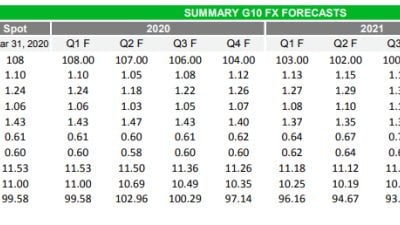
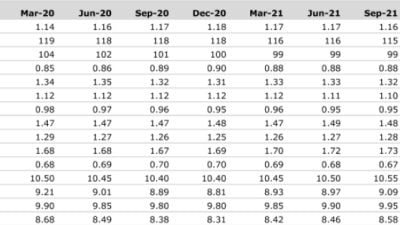
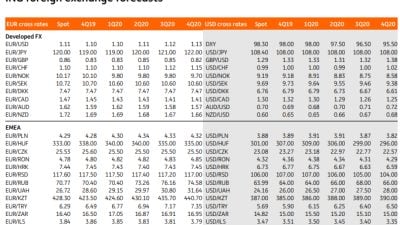
As such, the EUR/USD is forecast at 1.05 in September, up from 1.00.
The euro to pound exchange rate is predicted to be at 0.71 in September, adjusted up from a previous forecast of 0.68.
December will still see 0.67.
UniCredti Confirm Pro-EUR Bias
Due to China and low oil prices, markets have started speculating as to how dovish the ECB’s remarks will be on 3 September.
“We think markets are exaggerating the implications of these factors for the EUR. It is important to see things in context. The European economy is less reliant on China than many people think. Lower commodity prices are great for non-commodity businesses and consumers, and Europe is on track towards achieving further growth acceleration,” say UniCredit Bank.
On balance, UniCredit think EUR-USD may experience some downside potential to 1.1130 in the near term, but our medium-term view of upside in EUR-USD remains unchanged.