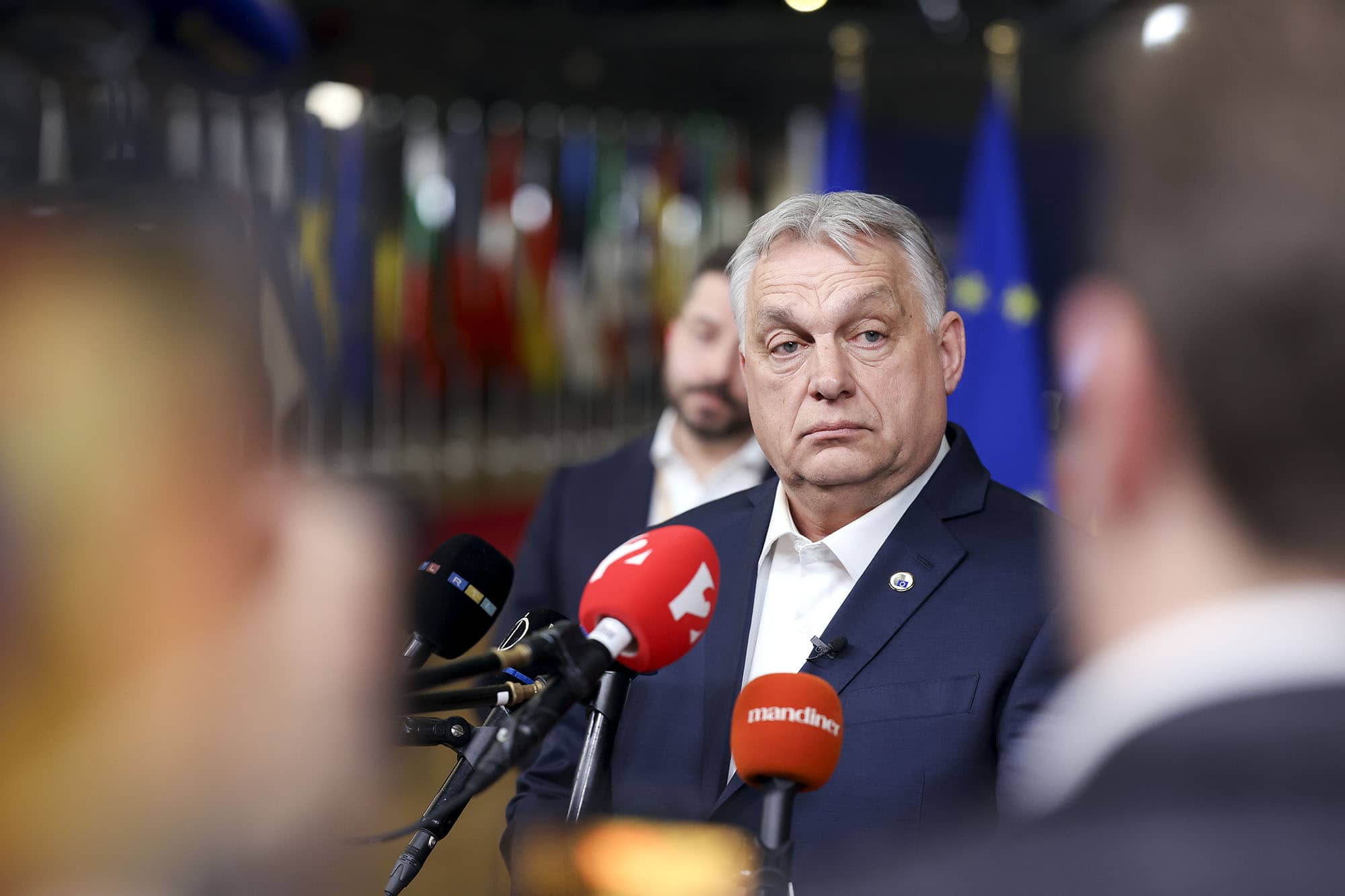
File image of Victor Orban. Copyright: European Union.
EUR/USD opened Monday at 1.1666, which is lower than previous week's close and consistent with negative headlines concerning the Middle East War.
A U.S. naval blockade of the Strait of Hormuz, aimed at blocking Iranian crude exports, hints at the prospect of escalation and helped brent crude prices spike above $100 / barrel in Monday trade.
However, the euro's losses look rather limited, and this suggests the shrort-term setup remains bullish.
Countering the negative headlines out of the Middle East are the positive developments in Hungary.
Here, the defeat of the Eurosceptic and pro-Russia Prime Minister Victor Orban in Hungarian elections allows for a more unified European Union on many policy fronts. For example, Orban, who ruled Hungary for 16 years, stood in the way of the release of €90BN in funds to Ukraine.
The release of these funds and the prospect of smoother European policy advancement in the coming months are net positives for the bloc and its currencies.
"No European policymaker had done more to weaken the internal cohesion and the external influence of the EU over the last five years than Orbán," says Holger Schmieding, Chief Economist at Berenberg Bank. "Beyond a general pro-EU message, opposition leader Magyar had fought the campaign largely on domestic issues, notably widespread corruption, weak economic performance and a deficient infrastructure."
This can help EUR/USD extend gains all else equal: the pair rose to 1.1740 last Friday, as the exchange rate recorded its biggest weekly advance since January.
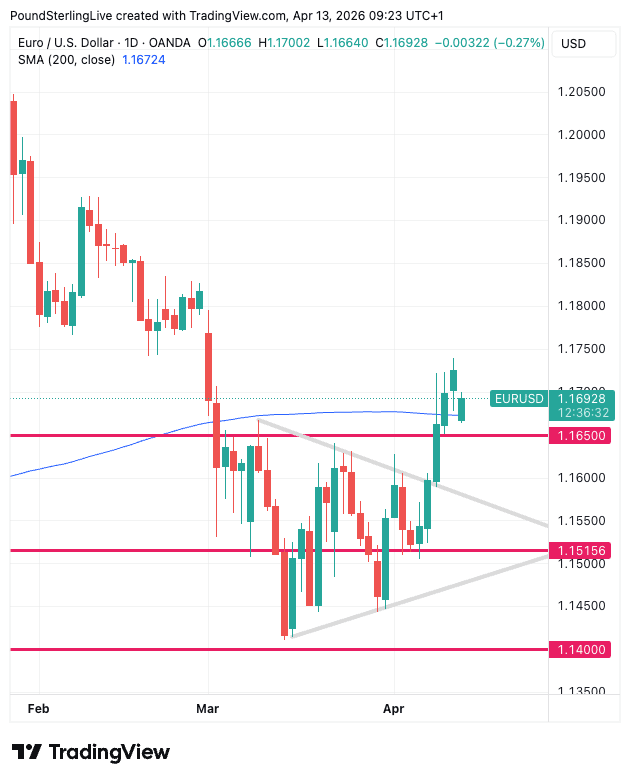
The chart shows the move was part of a breakout from a constricting wedge pattern; we wrote last week that the wedge would be resolved through a breakout either higher or lower and that usually such breakouts tend to be sizeable.
That's certainly been the case, with the trigger to the breakout being last week's U.S.-Iran ceasefire, that prompted a retracement in the USD across the board.
The breakout will likely fade now that escalation risks in the Middle East are rising again: The U.S. blockade of Iranian shipping opens the door to numerous unknowns.
That should be enough to put a floor under dollar weakness.
That said, Monday's price action is hardly suggestive of a panicked market: Euro-dollar is in the process of recovering earlier losses as brent crude oil prices fall back below the $100 a barrel mark through European trade.
Price action suggests investors see little distinction between two or three ships transiting the Strait of Hormuz every day and zero.
It also suggests the markets see the latest U.S. actions as a ploy to pressure Iran to a deal at the negotiating table.
Given evergreen hopes that this crisis has a distinct shelf-life, euro-dollar weakness could be limited to 1.1550 in the coming week, which is an approximate level of resistance from the March-April trading range.
Any news of further negotiations between Iran and the U.S. should meanwhile help the euro extend its rally back to 1.1750 and then eventually higher.