✳️ Secure today's exchange rate for a future payment. You may also book an order to trigger your purchase when your ideal rate is achieved. Learn more.
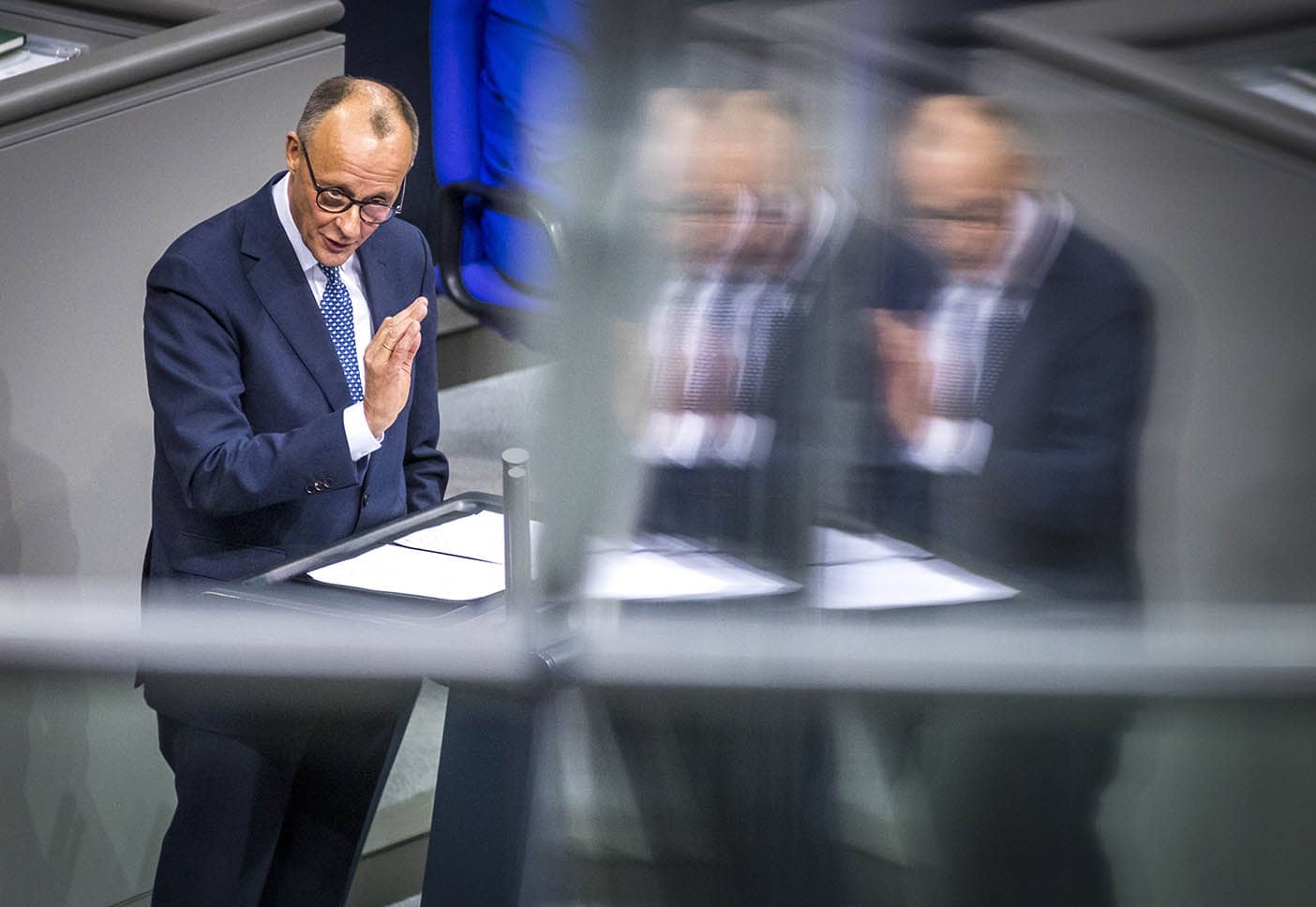
File image of Friedrich Merz, Reichstag building, plenary hall, Berlin / Germany. Photographer: Thomas Köhler / photothek, for bundestag.de.
New research from ING shows that the euro has fundamental upside potential, driven by an improving outlook for eurozone growth and interest rates.
The Dutch-based global banking giant concedes that some caution is still warranted over near-term data, but this should not detract from a fundamental shift in sentiment within the eurozone.
For example, Germany’s IFO business expectations survey has reached its highest level in over three years, showing that businesses are becoming more optimistic.
ING notes that even if GDP confirms a technical recession in the short run, the broader outlook is evolving in a constructive direction:
"Markets won't be convinced overnight of an improving structural growth picture… but the fiscal impulse over the medium term could help push rates higher," says a note from the bank.
"Upside potential for euro rates should not be underestimated," it adds.
This is important because FX markets tend to reward economies that show improving structural growth, especially when expectations move away from long periods of stagnation.
ING explains that simply pricing out the fear of a return to secular stagnation could be enough to lift euro interest rates and, by extension, the euro itself.
Researchers place strong emphasis on long-term real interest rates, particularly the 5-year forward 5-year real rate (5Y5Y), which is a proxy for the market’s view of long-run growth and monetary policy expectations.
Since the German fiscal spending announcement earlier in the year, the 5Y5Y real rate has already risen by 50 basis points.
However, it still sits below 1%, whereas pre-euro crisis norms were closer to 2%. This suggests that, "even after that jump, the real rate barely reaches 1%, still signalling a downbeat view of future growth."
As confidence recovers, ING sees the 10-year euro swap rate drifting up toward 3% in 2026.
Higher long-term rates typically increase the attractiveness of euro-denominated assets, creating persistent demand for the euro in FX markets.
What makes ING's view particularly euro-supportive is that its call doesn’t rely on "stellar growth numbers."
Rather, the case is built on markets gradually recognising that the worst-case, low-growth eurozone scenario is becoming less likely.
That repricing is enough to fuel a rise in real yields—supporting both domestic capital inflows and foreign demand for euro assets.