The Canadian Dollar shrugged off pessimistic forecasts that it would weaken and punched through a key 'rubicon' level following the dovish FOMC and another surge higher in oil.
Fewer rate hikes envisioned in the United States this year coupled with oil back in the black for the week has propelled the Canadian dollar through a key level last breached in October 2015.
The Federal Reserve Open Market Committee has indicated they only expect two hikes in 2016 rather than the four previously.
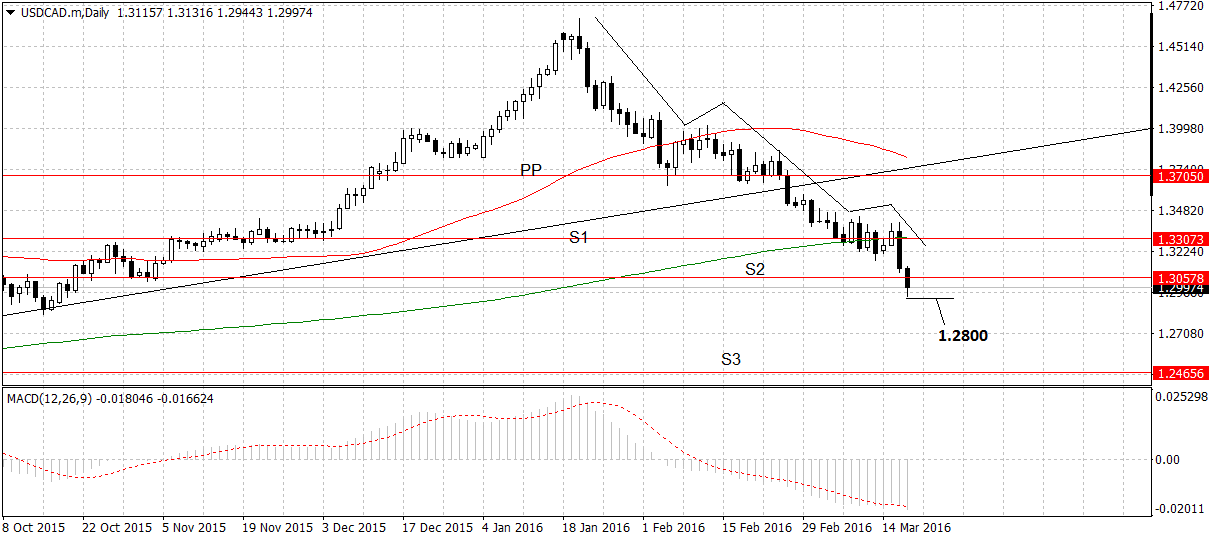
Signs that USD/CAD was about to strengthen quickly evaporated after the meeting as the exchange rate moved sharply lower, breaking the previous lows at 1.3167 and making new lows at 1.2944.
"The loonie has strengthened four cents since the Fed news Wednesday and rebounded by a jaw-dropping, profit-impacting 17 and a half cents above 13-year lows plumbed in January," says Joe Manimbo, Senior Market Analyst at Western Union's Business Solutions unit.
Latest Pound / Canadian Dollar Exchange Rates
  | Live: 1.8828▲ + 0.24%12 Month Best:1.9044 |
*Your Bank's Retail Rate
| 1.8188 - 1.8263 |
**Independent Specialist | 1.8564 - 1.864 Find out why this is a better rate |
* Bank rates according to latest IMTI data.
** RationalFX dealing desk quotation.
The USD to CAD rate now renewed the bearish short-term trend which is probably set to extend even further.
The fact that the pair has now cleared the 200-day MA and that the A-B-C down move is not in fact a simple three-wave correction but rather the beginning a deeper bear market are strong indications of longer-term trend reversal.
Adding ‘fuel’ to the USD/CAD fall was the news of a rebound in oil following reports that OPEC would be meeting to discuss supply quotas ‘with-or-without’ Iran, which has been reluctant to discuss cutting its production. This added much more conviction to the possibility that the Russia-Saudi pact could deliver a multilateral agreement on cutting oil supply, leading to a strong recovery in Oil and therefore CAD.
Downside could extend further if the current 1.2944 lows are breached, with the next target on the radar at 1.2800, although the R3 monthly pivot is the only major support level nearby so the pair could also move swiftly all the way down to there, and it provides a long-term target for the pair.
J.P Morgan Hui's 1.45 Call
Offering a more bullish perspective on the pair is J.P Morgan’s Daniel P Hui, who argues CAD's days in the sun are numbered, and sees the pair recovering to 1.45 by the end of the second quarter.
A collapse in oil prices will be the main driver pushing CAD back down to its multi-year January lows, according to Hui’s note.
“We continue to forecast a weaker CAD because we remain sceptical about the rally in oil prices and concerned about ongoing oversupply issues in crude.”
He further sees pressure on CAD coming from higher returns (or yields) on US assets compared to CAD assets, attracting a greater portion of capital to the US.
Further J P Morgan’s Hui sees a case for the BOC cutting interest rates again as deflationary forces resurface:
“While core and inflation have stayed near the 2% target more recently, the BoC itself has noted that this is largely only due to the inflation passthrough of earlier currency depreciation. However, given the 7.6% rebound in the trade weighted CAD just in the past two months, this pass-through support to CPI rates will quickly turn into a drag, making it even more difficult for CAD to keep inflation close to target in the near-term.”
The one potential “wild-card” event which could upset these forecasts, however, is the government’s long-awaited pro-stimulus budget to be announced on March 22.
Hui argues that if stimulus is substantial then it will remove the pressure on the Bank of Canada to use monetary policy to stimulate the economy, and the Canadian dollar will rise on expectations that BOC will not have to use any further accommodation.
Technical Forecasts More Hopeful for CAD
J P Morgan’s technical analysis of USD/CAD is less bullish than the fundamental analysis, which forecasts a recovery back to the 1.45 highs.
The technical analysis highlights the risk of more downside, revealing a bearish bias:
“More recently, the improved tone for risk and Crude has led to an extension through the next line of important levels against the USD and for the crosses while raising the risk that the CAD outperformance trend can extend.”
Pound Sterling Live’s own technical analysis is neutral with a very feint bullish bias at the time of writing.
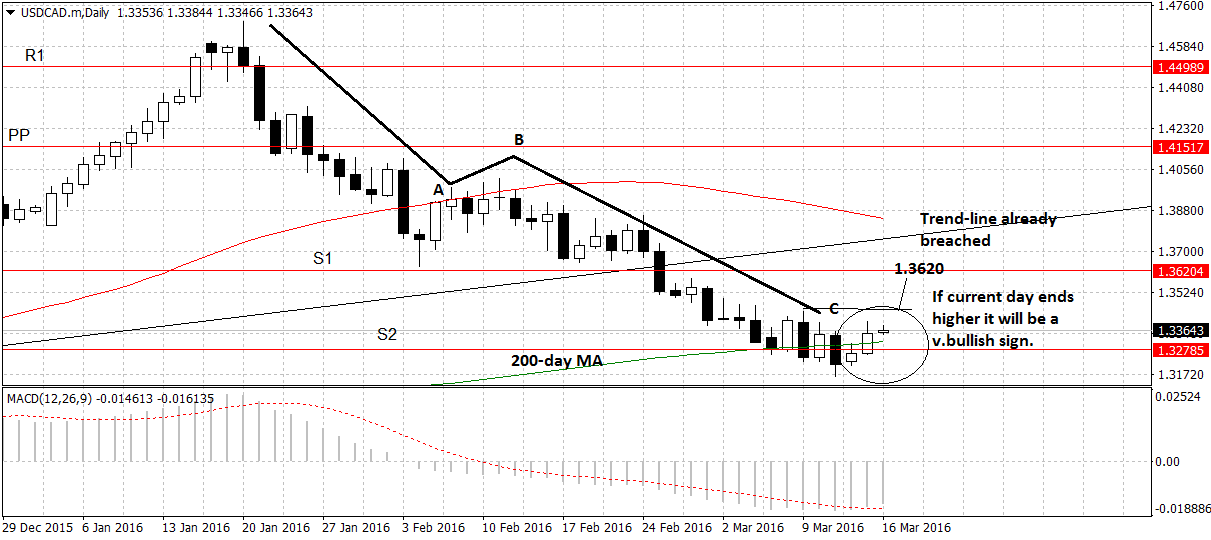
On the bearish side, our analysis suggests a major trend-line for the previous bull-market has already been broken, whereas J P Morgan’s chart shows the line still unbroken at the current lows.
There are no signs yet from price action that the trend is actually changing, such as for example a bullish candlestick set-up, or a reversal pattern, however, importantly we are very close to witenssing a potential reversal sign.
If Wednesday March 16 ends higher than it opened, that will produce a three white soldier bullish candlestick reversal pattern, which consists of three bullish up-days in a row. The fact the FOMC is on the same day increases the odds of a strong positive close.
The move down from the January highs is an A-B-C correction with legs A and C now equal or C-longer. If as noted above a three white soldiers’ reversal pattern forms, then because it has happened after the A-B-C increases the probability of a reversal.
If this coincides with a break above 1.3450, I would expect the exchange rate to gain traction and go all the way up to the S1 monthly pivot at 1.3620.
Finally, the pair has reached the 200-day MA which appears to be supporting it, and this is a common level for prices to reverse at, again potentially signalling more upside on the horizon.
Standard Chartered Support Bearish Outlook for Oil
It is not surprising that J P Morgan’s bearish view of CAD hinges on an equally bearish view of oil - after all CAD has always been the most correlated G10 currency to black gold.
In a recent note on the commodity, Standard Chartered appear to support Hui’s negative assessment of oil, arguing production cuts have been insufficient to justify the surge in the price to $40 per barrel, and the black stuff is therefore due a correction:
“We are bearish on oil prices in the short term, but expect Brent oil prices to bottom out over the next 3-6 months within USD 25-USD 30.”
Indeed Pound Sterling Live noted, from a technical perspective, that oil could be in danger of a correction as it is nearing resistance from the 200-day MA.
Production remains “Firm” in Opec Countries whilst having eased in the U.S, but this is not enough to keep prices high.
The Russia – Saudi deal is contingent on a multi-lateral response which looks unlikely to happen.
However, Standard Chartered’s head of research Alexis Calla does see a recovery in oil taking place after the next trough is complete.
The stronger longer-term outlook is dependent on continued rising demand, which Calla says remains robust.